

Visiting the Great Wall of China is one of the most unforgettable experiences in China. Stretching across mountains, forests and valleys, this ancient wonder attracts millions of visitors each year and offers a unique opportunity to explore one of the world’s greatest engineering achievements.
However, many first-time visitors are surprised to learn that there isn’t just one Great Wall to visit. Instead, there are several restored sections near Beijing, each offering a different experience. Some are perfect for families and first-time travellers, while others are ideal for hikers looking for spectacular scenery and fewer crowds.
Whether you’re planning a day trip from Beijing, deciding between Badaling and Mutianyu, or looking for the best hiking routes, choosing the right section can make a big difference to your visit.
This guide covers everything you need to know before visiting the Great Wall of China, including the best sections to explore, how to get there from Beijing, ticket information, opening hours, hiking advice, the best times to visit and practical travel tips to help you plan an unforgettable trip.

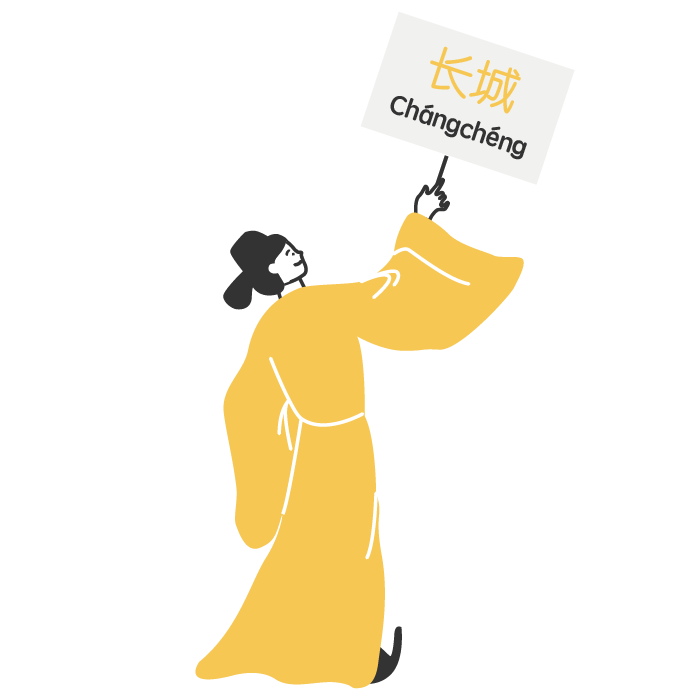
长城
Chángchéng
the Great Wall
(lit.”long-city wall”)
Key Takeaways
- The Great Wall of China has several restored sections that are open to visitors, most of which are located near Beijing.
- Badaling is the most popular section and is ideal for first-time visitors and families.
- Mutianyu offers beautiful scenery with fewer crowds and is one of the best all-round choices.
- Jinshanling and Jiankou are popular with experienced hikers and photographers.
- The best times to visit are spring (March–May) and autumn (September–November), when temperatures are comfortable and the scenery is at its most beautiful.
- Most travellers visit the Great Wall as a day trip from Beijing, with public transport, private drivers and guided tours all available.
Where Is the Great Wall of China?
The Great Wall of China stretches across northern China, passing through mountains, deserts, grasslands and river valleys. Rather than being one continuous wall, it is a vast network of defensive walls, watchtowers and fortifications extending for more than 21,196 kilometres across 15 provincial-level regions.
Although the Wall spans a huge portion of the country, the most accessible and best-preserved sections are located near Beijing. This is why the vast majority of international visitors choose to visit the Great Wall as a day trip from China’s capital.
Depending on which section you choose, the journey from central Beijing usually takes between 1 and 2.5 hours.
Some of the most popular sections include:
- Badaling – Around 70 km from Beijing and the easiest section to reach.
- Mutianyu – Approximately 75 km from Beijing, known for its beautiful scenery and fewer crowds.
- Jinshanling – Around 130 km from Beijing, ideal for hiking and photography.
- Simatai – Approximately 120 km from Beijing and famous for its night tours.
- Jiankou – About 100 km from Beijing, offering rugged scenery for experienced hikers.
Each section has its own unique atmosphere, level of difficulty and visitor facilities, making it important to choose the one that best matches your travel style.
Which Section of the Great Wall Should You Visit?
One of the biggest decisions when planning a trip to the Great Wall is choosing which section to visit. Although every section offers incredible views and a chance to experience one of China’s greatest historical landmarks, each has its own atmosphere, level of difficulty and facilities.
Some sections have been fully restored with cable cars and visitor centres, making them ideal for families and first-time visitors. Others remain largely untouched, offering adventurous hiking routes and a glimpse of the Wall in its original condition.
Here’s how the most popular sections compare.
Badaling
八达岭长城
Bādálǐng Chángchéng
About
Badaling is the most famous section of the Great Wall and is often the first place people think of when planning a visit. Located around 70 kilometres northwest of Beijing, it was the first section to be restored and opened to tourists.
Its wide stone pathways, excellent facilities and convenient transport connections make it the easiest section to visit.
Best for
First-time visitors, families, large tour groups and travellers using public transport.
Pros
- Closest major section to Beijing
- Easy to reach by high-speed rail, bus or guided tour
- Fully restored pathways
- Cable car available
- Suitable for children and older visitors
- Plenty of restaurants, shops and visitor facilities
Cons
- The busiest section of the Great Wall
- Can become extremely crowded during weekends and public holidays
- Less authentic feeling than some quieter sections
Mutianyu
慕田峪长城
Mùtiányù Chángchéng
About
Many experienced travellers consider Mutianyu to be the best all-round section of the Great Wall. Surrounded by forests and mountains, it offers breathtaking scenery while generally being much quieter than Badaling.
Mutianyu has been beautifully restored while still retaining a more peaceful atmosphere.
Best for
Families, photographers, couples and visitors looking for fewer crowds.
Pros
- Less crowded than Badaling
- Beautiful mountain scenery
- Twenty-three restored watchtowers
- Excellent for photography
- Cable car and chairlift available
- Famous alpine toboggan ride back down the mountain
Cons
- Slightly farther from Beijing than Badaling
- Public transport requires more planning
For many visitors, Mutianyu offers the perfect balance between accessibility, history and spectacular views.
Jinshanling
金山岭长城长城
Jīnshānlǐng Chángchéng
Best for
Hikers, photographers and history enthusiasts.
About
If you’re looking for a more authentic Great Wall experience, Jinshanling is one of the best choices.
This section combines beautifully restored pathways with original unrestored areas, allowing visitors to experience both the preserved and ancient sides of the Wall.
The dramatic mountain scenery makes Jinshanling one of the most photogenic sections of the entire Great Wall.
Pros
- Incredible hiking opportunities
- Fewer crowds
- Spectacular mountain landscapes
- Mix of restored and original Wall
- Excellent for photography
Cons
- Longer journey from Beijing
- More physically demanding than Badaling or Mutianyu
Simatai
慕田峪长城
Sīmǎtái Chángchéng
About
Simatai is one of the few sections of the Great Wall where visitors can experience night tours. Illuminated after dark, the Wall offers an entirely different atmosphere and some unforgettable views.
Best for
Night tours, photographers and visitors seeking a unique experience.
Much of Simatai retains its original Ming Dynasty architecture, making it particularly appealing to visitors interested in history.
Pros
- Famous night-time visits
- Original architecture
- Beautiful scenery
- Less crowded than Badaling
Cons
- Some areas are steeper
- More limited access than other sections
Jiankou
箭扣长城
Jiànkòu Chángchéng
About
Unlike the fully restored tourist sections, Jiankou remains largely untouched. Its steep staircases, broken watchtowers and rugged mountain ridges create one of the most dramatic landscapes anywhere along the Great Wall.
This section is famous among photographers and experienced hikers but is not recommended for beginners due to its challenging terrain.
Best for
Experienced hikers and adventurous travellers.
Pros
- Stunning panoramic views
- Wild, unrestored scenery
- Incredible photography opportunities
- One of the most authentic sections
Cons
- Very steep and physically demanding
- No tourist facilities
- No cable cars
- Safety risks on damaged sections
Great Wall Sections: Comparison Table
| section | crowd level | hiking difficulty | cable car | family friendly | distance from beijing |
|---|---|---|---|---|---|
| Badaling | High | Easy | ✅ | ✅✅✅ | ~70 km |
| Mutianyu | Medium | Easy–Moderate | ✅ | ✅✅✅ | ~75 km |
| Jinshanling | Low | Moderate | Limited | ✅ | ~130 km |
| Simatai | Low | Moderate | ✅ | ✅ | ~120 km |
| Jiankou | Very Low | Difficult | ❌ | ❌ | ~100 km |
How to Get to the Great Wall from Beijing
One of the reasons the Great Wall is such a popular attraction is that several of its most famous sections are located within easy reach of Beijing. Whether you prefer travelling independently or joining a guided tour, there are plenty of ways to visit the Wall. The best transport option depends on which section you plan to visit, your budget and how much flexibility you want during your trip.
High-Speed Train (Best for Badaling)
The high-speed train is one of the fastest and most convenient ways to reach Badaling.
Trains depart from Beijing North Railway Station and Qinghe Railway Station, arriving at Badaling Great Wall Railway Station in around 20–35 minutes.
From the station, it’s a short walk or shuttle bus ride to the entrance.
Advantages
- Fast and comfortable
- Affordable
- Ideal for independent travellers
- Avoids Beijing traffic
Best for
- Badaling visitors
- First-time travellers
- Budget-conscious visitors

Public Bus
Several public buses connect central Beijing with different sections of the Great Wall.
For Badaling, buses depart regularly from Deshengmen Bus Station.
Mutianyu can also be reached by public transport, although it usually requires a transfer to a local shuttle bus or taxi.
Advantages
- Cheapest option
- Frequent departures
- Good for independent travellers
Considerations
- Can take longer than the train
- Some routes require transfers
- Signage may be challenging for non-Chinese speakers

Guided Tours
For many international visitors, a guided tour is the easiest and most convenient option.
Most tours include:
- Return transportation from Beijing
- Entrance tickets
- An English-speaking guide
- Historical commentary
- Optional lunch
- Hotel pickup (on some tours)
Many tours also combine the Great Wall with attractions such as the Ming Tombs, Summer Palace or the Olympic Park.
Advantages
- Stress-free experience
- Learn about the Wall’s history
- No transport planning required
- Excellent for first-time visitors
Private Driver
Hiring a private driver offers the greatest flexibility.
This option allows you to:
- Choose your preferred departure time
- Visit quieter sections
- Spend as much time as you like
- Combine multiple attractions in one day
Private drivers are especially popular for trips to Mutianyu, Jinshanling and Jiankou, where public transport is less convenient.

Taxi or Didi
Visitors can also book a taxi or use Didi, China’s most popular ride-hailing app.
This is a convenient option for small groups, particularly if you’re travelling to Mutianyu or returning to Beijing after a long day of hiking.
Keep in mind that finding a return taxi from some remote sections can be more difficult, so many travellers arrange their return journey in advance.
See our guide to the 5 Chinese Phrases and Questions to Take a Taxi
Great Wall Tickets & Opening Hours
Ticket prices and opening hours vary slightly depending on which section of the Great Wall you visit. While details may change over time, the information below provides a general guide to help you plan your trip.
Typical Opening Hours
Most restored sections are open daily.
Typical opening hours are:
- Summer: 7:30 am – 6:00 pm
- Winter: 8:00 am – 5:00 pm
Some sections, such as Simatai, also offer evening opening hours for their famous night tours.
It’s always worth checking the official website of your chosen section before travelling, as seasonal hours and maintenance closures may apply.
Ticket Prices
Adult admission tickets generally range between:
- ¥40–¥60 RMB depending on the section and season.
Additional attractions may include:
- Cable car tickets
- Chairlift tickets
- Toboggan rides
- Shuttle buses
These are usually purchased separately or as part of a combined ticket package.
As prices may change, it’s recommended to check official booking platforms before your visit.
💡 Should You Book in Advance?
Booking in advance is recommended, particularly if you are visiting:
- During spring or autumn
- Chinese public holidays
- Golden Week
- Weekends
Popular sections such as Badaling and Mutianyu can sell out during peak travel periods.
If you’re travelling independently, purchasing tickets online before your visit can save time and help avoid queues at the entrance.
Best Time to Visit the Great Wall of China
The Great Wall is open throughout the year, and each season offers a different experience. The best time to visit depends on the weather, crowd levels and the type of scenery you would like to enjoy. For most travellers, spring and autumn are considered the ideal seasons, thanks to their comfortable temperatures and beautiful landscapes.

Spring (March to May)
Spring is one of the most popular times to visit the Great Wall.
As temperatures begin to warm up, the surrounding mountains become covered in fresh greenery and colourful blossoms, creating spectacular scenery.
Why visit in spring?
- Pleasant temperatures for walking
- Blooming flowers and lush landscapes
- Excellent visibility for photography
- Comfortable hiking conditions
Because of the mild weather, spring is also one of the busiest seasons, especially during weekends and Chinese public holidays.

Summer (June to August)
Summer offers long daylight hours and vibrant green scenery, making it a popular time for both domestic and international tourists.
However, temperatures in Beijing can exceed 30°C (86°F), and popular sections such as Badaling can become extremely crowded during school holidays.
Advantages
- Long opening hours
- Beautiful green mountains
- Great for photography
Things to consider
- High temperatures
- Large crowds
- Increased waiting times for cable cars and shuttle buses
If you’re visiting during summer, arriving early in the morning is highly recommended.

Autumn (September to November)
Many visitors consider autumn to be the best season to visit the Great Wall.
The cooler weather makes walking much more comfortable, while the surrounding forests transform into stunning shades of red, orange and gold.
Why autumn is a favourite
- Comfortable temperatures
- Colourful autumn foliage
- Clear skies
- Excellent hiking conditions
- Beautiful photography opportunities
Autumn is particularly popular among photographers and hikers visiting sections such as Mutianyu and Jinshanling.

Winter (December to February)
Winter offers a completely different experience.
Snow occasionally covers parts of the Wall, creating breathtaking scenery and far fewer crowds than at other times of the year.
Although temperatures can fall below freezing, many visitors enjoy having the Wall almost to themselves.
Advantages
- Very quiet
- Stunning snow-covered landscapes
- Excellent for photography
- Peaceful atmosphere
Things to consider
- Cold temperatures
- Possible icy pathways
- Some facilities may operate on reduced hours
🌄 Best Time of Day
Regardless of the season, visiting early in the morning is usually the best option.
Early arrivals can enjoy:
- Smaller crowds
- Cooler temperatures
- Better lighting for photographs
- A quieter atmosphere
Late afternoon is another excellent choice, particularly during autumn, when the warm sunlight creates beautiful views across the surrounding mountains.
When to Avoid Visiting
If possible, avoid visiting during China’s busiest travel periods, including:
- Golden Week (1–7 October)
- Chinese New Year holiday
- Major public holidays
- Summer school holidays
- Weekends during peak seasons
During these periods, popular sections such as Badaling can become extremely crowded, with longer queues for transport, tickets and cable cars.
What to Wear & Bring
The Great Wall is much larger and steeper than many visitors expect. Wearing suitable clothing and bringing a few essentials will make your visit much more comfortable.
Comfortable Walking Shoes
Many sections include:
- Steep staircases
- Uneven stone paths
- Sloping walkways
- Mountain trails
Supportive walking or hiking shoes are strongly recommended.
Water
There are shops at many restored sections, but carrying your own water is always a good idea, especially during warmer months.
Sun Protection
Much of the Great Wall offers very little shade.
Don’t forget:
- Sunscreen
- Sunglasses
- A hat
These items are particularly important during spring and summer.
Light Snacks
If you plan on hiking for several hours, bringing light snacks can help keep your energy levels up.
Camera or Smartphone
The Great Wall offers some of the most spectacular views in China, making it a fantastic place for photography.
If you enjoy taking lots of photos, consider bringing a power bank, as you’ll likely use your phone throughout the day.
Weather-Appropriate Clothing
Mountain weather can change quickly.
Depending on the season, consider bringing:
- A lightweight jacket
- Rain protection
- Extra layers during winter
- Breathable clothing during summer
Checking the forecast before your visit is always recommended.
Is the Great Wall Difficult to Walk?
One of the most common questions visitors ask is whether the Great Wall of China is difficult to walk. The answer depends entirely on which section you choose to visit.
Some restored sections are suitable for families and casual visitors, while others involve steep climbs, uneven stone steps and challenging mountain terrain that require a good level of fitness.
Badaling
Difficulty: ★★☆☆☆
Badaling is the easiest section of the Great Wall to explore.
The pathways have been fully restored, there are handrails in many places and a cable car is available for visitors who want to avoid the steepest climbs.
Although there are still plenty of stairs, most people with a reasonable level of fitness can comfortably enjoy a visit.
Best for:
- Families
- Children
- Older visitors
- First-time visitors
Simatai
Difficulty: ★★★☆☆
Simatai offers a moderately challenging walk with a mixture of restored and original sections.
Some staircases are steep, but the scenery is spectacular, particularly during the evening when the Wall is illuminated for night tours.
Mutianyu
Difficulty: ★★☆☆☆
Mutianyu is slightly more challenging than Badaling but remains suitable for most visitors.
Some staircases are steeper, but the cable car, chairlift and famous toboggan ride make it an excellent option for people who want flexibility.
Many visitors consider Mutianyu the best balance between accessibility and a more authentic Great Wall experience.
Jinshanling
Difficulty: ★★★★☆
Jinshanling is popular with hikers thanks to its longer walking routes and dramatic mountain scenery.
Visitors will encounter:
- Steeper staircases
- Uneven pathways
- Original stone sections
- Longer hiking distances
A moderate level of fitness is recommended.
Jiankou
Difficulty: ★★★★★
Jiankou is widely considered the most challenging section of the Great Wall.
It features:
- Very steep climbs
- Broken stone staircases
- Narrow mountain ridges
- Unrestored pathways
This section is recommended only for experienced hikers with appropriate footwear and outdoor experience.
Is the Great Wall Suitable for Children?
Yes, many families visit the Great Wall every year.
Sections such as Badaling and Mutianyu are the most family-friendly because they offer:
- Restored pathways
- Safety railings
- Cable cars
- Visitor facilities
- Restaurants and rest areas
Parents should still supervise children carefully, particularly on steep staircases.
Is the Great Wall Suitable for Older Visitors?
Yes, especially the restored sections.
Visitors who may find long climbs difficult can choose to:
- Ride the cable car
- Visit shorter sections
- Take frequent breaks
- Explore only part of the Wall
Many older visitors enjoy Badaling or Mutianyu because of their accessibility and visitor facilities.
Learn Chinese While Exploring Beijing
Visiting the Great Wall is just one of the many unforgettable experiences Beijing has to offer.
If you’re interested in learning more about China’s language, history and culture, combining sightseeing with Mandarin lessons is a fantastic way to deepen your experience.
Understanding the language allows you to connect with local culture, read historical sites and appreciate the stories behind China’s most famous landmarks.

At That’s Mandarin, our Summer Camp in Beijing combines immersive Mandarin classes with exciting cultural activities and excursions to some of China’s most iconic attractions, including the Great Wall.
Whether you’re a complete beginner or already studying Chinese, our programs are designed to help you improve your language skills while experiencing authentic Chinese culture firsthand.
Ready to explore Beijing beyond the classroom? Learn more about our Summer Camp in Beijing and discover China through language, culture and unforgettable adventures.
Frequently Asked Questions
Which section of the Great Wall is best to visit?
- Badaling is ideal for first-time visitors and families thanks to its excellent facilities and easy access from Beijing.
- Mutianyu offers beautiful scenery with fewer crowds and is often considered the best all-round choice.
- Jinshanling is perfect for hiking and photography.
- Simatai is known for its unique night tours.
- Jiankou is recommended only for experienced hikers.
Can you visit the Great Wall without a tour?
How far is the Great Wall from Beijing?
- Badaling: Around 70 km (1–1.5 hours)
- Mutianyu: Around 75 km (1.5–2 hours)
- Jiankou: Around 100 km (approximately 2 hours)
- Simatai: Around 120 km (approximately 2 hours)
- Jinshanling: Around 130 km (2–2.5 hours)
Most visitors explore the Great Wall as a day trip from Beijing.
How much does it cost to visit the Great Wall?
Additional charges may apply for:
- Cable cars
- Chairlifts
- Toboggan rides
- Shuttle buses
Prices can change, so it’s always best to check the official website before your visit.
How long should you spend at the Great Wall?
If you’re visiting from Beijing, you should allow a full day for transport, exploring the Wall and returning to the city.
What should I wear to the Great Wall?
Wear comfortable walking shoes with good grip, as many sections include steep staircases and uneven stone paths.
Depending on the season, you should also bring:
- Water
- Sunscreen
- A hat
- Sunglasses
- A lightweight jacket
- Snacks
- A camera or smartphone
Is the Great Wall difficult to walk?
It depends on the section.
Badaling and Mutianyu are suitable for most visitors, while Jinshanling involves more hiking. Jiankou is considered one of the most challenging sections and is recommended only for experienced hikers.
Can children visit the Great Wall?
Yes. Families visit the Great Wall every day.
The best sections for children are Badaling and Mutianyu, both of which have restored pathways, cable cars and visitor facilities.
Parents should supervise children carefully on staircases and elevated areas.
What is the best time of year to visit the Great Wall?
The best times to visit are spring (March to May) and autumn (September to November), when temperatures are comfortable and the scenery is at its most beautiful.
Early mornings on weekdays are usually the quietest times to visit.
Is Mutianyu or Badaling better?
Both are excellent choices, but they suit different types of travellers.
Badaling is easier to reach from Beijing and offers the most visitor facilities, making it ideal for first-time visitors.
Mutianyu is generally quieter, surrounded by beautiful mountain scenery and offers cable cars, a chairlift and its famous toboggan ride, making it a favourite among many experienced travellers.