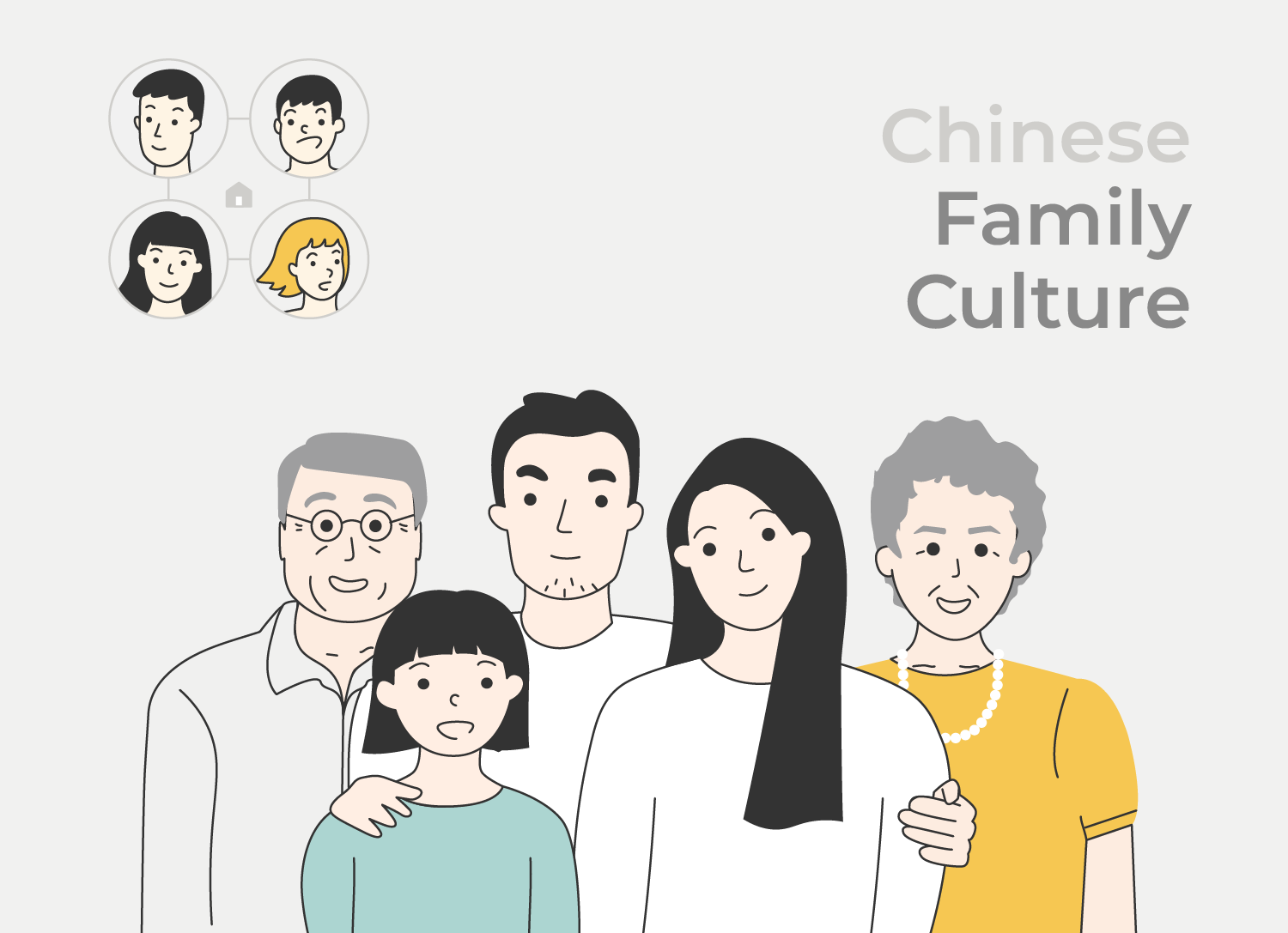
One concept that is especially useful for understanding traditional Chinese family culture is 孝 (xiào), often translated as “filial piety.” It describes ideas around respecting and caring for one’s parents and elders, as well as fulfilling responsibilities within the family.
At the same time, there is no single “Chinese family.” A family in modern Shanghai may look very different from one in a smaller city, and younger generations may have different expectations from their parents and grandparents.
In this guide, we’ll explore Chinese family traditions, values and relationships, as well as how family life is changing in modern China.
Key Takeaways
-
Family has traditionally been an important part of Chinese social and cultural life.
-
孝 (xiào), or filial piety, is a key concept involving respect and responsibility toward parents and elders.
-
Chinese family relationships can extend beyond parents and children to grandparents, aunts, uncles and other relatives.
-
Grandparents play an important role in childcare in many Chinese families.
-
Shared meals and family gatherings are important opportunities for relatives to spend time together.
Why Is Family Important in Chinese Culture?
Family has traditionally been viewed as one of the most important parts of social life in China. Rather than focusing only on the relationship between parents and children, traditional Chinese family culture often considers the wider network of relatives and the responsibilities people have toward one another.
Family can provide:
- Emotional support
- Practical help
- Childcare
- Financial support
- Advice and guidance
- Care for older relatives
This means that family relationships can involve both affection and responsibility. Being part of a family is not only about spending time together; it can also involve helping relatives when they need support and maintaining relationships across generations.
Family as a Social Connection
Historically, a person’s family could also influence their wider social life. Family relationships connected people across generations and helped create networks between relatives.
This is one reason concepts such as respect for elders, family responsibility and maintaining harmony have been important in traditional Chinese culture.
However, this does not mean that every Chinese person has the same relationship with their family. Family size, personality, location, generation and individual circumstances can all make a significant difference.
Traditional Chinese Family Values
Traditional Chinese family culture has been influenced by several ideas about how people should relate to one another. Among the most commonly discussed are respect, responsibility, loyalty and harmony.
These values do not mean that every traditional Chinese family followed exactly the same rules. Instead, they provide a useful framework for understanding why relationships between generations have historically been given so much importance.
Respect for Parents and Elders
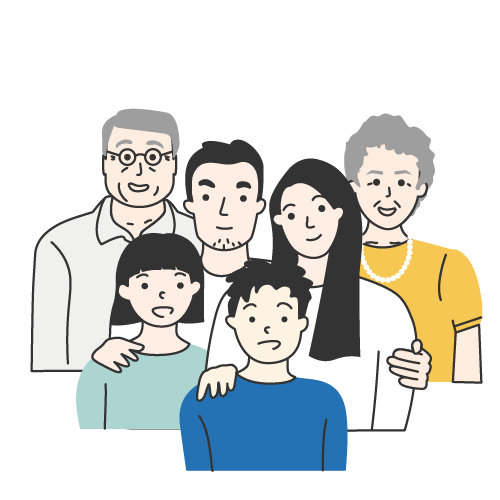
Respect for older family members is an important part of traditional Chinese family values. Parents and grandparents may be treated as sources of experience and guidance, and younger family members are traditionally expected to show consideration toward them.
This can be expressed through everyday actions, such as:
- Asking older relatives for their advice
- Checking in on parents and grandparents
- Visiting older family members
- Helping relatives when they need support
- Including elders in important family occasions
The idea of respect is closely connected to 孝 (xiào), which we will explore in more detail below.
Family Responsibility
Traditional family relationships can also involve a strong sense of responsibility.
Family members may be expected to support one another through different stages of life. Parents care for their children while they are growing up, and adult children may later help care for their parents as they age.
This creates a sense of intergenerational support: different generations may have different responsibilities toward one another.
Family Harmony
Another important idea is 和 (hé), meaning harmony.
Maintaining harmony within the family can sometimes be valued over openly expressing disagreement. This does not mean that Chinese families never argue or disagree; they certainly do. Rather, traditional ideas about family relationships can place importance on resolving disagreements while maintaining the overall relationship.
Education and Family
Education has also traditionally been highly valued in Chinese society. Families may see education as an important pathway to personal development, opportunity and a stable future.
For some parents, this can mean taking a very active interest in their children’s education and career choices. However, expectations vary considerably between families and generations.
Today, many parents continue to value education highly while also placing greater emphasis on their children’s individual interests, wellbeing and personal choices.
What Is Filial Piety (孝)?
One of the most important concepts for understanding traditional Chinese family culture is 孝 (xiào), often translated as “filial piety.”
The English phrase can sound quite formal, but the basic idea is about respecting, caring for and fulfilling responsibilities toward one’s parents and elders.
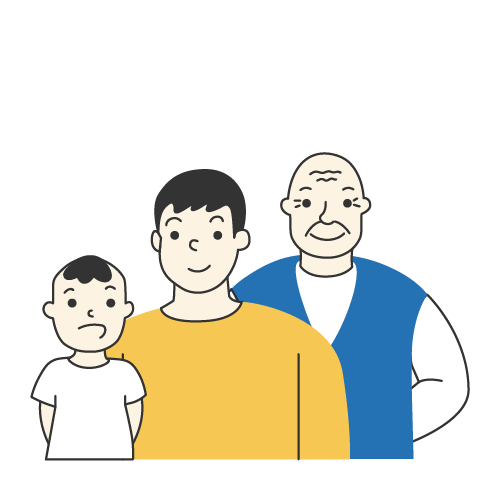
Historically, filial piety could involve listening to parents, caring for them, maintaining the family name and continuing family traditions. It was not simply about children obeying their parents. It was part of a broader understanding of how different generations should treat one another.
孝
xiào
filial piety
Filial Piety in Traditional Chinese Thought
The idea of 孝 is strongly associated with Confucian thought, which placed great importance on relationships and responsibilities within the family.
The family was viewed as an important foundation for wider society. Learning to respect parents and elders was therefore connected to ideas about how people should behave toward others more generally.
This helps explain why family relationships have traditionally been treated as more than private relationships between individuals. They can also involve a sense of duty, responsibility and mutual care.
What Does Filial Piety Look Like Today?
Filial piety does not necessarily look the same in modern China as it did in the past.
Today, it might mean:
- Staying in regular contact with parents
- Visiting parents and grandparents
- Helping parents financially when possible
- Supporting parents with healthcare or practical needs
- Including parents in important family occasions
- Helping care for older relatives
At the same time, younger generations may have different ideas about independence, careers, relationships and where they want to live.
For some people, filial piety may mean living close to their parents and being heavily involved in family life. For others, it may mean maintaining a close relationship while living independently in another city.
The important point is that 孝 is a cultural concept that has evolved over time. Understanding it can help explain why relationships between parents and adult children can carry a strong sense of responsibility in Chinese culture, without assuming that every Chinese family follows the same expectations.
You can also learn about friendships in Chinese culture in our dedicated guide.
Respect for Parents and Elders
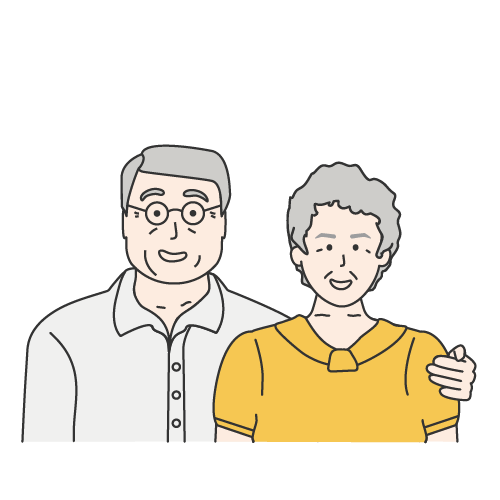
Respect for older family members is closely connected to the idea of 孝 (xiào). In traditional Chinese family culture, parents and elders have often been viewed as people who deserve care, consideration and respect because of their age, experience and role within the family.
This can be expressed through everyday behaviour rather than one specific ceremony or rule.
For example, younger family members may:
- Ask older relatives for advice
- Check in on parents and grandparents
- Visit older relatives regularly
- Help with practical tasks
- Include elders in important family celebrations
- Consider their parents’ opinions when making major life decisions
Family Titles and Language
The importance of family relationships is also reflected in the Chinese language.
Unlike English, which generally uses one word such as “uncle” or “grandmother,” Chinese has much more specific terms for relatives. The word you use can depend on whether someone is related through your mother or father, whether they are older or younger, and sometimes their position within the family.
For example:
- 哥哥 (gēge) — older brother
- 弟弟 (dìdi) — younger brother
- 姐姐 (jiějie) — older sister
- 妹妹 (mèimei) — younger sister
- 爷爷 (yéye) — paternal grandfather
- 奶奶 (nǎinai) — paternal grandmother
- 外公 (wàigōng) — maternal grandfather
- 外婆 (wàipó) — maternal grandmother
These distinctions can initially seem complicated to Mandarin learners, but they are useful because they tell you something about how the speaker is connected to that person.
You can see our dedicated guide to the Family Tree in Chinese here.
Respect Doesn’t Mean Every Family Is Hierarchical
It is important not to interpret traditional respect for elders as meaning that every Chinese family has a strict hierarchy.
Modern families can have very different relationships between parents, children and grandparents. Younger family members may disagree with their parents, make independent decisions and live far from home.
The traditional idea of respecting elders can therefore coexist with modern ideas about independence and personal choice. What that balance looks like depends on the individual family.
Grandparents and Childcare
Grandparents can play an important role in many Chinese families, particularly when it comes to helping care for grandchildren. This is one of the clearest examples of how family relationships can extend across several generations.
In some families, grandparents may regularly:
- Look after young children
- Prepare meals
- Take grandchildren to and from school
- Help with homework
- Spend weekdays with grandchildren
- Support parents who are working
This can make grandparents an important part of a child’s everyday life rather than relatives who are only seen on special occasions.
Why Are Grandparents So Involved?
There isn’t one explanation that applies to every family. Practical circumstances, work schedules, living arrangements and family preferences can all influence how much grandparents are involved.
In some cases, parents may have demanding jobs and grandparents can provide valuable childcare support. In others, several generations may live close to one another, making regular contact easier.
This can create a strong intergenerational relationship, with grandparents helping their children while also developing a close bond with their grandchildren.
Family Gatherings & Shared Meals
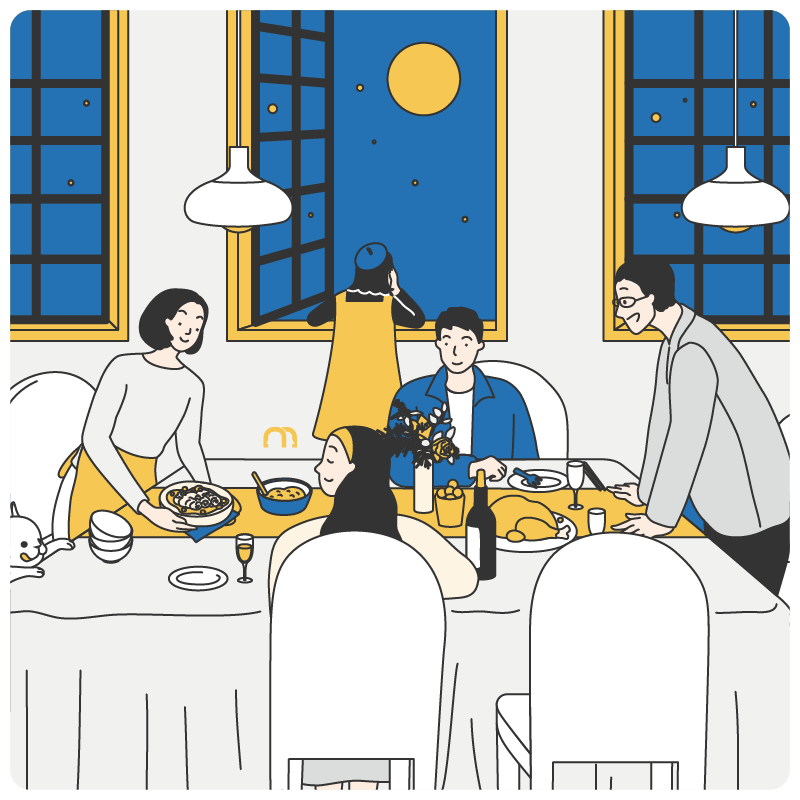
Family gatherings are an important part of Chinese social life, and food is often at the centre of these occasions. Families may come together for birthdays, holidays, weddings, or simply to have a meal and catch up.
Shared meals provide an opportunity for different generations to spend time together, particularly when family members live in different places.
Sharing Food at the Table
In many Chinese dining settings, dishes are placed in the centre of the table and shared by everyone rather than each person ordering a completely separate meal.
This style of dining makes meals naturally social. Family members can:
-
Share different dishes
-
Serve food to one another
-
Talk about work or school
-
Catch up on family news
-
Celebrate important occasions
For children and younger family members, these meals can also be an opportunity to spend time with grandparents and other relatives they may not see every day.
Family Reunion
A particularly useful Chinese word is 团圆 (tuányuán), meaning reunion or family reunion.
The idea of family reunion is especially important during major festivals. For example, the Lunar New Year reunion dinner is traditionally one of the most important meals of the year for many families.
Family members may travel long distances to return home and celebrate together. This is one reason the Lunar New Year period is associated with such a large amount of travel across China.
Chinese Family Traditions & Festivals
Traditional festivals provide some of the most important opportunities for families to come together. While the celebrations themselves have different histories and customs, many involve the same underlying idea: spending time with family and maintaining relationships across generations.
Lunar New Year
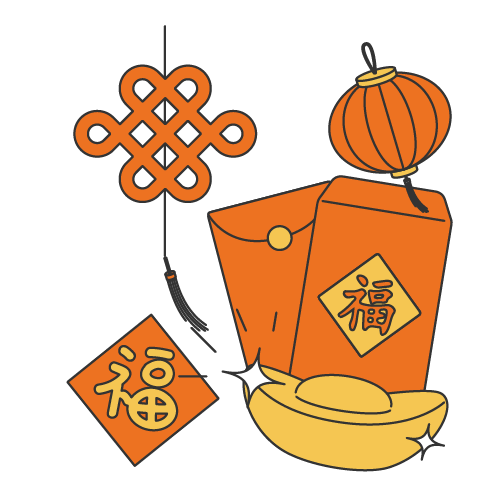
Lunar New Year is perhaps the most important family celebration in the Chinese calendar.
Families may travel home for a 团圆饭 (tuányuánfàn), or reunion dinner, on New Year’s Eve. Relatives gather to eat together, exchange good wishes and celebrate the beginning of a new year.
For families who live in different cities, this can be one of the few times each year when everyone is able to return home.
Qingming Festival
Qingming Festival (清明节, Qīngmíng Jié) has a different focus. Families traditionally use this time to remember and honour deceased relatives and ancestors.
Some families visit ancestral graves, clean the area and make offerings. The festival reflects the importance that traditional Chinese culture has placed on remembering previous generations.
Mid-Autumn Festival
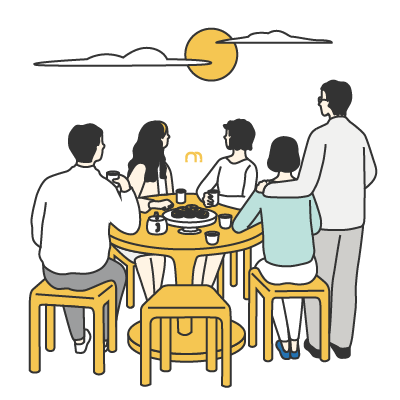
The Mid-Autumn Festival (中秋节, Zhōngqiū Jié) is also strongly associated with family reunion.
Families may gather for a meal, admire the moon and share mooncakes (月饼, yuèbǐng).
The round shape of the moon and mooncakes has traditionally been associated with completeness and reunion, making the festival particularly fitting for family gatherings.
You can also learn about Mid-Autumn Festival in our dedicated guide.
Chinese Family Vocabulary
One of the most useful things about learning Chinese family vocabulary is that Chinese often has more specific words for relatives than English does. Instead of simply saying “uncle” or “grandmother,” the Chinese term can tell you which side of the family the person is from or whether they are older or younger.
Common Chinese Family Words
| chinese | pinyin | english |
|---|---|---|
| 家庭 | jiātíng | family |
| 家 | jiā | home / family |
| 父母 | fùmǔ | parents |
| 爸爸 | bàba | father |
| 妈妈 | māma | mother |
| 儿子 | érzi | son |
| 女儿 | nǚ’ér | daughter |
| 哥哥 | gēge | older brother |
| 弟弟 | dìdi | younger brother |
| 姐姐 | jiějie | older sister |
| 妹妹 | mèimei | younger sister |
| 爷爷 | yéye | paternal grandfather |
| 奶奶 | nǎinai | paternal grandmother |
| 外公 | wàigōng | maternal grandfather |
| 外婆 | wàipó | maternal grandmother |
| 孩子 | háizi | child |
| 丈夫 / 老公 | zhàngfu / lǎogōng | husband |
| 妻子 / 老婆 | qīzi / lǎopó | wife |
Why Are There So Many Different Words?
In English, both your mother’s brother and your father’s brother are your “uncle.” In Chinese, there are different terms depending on the relationship.
For example:
- 伯伯 (bóbo) — father’s older brother
- 叔叔 (shūshu) — father’s younger brother
- 舅舅 (jiùjiu) — mother’s brother
- 姑姑 (gūgu) — father’s sister
- 阿姨 (āyí) — mother’s sister
There are even more specific terms depending on the relative’s exact relationship and age.
You don’t need to memorise every family term immediately. For beginners, learning the most common words for parents, siblings and grandparents is a good starting point.
你家有几口人?
Nǐ jiā yǒu jǐ kǒu rén?
How many people are there in your family?
你有兄弟姐妹吗?
Nǐ yǒu xiōngdì jiěmèi ma?
Do you have any brothers or sisters?
你跟父母一起住吗?
Nǐ gēn fùmǔ yìqǐ zhù ma?
Do you live with your parents?
你家人住在哪里?
Nǐ jiārén zhù zài nǎlǐ?
Where does your family live?