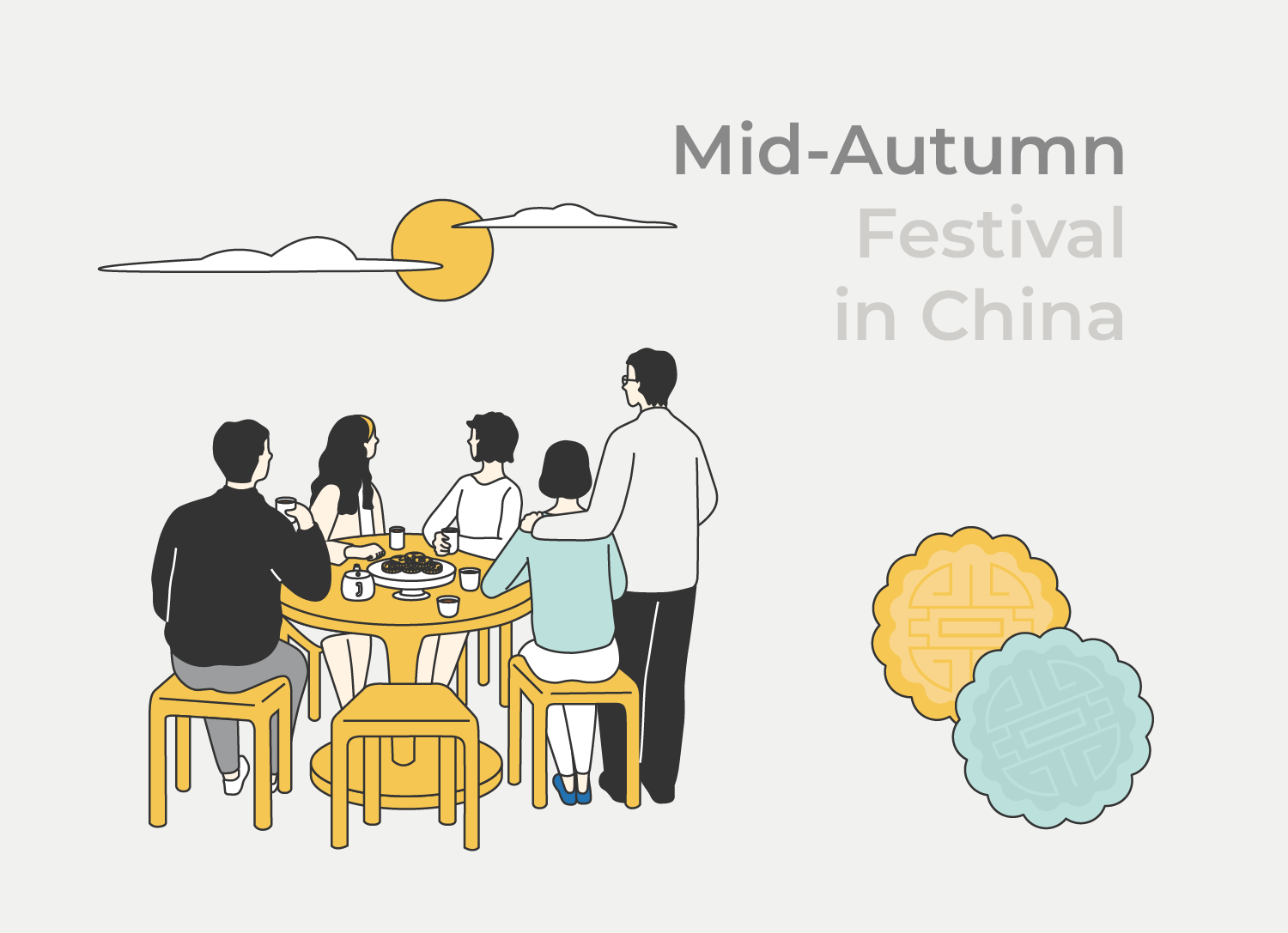
The Mid-Autumn Festival (中秋节, Zhōngqiū Jié) is one of the most important traditional festivals in Chinese culture. It is celebrated on the 15th day of the eighth month of the traditional Chinese lunar calendar, when the moon is traditionally at its fullest.
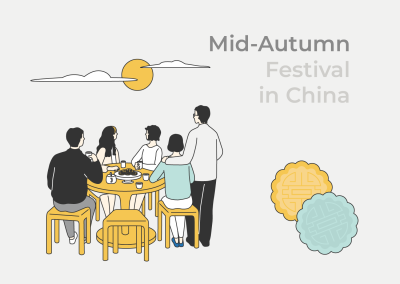
The festival is closely associated with the full moon, family reunion and harvest. Families and friends may gather for meals, admire the moon, exchange mooncakes and enjoy lantern displays.
The Mid-Autumn Festival is also known as the Moon Festival. Alongside its traditions, the celebration is connected to several well-known stories from Chinese mythology, including the legend of Chang’e (嫦娥), who is said to live on the moon.
While the festival has ancient roots, the way it is celebrated continues to evolve. Traditions can vary between regions, families and communities, but the themes of reunion, togetherness and the moon remain central.
Key Takeaways
- The Mid-Autumn Festival is called 中秋节 (Zhōngqiū Jié) in Chinese
- It takes place on the 15th day of the eighth month of the lunar calendar
- The festival is also known as the Moon Festival
- The full moon traditionally represents completeness and family reunion
- Mooncakes (月饼, yuèbǐng) are one of the festival’s most recognizable traditions
- The legend of Chang’e is closely associated with the festival and the moon
- Other traditions include moon viewing, lanterns, family gatherings and sharing seasonal foods
What Is the Mid-Autumn Festival?
The Mid-Autumn Festival (中秋节, Zhōngqiū Jié) is a traditional Chinese festival centered around the full moon, family reunion and the autumn harvest.
The name itself provides a clue to its timing. 中秋 (Zhōngqiū) means “mid-autumn”, referring to the middle of the autumn season. The festival falls on the 15th day of the eighth month in the traditional Chinese lunar calendar.
The full moon has an important symbolic meaning during the festival. Its round shape is associated with completeness, unity and reunion, making it a particularly meaningful time for families to come together.
People celebrate in different ways depending on where they live and their family traditions. Common activities include sharing a meal, eating mooncakes, admiring the moon and carrying or displaying lanterns.
The festival is celebrated across mainland China and other Chinese-speaking communities, as well as in several parts of East and Southeast Asia. Customs and foods can vary considerably between regions.
中秋节
Zhōngqiū Jié
Mid-Autumn Festival
When Is the Mid-Autumn Festival?
Unlike holidays that fall on the same Gregorian calendar date every year, the Mid-Autumn Festival changes dates annually.
It is celebrated on the 15th day of the eighth month of the traditional Chinese lunar calendar. This usually falls in September or October on the Gregorian calendar.
The festival is traditionally associated with the full moon, so the date is determined according to the lunar calendar rather than a fixed date on the Western calendar.
| year | mid-autumn festival |
|---|---|
| 2026 | September 25 |
| 2027 | September 15 |
| 2028 | October 3 |
| 2029 | September 22 |
| 2030 | September 12 |
What Is the History of the Mid-Autumn Festival?
The Mid-Autumn Festival has a long history, but there is no single event that can be identified as its exact beginning.
Its development is connected to older traditions surrounding the autumn harvest and the moon. Seasonal rituals and celebrations gave people opportunities to express gratitude for the harvest and mark an important point in the agricultural year.
Over time, these traditions developed into more formal celebrations. The festival became increasingly associated with family gatherings, moon viewing and the idea of reunion.
Different periods of Chinese history contributed to the traditions we recognize today. Stories, foods and customs associated with the festival continued to develop and spread across different regions.
This is why the Mid-Autumn Festival should not be understood as one tradition that has remained completely unchanged for thousands of years. Instead, it is a celebration whose customs have evolved over time while retaining some central themes, particularly the moon, family and togetherness.
The Legend of Chang’e and the Moon
One of the best-known stories associated with the Mid-Autumn Festival is the legend of Chang’e (嫦娥, Cháng’é), a mythical figure said to live on the moon.
There are several versions of the story, with details changing between different texts and traditions. The most widely known version centers on Chang’e and her husband, Hou Yi (后羿, Hòu Yì).
后羿
Hòu Yì
Hou Yi
Who Was Chang’e?
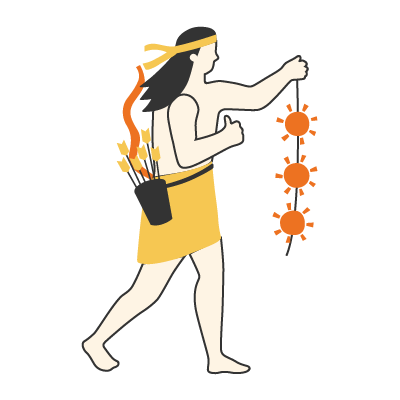
According to the legend, Hou Yi was a skilled archer who helped save the world from a series of scorching suns. After completing his heroic task, he received an elixir of immortality.
The story then takes a tragic turn.
In one well-known version, Chang’e took the elixir to prevent it from falling into the hands of someone who wanted to steal it. After drinking it, she became immortal and was carried away to the moon.
There, she was separated from Hou Yi.
The story is often interpreted as one of love, separation and longing, which helps explain its connection with the Mid-Autumn Festival and the tradition of looking at the moon while thinking of loved ones.
Why Is Chang’e Connected to the Mid-Autumn Festival?
The moon is at the centre of the Mid-Autumn Festival, and Chang’e is one of the most famous figures associated with the moon in Chinese mythology.
According to the legend, Hou Yi could see Chang’e on the moon but could not be reunited with her. This idea of separation and longing became closely connected with the festival’s broader theme of family reunion.
The story also helps explain why the moon is such a powerful cultural symbol during the festival. Families may gather under the full moon while remembering relatives who are far away.
Chang’e is not the only moon-related figure in Chinese mythology, but her story has become particularly strongly associated with the Mid-Autumn Festival.
If you’d like to explore more stories and legendary figures from Chinese tradition, see our guide to Chinese mythology.
Why Is the Moon Important During the Mid-Autumn Festival?
The full moon is one of the most recognizable symbols of the Mid-Autumn Festival.
Its round shape is traditionally associated with completeness and reunion. This makes the full moon particularly meaningful during a festival that places such a strong emphasis on family.
The idea of reunion is reflected in the Chinese word 团 (tuányuán), meaning “reunion” or “family togetherness”. During the festival, families may make an effort to gather together for a meal, share mooncakes and spend time looking at the moon.
For people who cannot be together, the moon can also represent a connection between loved ones who are far apart.
This symbolism is one reason the Mid-Autumn Festival is about more than simply celebrating the arrival of autumn. It is also a time to appreciate family, relationships and togetherness.
Why Do People Eat Mooncakes?
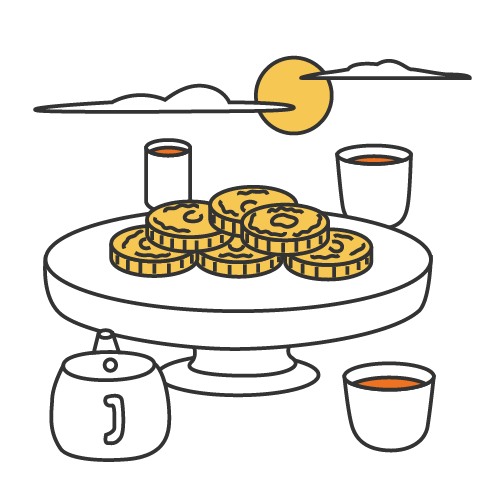
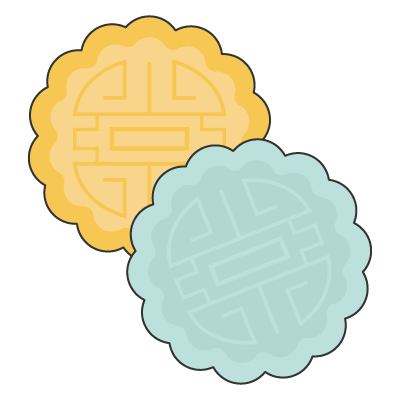
Mooncakes (月饼, yuèbǐng) are perhaps the most recognizable food associated with the Mid-Autumn Festival.
They are traditionally round or oval pastries with a rich filling inside. Their shape is closely connected to the full moon, while sharing them with family and friends reflects the festival’s themes of reunion and togetherness.
Mooncakes can contain a wide variety of fillings. Some of the most traditional include:
- Lotus seed paste
- Red bean paste
- Salted egg yolks
- Mixed nuts and seeds
Different regions have developed their own styles, so there is no single type of mooncake that represents the entire country.
Modern mooncakes can also include more contemporary flavors, such as custard, chocolate, fruit and ice cream. These newer varieties have become particularly popular with younger consumers.
月饼
yuèbǐng
mooncake(s)
What Do Mooncakes Symbolize?
The round shape of a mooncake is one of its most important cultural features.
The circle is associated with completeness and reunion, echoing the symbolism of the full moon. Sharing a mooncake therefore becomes more than simply eating a seasonal food — it can represent spending time together and wishing loved ones well.
Mooncakes are also commonly given as gifts during the festival. People may exchange them with relatives, friends, colleagues and business partners.
This has made mooncakes an important part of both family celebrations and modern seasonal gift-giving.
Types of Mooncakes
Mooncakes vary significantly across China, with different regions developing their own pastry styles and fillings.
Cantonese Mooncakes
Cantonese-style mooncakes are among the best-known varieties outside China.
They typically have a thin, soft pastry crust surrounding a rich filling. Common fillings include lotus seed paste, red bean paste and salted egg yolk.
The salted egg yolk is traditionally said to resemble the full moon when the mooncake is cut open.
Suzhou-Style Mooncakes
Suzhou-style mooncakes are known for their flaky pastry rather than the softer crust associated with Cantonese mooncakes.
They can contain both sweet and savory fillings, reflecting the broader diversity of Chinese regional cuisine.
Snowy Mooncakes
Snowy mooncakes (冰皮月饼, bīngpí yuèbǐng) have a soft, pale outer layer and are usually served chilled.
Unlike traditional baked mooncakes, they are not typically baked in the same way. Their softer texture and modern presentation have made them particularly popular in many places.
Modern Mooncakes
Today, mooncakes can be surprisingly creative.
Modern versions may include flavors such as:
- Custard
- Chocolate
- Matcha
- Coffee
- Fruit
- Ice cream
These newer styles show how traditional festival foods continue to evolve while remaining connected to the symbolism of the Mid-Autumn Festival.
Mid-Autumn Festival Traditions
Mooncakes are only one part of the celebration. Across China and other communities, people observe the Mid-Autumn Festival through a range of traditions.
Family Reunions
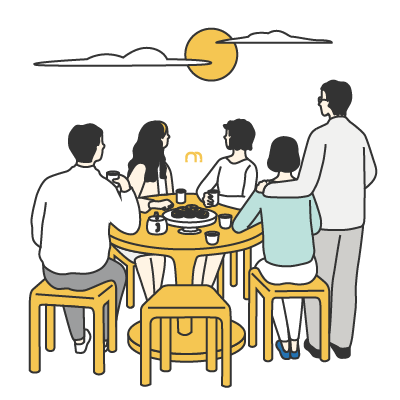
Family is at the heart of the festival.
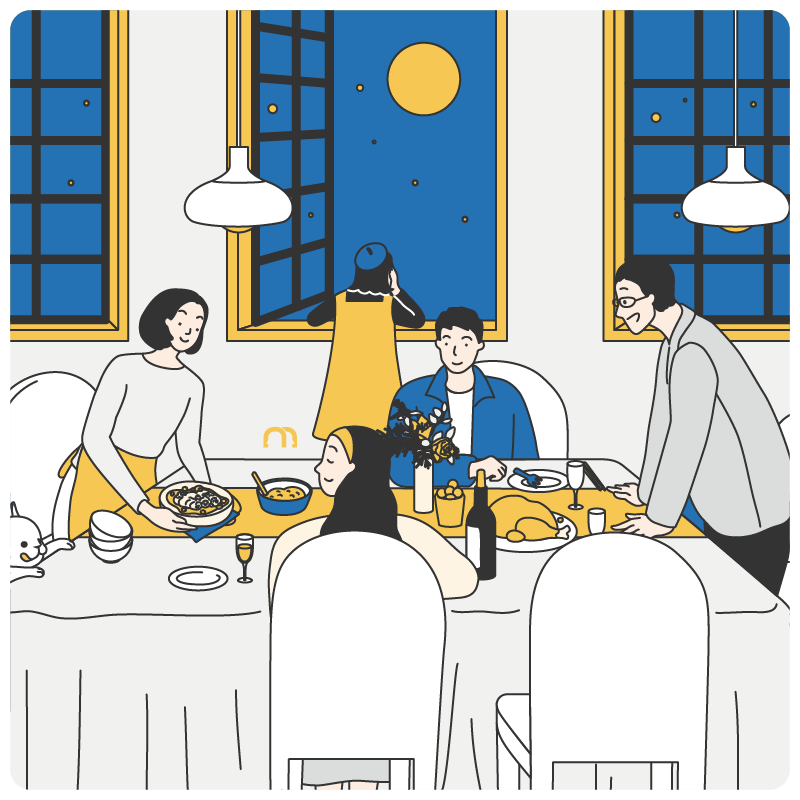
People may travel home to have a meal with their relatives, particularly when family members live in different cities.
The emphasis on reunion is closely connected to the symbolism of the full moon and the idea of 团 (tuányuán).

Moon Viewing
赏月 (shǎngyuè) means “admiring the moon” and is a traditional Mid-Autumn Festival activity. Families and friends may spend time outdoors looking at the full moon, talking and sharing food.
In some places, public spaces and parks also hold evening celebrations or cultural events centred around the moon.
Lanterns
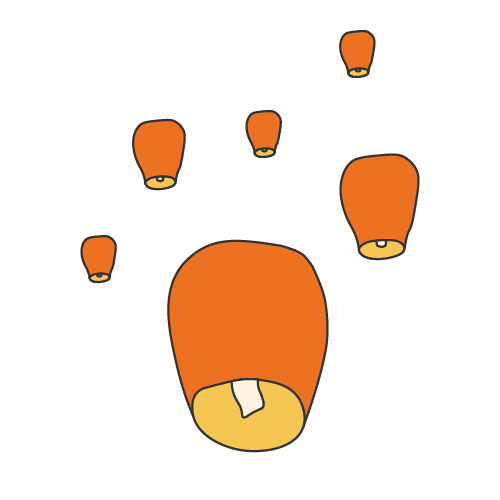
Lanterns are another familiar part of Mid-Autumn Festival celebrations.
Children may carry colourful lanterns, while communities can create larger lantern displays or installations.
Lantern traditions vary considerably between regions, so the way they are used during the festival is not the same everywhere.
Sharing Food
Food plays an important role in family celebrations.
Alongside mooncakes, families may prepare a larger meal and share seasonal fruit, tea and regional dishes.
The emphasis is often less on one specific menu and more on sharing food and spending time together.
How Is the Mid-Autumn Festival Celebrated Around China?
There is no single way to celebrate the Mid-Autumn Festival across China. Customs can vary depending on the region, local culture and individual family traditions.
Hong Kong
In Hong Kong, Mid-Autumn celebrations often include lantern displays, mooncakes, family gatherings and public events.
Large lantern installations can be found in parks and public spaces, while families may gather for meals and exchange mooncakes.
Guangdong
In Guangdong, Cantonese-style mooncakes are particularly well known.
Families may celebrate with a meal, moon-viewing and traditional seasonal foods. Local customs can differ between cities and communities.
Shanghai
In Shanghai and surrounding areas, families may celebrate with meals, mooncakes and other regional foods.
Suzhou-style mooncakes, known for their flaky pastry, are also associated with the wider Jiangnan region.
Beijing
In Beijing, the festival is commonly marked by family gatherings, mooncakes and cultural events.
As in other parts of China, the exact traditions followed can depend on individual families and communities.
These examples highlight an important point: Chinese festival traditions are not identical everywhere. Regional foods, local customs and family practices all contribute to how the Mid-Autumn Festival is experienced.
Mid-Autumn Festival Foods
Mooncakes may be the festival’s most famous food, but they are not the only seasonal foods associated with the celebration.
Pomelo
Pomelo (柚子, yòuzi) is enjoyed in some regions during the Mid-Autumn Festival.
Its round shape can also fit with the festival’s broader symbolism of completeness and reunion.
Seasonal Fruit
Families may share seasonal fruit while gathering together for the festival. The exact foods vary depending on the region and what is locally available.
Tea
Tea is often served alongside mooncakes.
The bitterness of tea can complement the rich sweetness of many mooncakes, making the two a natural pairing during festival gatherings.
It is important to remember that there is no single Mid-Autumn Festival menu followed throughout China. Food traditions differ significantly between regions and families.
Useful Chinese Vocabulary for the Mid-Autumn Festival
Learning a few festival-related words can make it easier to understand Chinese conversations, decorations and greetings during the Mid-Autumn Festival.
| chinese | pinyin | english |
|---|---|---|
| 中秋节 | Zhōngqiū Jié | Mid-Autumn Festival |
| 月亮 | yuèliang | moon |
| 满月 | mǎnyuè | full moon |
| 月饼 | yuèbǐng | mooncake |
| 灯笼 | dēnglóng | lantern |
| 团圆 | tuányuán | family reunion |
| 嫦娥 | Cháng’é | Chang’e |
| 秋天 | qiūtiān | autumn |
| 丰收 | fēngshōu | harvest |
| 赏月 | shǎngyuè | to admire the moon |
中秋快乐!
Zhōngqiū Kuàilè!
Happy Mid-Autumn Festival!
You may hear or see this greeting during the festival, particularly in messages, cards and social media posts.