Chinese New Year, also known as the Spring Festival (春节, Chūnjié), is one of the most important celebrations in Chinese culture. It marks the beginning of a new year according to the traditional Chinese lunisolar calendar and is a time for family reunions, festive food, good wishes and celebrations.
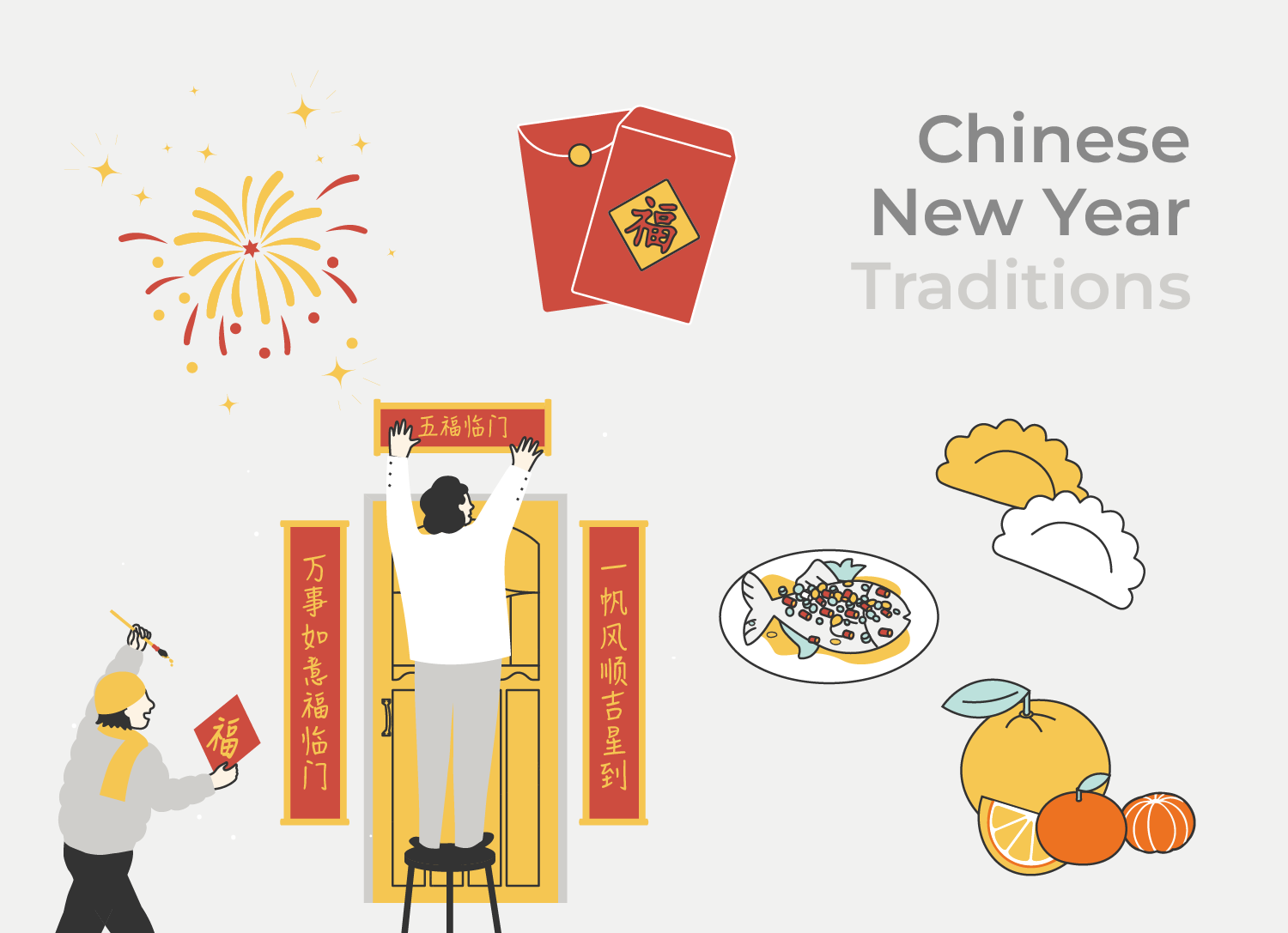
During the holiday, homes and businesses are decorated with red banners and auspicious symbols, families gather for reunion meals, and red envelopes are exchanged. Traditional foods are also an important part of the celebration, with dishes chosen not only for their taste but also for their symbolic meanings.
While many Chinese New Year customs have been passed down for generations, celebrations today can look very different depending on the family, region and generation. Some people closely follow traditional customs, while others celebrate in more modern ways.
In this guide, we’ll explore the most important Chinese New Year traditions, foods, decorations, superstitions and celebrations, as well as some useful Mandarin vocabulary to help you understand the festival.
Key Takeaways
- Chinese New Year is also called 春节 (Chūnjié), or Spring Festival.
- The date changes each year because it follows the traditional Chinese calendar.
- Family reunion is one of the central themes of Chinese New Year.
- The reunion dinner (年夜饭, niányèfàn) is an important New Year’s Eve tradition.
- Red envelopes (红包, hóngbāo) are traditionally given as gifts carrying good wishes and good fortune.
- Red decorations and auspicious characters such as 福 (fú) are common during the festival.
- Foods such as fish, dumplings and rice cakes have symbolic meanings connected with prosperity, abundance or progress.
- Firecrackers and fireworks have long been associated with New Year celebrations, although their use varies today.
- The Chinese zodiac follows a repeating 12-animal cycle.
What Is Chinese New Year?
Chinese New Year is commonly known in Chinese as 春节 (Chūnjié), meaning “Spring Festival.” It marks the beginning of the new year according to the traditional Chinese calendar and is one of the most important holidays in China.
Although it is often called “Chinese New Year” in English, the celebration is part of a wider tradition of New Year festivals observed by Chinese communities around the world. The term Lunar New Year is also sometimes used, although this is a broader term that can refer to New Year celebrations in several Asian cultures.
For many people in China, Spring Festival is much more than a single day. It is a period associated with:
- Returning home to see family
- Sharing meals
- Giving gifts and red envelopes
- Decorating homes
- Visiting relatives and friends
- Making wishes for the year ahead
- Taking part in traditional celebrations
A Festival of New Beginnings
The idea of a fresh start is central to many Chinese New Year customs.
Families may clean and decorate their homes before the festival, buy new clothes and prepare special foods. Red decorations and auspicious phrases are used to create a festive atmosphere and express wishes for good fortune in the coming year.
The holiday is also closely connected with family reunion. For people who study or work away from their hometowns, Chinese New Year can be an important opportunity to return home and spend time with parents, grandparents and other relatives.
This emphasis on reunion is reflected in the Chinese word 团圆 (tuányuán), meaning “reunion” or “family reunion.”
Learn more about Chinese family culture in our guide here.
When Is Chinese New Year?
Unlike January 1 on the Gregorian calendar, Chinese New Year falls on a different date each year.
The date is determined by the traditional Chinese lunisolar calendar and generally falls between late January and February on the Gregorian calendar.
This means that if you’re planning to travel to China or want to know when celebrations will take place in a particular year, it’s important to check the date rather than assuming Chinese New Year always falls on the same day.

How Long Does Chinese New Year Last?
Chinese New Year is not simply a one-day celebration.
The Spring Festival period includes several days of celebrations, family visits and traditional activities. The festive period traditionally leads toward the Lantern Festival (元宵节, Yuánxiāo Jié), celebrated on the 15th day of the first month of the traditional calendar.
Different families and regions may observe different customs throughout this period.
For many people, however, the most important moments are concentrated around New Year’s Eve and the first few days of the new year, when families gather, exchange greetings and celebrate together.
Preparing for Chinese New Year
The celebrations don’t begin on New Year’s Eve. In many families, preparations start days or even weeks beforehand.
Getting ready for the new year can involve cleaning the home, buying new clothes, preparing food and putting up decorations. These customs are connected with the idea of leaving the old year behind and welcoming a fresh start.
Cleaning the Home
One traditional custom is to thoroughly clean the home before Chinese New Year.
This can be seen as a way of clearing away the old and preparing for the new year. Families may clean, organise and decorate their homes before the celebrations begin.
There is also a traditional belief that cleaning during the first days of the new year should be avoided. The idea is that sweeping or throwing things away could symbolically sweep away good fortune.
This is a good example of a Chinese New Year custom that falls somewhere between tradition and superstition. Some families follow it carefully, while others treat it simply as an old custom.
Buying New Clothes
Wearing new clothes is another traditional part of preparing for the new year.
New clothes can represent renewal and a fresh beginning. Red clothing is especially popular because red is strongly associated with happiness, celebration and good fortune.
Today, however, what people wear for Chinese New Year varies widely. Some people dress traditionally, while others simply wear something new or dress up for family gatherings.
Decorating the Home
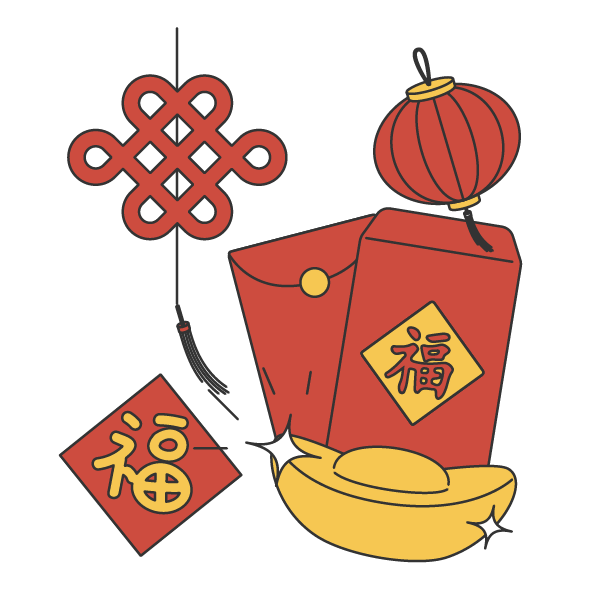
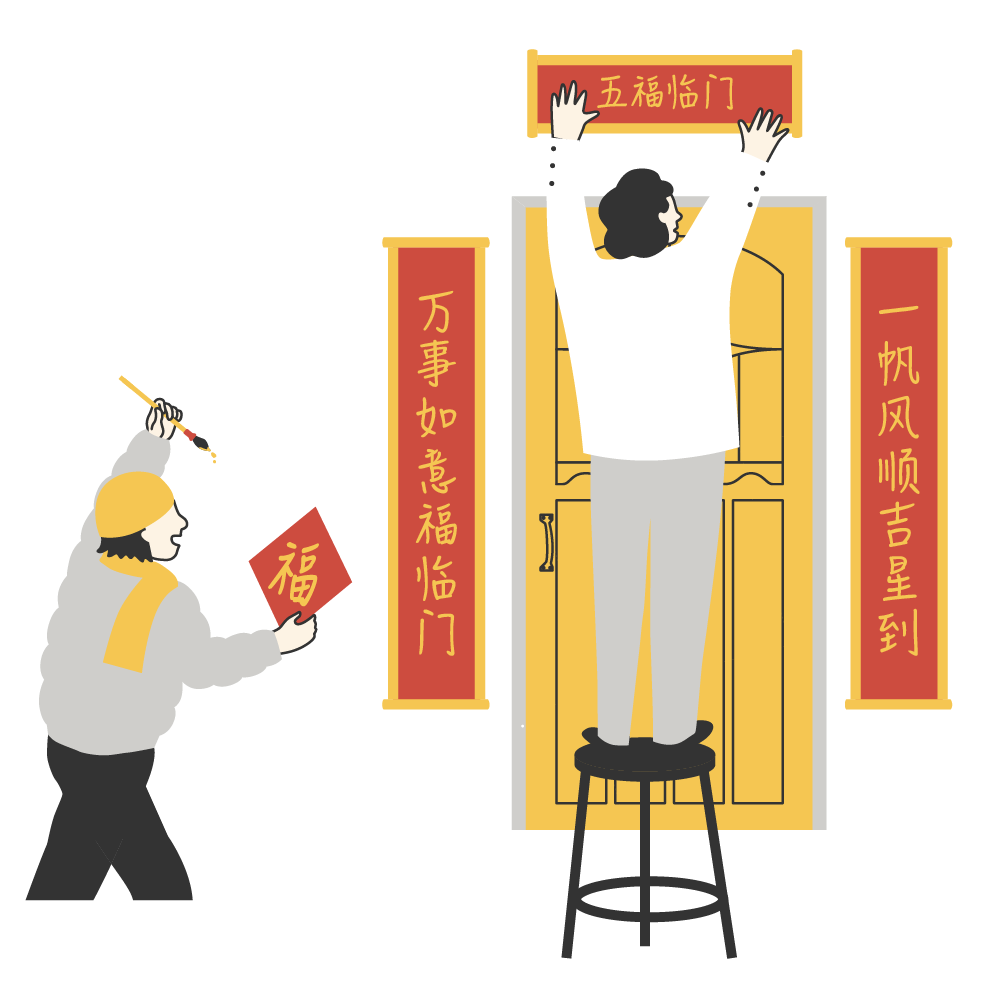
Once the cleaning is finished, homes may be decorated with red paper decorations, flowers, lanterns and auspicious characters.
One of the most recognisable is:
福 (fú) — good fortune/blessing
You may also see 春联 (chūnlián), or red couplets, placed around doors. These contain traditional phrases expressing wishes for happiness, prosperity and good fortune.
The decorations help create a festive atmosphere while also expressing good wishes for the year ahead.
Check out our guide to the luckiest things in Chinese culture here.
Chinese New Year’s Eve & the Reunion Dinner
For many families, New Year’s Eve is one of the most important moments of the entire Chinese New Year period. It is traditionally a time for family members to come together for a large meal known as 年夜饭 (niányèfàn), or the New Year’s Eve reunion dinner.
The word 年夜饭 literally refers to the special meal eaten on New Year’s Eve, while 团圆 (tuányuán) means reunion. Together, these ideas capture one of the central themes of Chinese New Year: bringing family members together to welcome the new year.
Returning Home for Chinese New Year
Because family reunion is such an important part of the holiday, many people travel back to their hometowns during the Spring Festival period.
Students may return home from university, while people working in large cities may travel back to see their parents and grandparents.
This creates one of the busiest travel periods of the year in China, known as 春运 (Chūnyùn), or the Spring Festival travel period.
For some people, the journey home is almost as much a part of the experience as the celebrations themselves.
What Happens at the Reunion Dinner?
The exact dishes served depend on the family’s region and traditions, but a New Year’s Eve dinner may include a variety of shared dishes placed in the centre of the table.
Common foods include:
- Fish
- Dumplings
- Rice cakes
- Meat dishes
- Vegetables
- Spring rolls
- Fruit
Many of these foods have symbolic meanings, which we’ll explore in the next section.
The meal is not simply about eating. It is an opportunity for relatives to catch up, exchange good wishes and spend time together.
For families whose members live in different cities, the reunion dinner can be particularly meaningful because it may be one of the few times each year when everyone is able to sit around the same table.
Staying Up for the New Year
Another traditional practice is 守岁 (shǒusuì), which refers to staying awake through New Year’s Eve and into the new year.
Historically, this was associated with watching over the transition from the old year to the new one. Today, people may stay up to talk with family, watch television, use their phones, play games or simply enjoy the celebrations together.
As with many Chinese New Year traditions, the way people observe 守岁 varies between families and generations.
Chinese New Year Food & Their Meanings
Food is one of the most important parts of Chinese New Year celebrations. Many families prepare special dishes not only because they are delicious, but because certain foods are associated with good fortune, prosperity, longevity or family reunion.
These meanings can come from the food’s shape, appearance, cultural history or, particularly interestingly, the way its Chinese name sounds.
Fish: Abundance
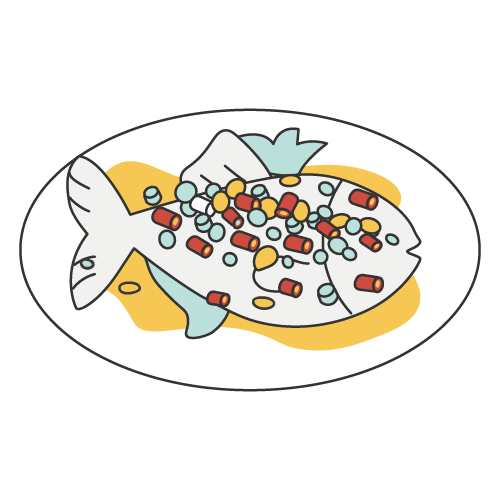
鱼 (yú), meaning “fish,” is one of the most popular New Year foods.
The reason is partly a piece of Chinese wordplay. 鱼 (yú) sounds like 余 (yú), which can refer to having something left over or having a surplus.
This connects fish with the idea of having abundance year after year.
A common New Year expression is:
年年有余
niánnián yǒu yú
This can be understood as a wish for “abundance every year.”
Fish is therefore often served during New Year meals as a symbol of prosperity and having enough to spare.
Dumplings: Wealth & Prosperity
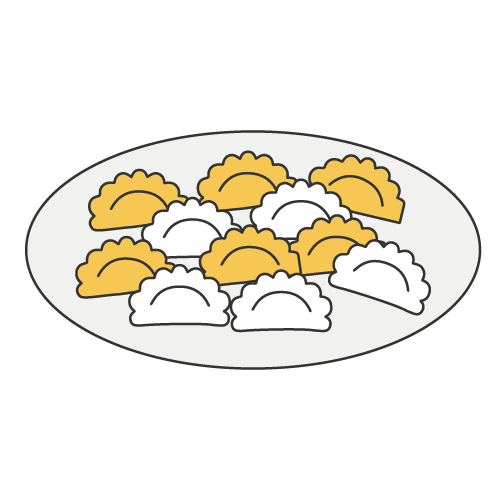
饺子 (jiǎozi) are another popular Chinese New Year food, particularly in northern China.
Their shape is sometimes compared with traditional Chinese gold or silver ingots, giving them an association with wealth and prosperity.
Families may make dumplings together, making the preparation itself part of the celebration.
Rice Cakes: Progress & Growth
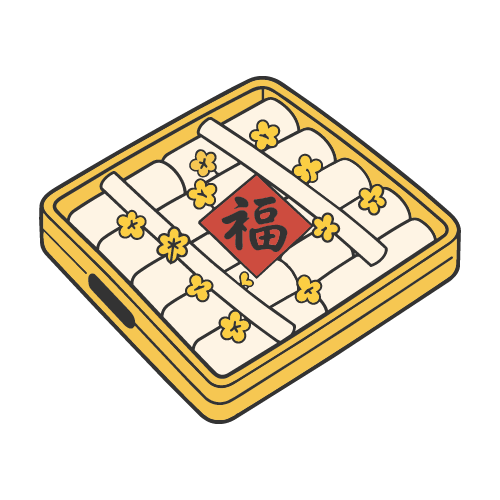
年糕 (niángāo) is a type of sticky rice cake traditionally eaten during Chinese New Year.
The name provides another example of Chinese wordplay. 年糕 (niángāo) sounds similar to 年高 (niángāo), which can be understood as “higher year.”
As a result, 年糕 can represent hopes for growth, improvement and progress in the coming year.
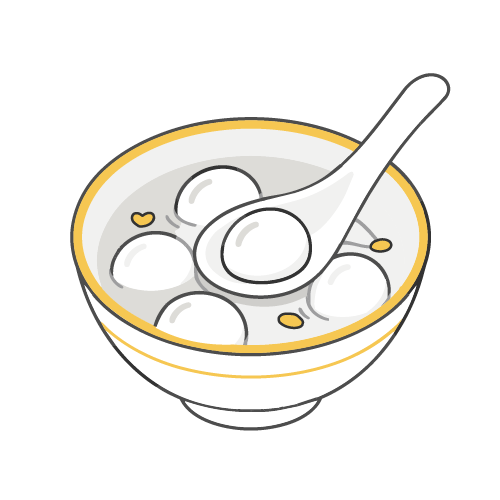
Tangyuan: Reunion
汤圆 (tāngyuán) are round glutinous rice balls, usually served in a sweet soup.
Their round shape is associated with completeness and reunion, making them especially appropriate for family celebrations.
The word 团圆 (tuányuán) means reunion, particularly family reunion, and the round shape of 汤圆 echoes this idea.
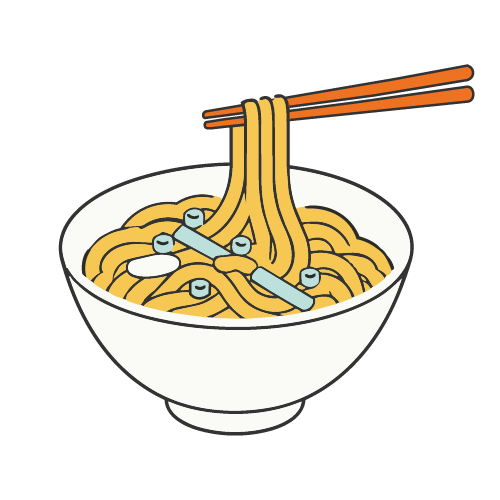
Long Noodles: Longevity
Long noodles (长命面 chángmìngmiàn) can be associated with long life and longevity.
Because of this, they may be served during birthdays as well as festive occasions.
The traditional idea is simple: the longer the noodle, the longer the life. For this reason, people may try not to cut the noodles while eating them.
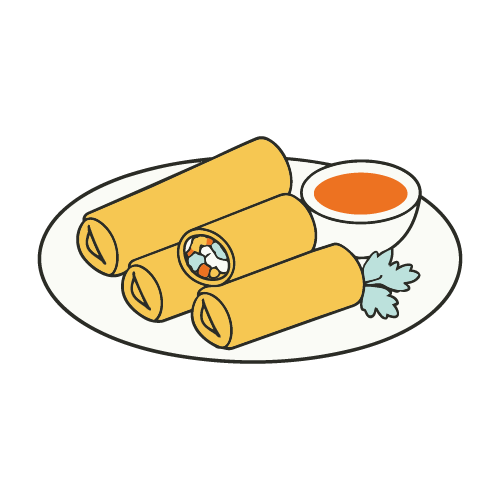
Spring Rolls: Wealth & Renewal
春卷 (chūnjuǎn), or spring rolls, are particularly associated with spring and the arrival of the new year.
Their golden colour and shape can also evoke traditional gold bars or wealth, giving them an association with prosperity.
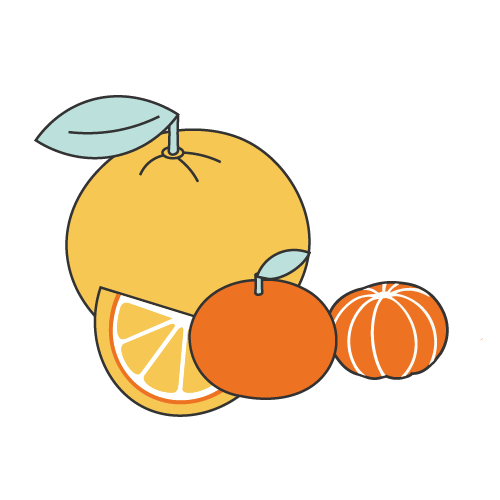
Oranges and Tangerines: Good Fortune
Oranges and tangerines are popular during the Chinese New Year period because of their bright colour, round shape and auspicious associations.
Some varieties also have names or pronunciations that connect them with ideas of good fortune.
You may see citrus fruits displayed in homes or given as gifts during the holiday.
Red Envelopes & Lucky Money
One of the most recognisable Chinese New Year traditions is giving red envelopes (红包, hóngbāo) containing money. During the holiday, adults may give them to children, younger relatives and other family members as a way of sharing good wishes for the year ahead.
The money is often called 压岁钱 (yāsuìqián), or “New Year’s money.” Traditionally, it is associated with protection, good fortune and blessings for the coming year.
Why Are Red Envelopes Red?
The colour red is strongly associated with:
- Good fortune
- Happiness
- Celebration
- Prosperity
- Positive energy
This is why red appears throughout Chinese New Year celebrations, from clothing and decorations to envelopes and paper couplets.
The envelope itself is therefore part of the symbolism. Giving someone a red envelope is not simply about giving them money — it is a way of expressing good wishes for the new year.
Who Gives Red Envelopes?
Traditionally, married adults may give red envelopes to children and younger family members. However, customs vary between families, and red envelopes can also be given in other social situations.
The amount of money can also vary depending on the relationship and circumstances.
An important part of the tradition is choosing an auspicious amount. Certain numbers are considered more fortunate than others, while numbers associated with negative meanings may be avoided.
Digital Red Envelopes
The tradition has also moved into the digital world.
微信红包 (Wēixìn hóngbāo) are digital red envelopes sent through WeChat. Friends, relatives and colleagues can send money electronically, sometimes to individuals and sometimes through group chats.
This is a good example of how Chinese New Year traditions have adapted to modern life. The traditional red envelope remains, but the way people give it has changed.
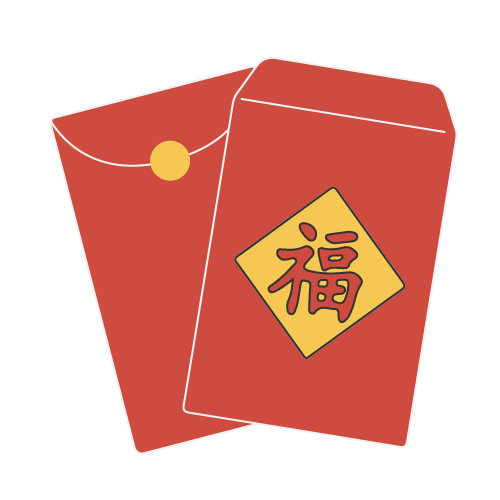
Why Is Red Lucky in Chinese New Year?
If you’ve ever seen Chinese New Year decorations, you’ve probably noticed that red is the dominant colour. Red clothing, red envelopes, red lanterns and red paper decorations are all common during the festival.
In Chinese culture, red is traditionally associated with happiness, celebration, good fortune and auspiciousness. This makes it a natural choice for a festival centred around welcoming a new year and wishing for a positive year ahead.
The Legend of Nian
One popular traditional story connects the colour red with a mythical creature called 年 (Nián).
According to the legend, Nian was a frightening creature that appeared around the New Year and threatened villages. People eventually discovered that it was frightened by loud noises, fire and the colour red.
The story is one traditional explanation for customs such as using red decorations, lighting fireworks and making loud noises during New Year celebrations.

Firecrackers & Fireworks
Firecrackers and fireworks have long been associated with Chinese New Year celebrations. The loud sounds are traditionally connected with driving away bad luck and welcoming the new year.
This tradition is also linked to the popular story of Nian. As explained above, the mythical creature is said to be frightened by loud noises, fire and the colour red.
Why Are Firecrackers Used?
In traditional celebrations, firecrackers were set off to create loud sounds and mark the arrival of the new year.
Over time, fireworks and firecrackers also became an important part of the festive atmosphere. The sounds and bright displays can signal that the celebrations have begun and bring people together to celebrate.
The Chinese word for firecrackers is:
鞭炮
biānpào
Fireworks are:
烟花
yānhuā

Chinese Zodiac Animals
The Chinese zodiac (生肖, shēngxiào) is another important part of Chinese New Year culture. It is based on a repeating cycle of 12 animals, with each animal representing a different year.
The 12 zodiac animals are:
- Rat (鼠, shǔ)
- Ox (牛, niú)
- Tiger (虎, hǔ)
- Rabbit (兔, tù)
- Dragon (龙, lóng)
- Snake (蛇, shé)
- Horse (马, mǎ)
- Goat (羊, yáng)
- Monkey (猴, hóu)
- Rooster (鸡, jī)
- Dog (狗, gǒu)
- Pig (猪, zhū)
After the 12th animal, the cycle starts again.
If you want to learn more about the Chinese Zodiac, we have a guide here for you to check out!

Chinese New Year Vocabulary
If you’re learning Mandarin, Chinese New Year is a great opportunity to learn vocabulary that you’ll hear and see repeatedly during the festival.
| chinese | pinyin | english |
|---|---|---|
| 春节 | Chūnjié | Chinese New Year / Spring Festival |
| 除夕 | Chúxī | New Year’s Eve |
| 新年 | xīnnián | new year |
| 团圆 | tuányuán | reunion |
| 年夜饭 | niányèfàn | reunion dinner |
| 红包 | hóngbāo | red envelope |
| 福 | fú | good fortune / blessing |
| 好运 | hǎoyùn | good luck |
| 鞭炮 | biānpào | firecrackers |
| 烟花 | yānhuā | fireworks |
| 灯笼 | dēnglóng | lantern |
| 饺子 | jiǎozi | dumplings |
| 鱼 | yú | fish |
| 年糕 | niángāo | rice cake |
| 生肖 | shēngxiào | zodiac |
| 家庭 | jiātíng | family |
| 庆祝 | qìngzhù | to celebrate |
A Few Useful Expressions
新年快乐!
Xīnnián kuàilè!
Happy New Year!
This is a simple and widely useful New Year greeting.
春节快乐!
Chūnjié kuàilè!
Happy Spring Festival!
You can also use 恭喜发财 (gōngxǐ fācái), a very well-known New Year greeting meaning roughly “wishing you prosperity.”
Another common expression is:
万事如意!
Wànshì rúyì!
May everything go as you wish!
These phrases are useful to know even if you’re only visiting China during the holiday. You’ll hear New Year greetings everywhere, from family gatherings to shops, restaurants and public celebrations.