Chinese weddings are often filled with red decorations, traditional clothing, tea ceremonies, family celebrations and elaborate banquets. But these customs are more than simply visual traditions. Many are connected to ideas of family, respect for elders, happiness, prosperity and good fortune.
There is no single format for a traditional Chinese wedding. Customs can differ depending on the region, family background and generation, and modern couples often combine Chinese traditions with Western-style ceremonies.
From the meaning behind the colour red to the significance of serving tea to parents, understanding these traditions offers a glimpse into how Chinese ideas about family and relationships have shaped wedding celebrations.
In this guide, we’ll explore some of the most common Chinese wedding traditions, what they mean and how they are practised today.
Key Takeaways
-
Chinese wedding traditions vary between regions and families.
-
Red is strongly associated with happiness, celebration and good fortune.
-
The tea ceremony is an important way for the couple to show respect to their elders.
-
Traditional Chinese wedding clothing includes garments such as the qipao and qun kwa, although modern brides may wear several different outfits.
-
Lucky dates, numbers and symbols can influence wedding planning.
-
Red envelopes (红包, hóngbāo) are a common form of wedding gift.
-
Wedding banquets bring the couple’s families and guests together and often include foods with symbolic meanings.
What Is a Traditional Chinese Wedding?
Traditionally, marriage in China was understood as more than the union of two individuals. It was also a relationship between two families, which is why many wedding customs place such a strong emphasis on parents, elders and family involvement.
Historically, weddings could involve a series of rituals before and during the marriage, including the exchange of betrothal gifts, choosing an auspicious wedding date and ceremonies involving both families. The exact customs varied considerably depending on the region and period.
Today, Chinese weddings can look very different. Some couples have a traditional Chinese ceremony and banquet, while others have a Western-style wedding with a few Chinese customs incorporated into the day. A couple might, for example, wear a white wedding dress for one part of the celebration, change into traditional Chinese clothing for the tea ceremony and finish the day with a large Chinese banquet.
This combination of old and new is one of the most interesting features of modern Chinese weddings: couples often keep the traditions that have personal or family meaning while adapting them to contemporary life.
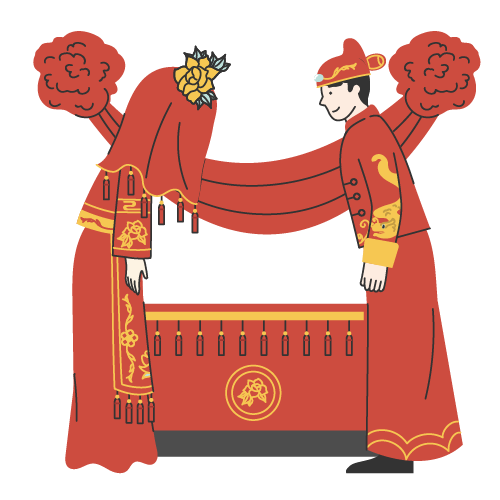
婚礼
hūnlǐ
wedding
Traditional Chinese Wedding Customs
Traditional Chinese weddings can involve several rituals, many of which focus on bringing the two families together and wishing the couple a prosperous marriage. Not every couple follows all of these customs today, but some continue to appear in modern weddings.
The Betrothal Gift Ceremony
One traditional custom is 过大礼 (guò dàlǐ), often translated as the formal exchange of betrothal gifts. It is particularly associated with Cantonese wedding traditions.
The groom’s family traditionally presents gifts to the bride’s family before the wedding. Depending on the family’s customs, these may include items such as tea, food, wine, jewellery or symbolic gifts.
The exchange is not simply about the monetary value of the items. It represents the families formally recognising the marriage and expressing goodwill towards one another.
In modern weddings, families may simplify the ceremony or adapt the gifts to suit their circumstances.
The Hair-Combing Ceremony
Another traditional ritual is 上头 (shàngtóu), a ceremonial hair-combing ritual performed before the wedding.
Traditionally, an elder with a good marriage and family life would comb the bride’s and groom’s hair while offering auspicious words or blessings. The ritual symbolises the transition into married adulthood and wishes the couple a harmonious and prosperous life together.
The practice is less common in everyday modern weddings, but some couples choose to revive it as part of a traditional-style celebration.
The Door Games
A more playful tradition is 接亲 (jiēqīn), where the groom and his wedding party go to the bride’s home to “receive” or collect the bride.
In modern weddings, this can involve a series of challenges or games organised by the bridesmaids. The groom may have to answer questions, complete challenges or negotiate his way through the door before he is allowed to see the bride.
Although the modern version is often light-hearted, the custom is connected to the older tradition of the groom formally coming to receive his bride from her family.
The Tea Ceremony
Of all these traditions, the Chinese wedding tea ceremony is one of the customs that has remained particularly common in modern Chinese weddings.
The couple serves tea to their parents and senior relatives as a formal gesture of respect and gratitude. We’ll look more closely at what happens during this ceremony and why it remains so meaningful today in the next section.
We also have a guide on Chinese tea culture you can check out!
Why Is Red Important at Chinese Weddings?
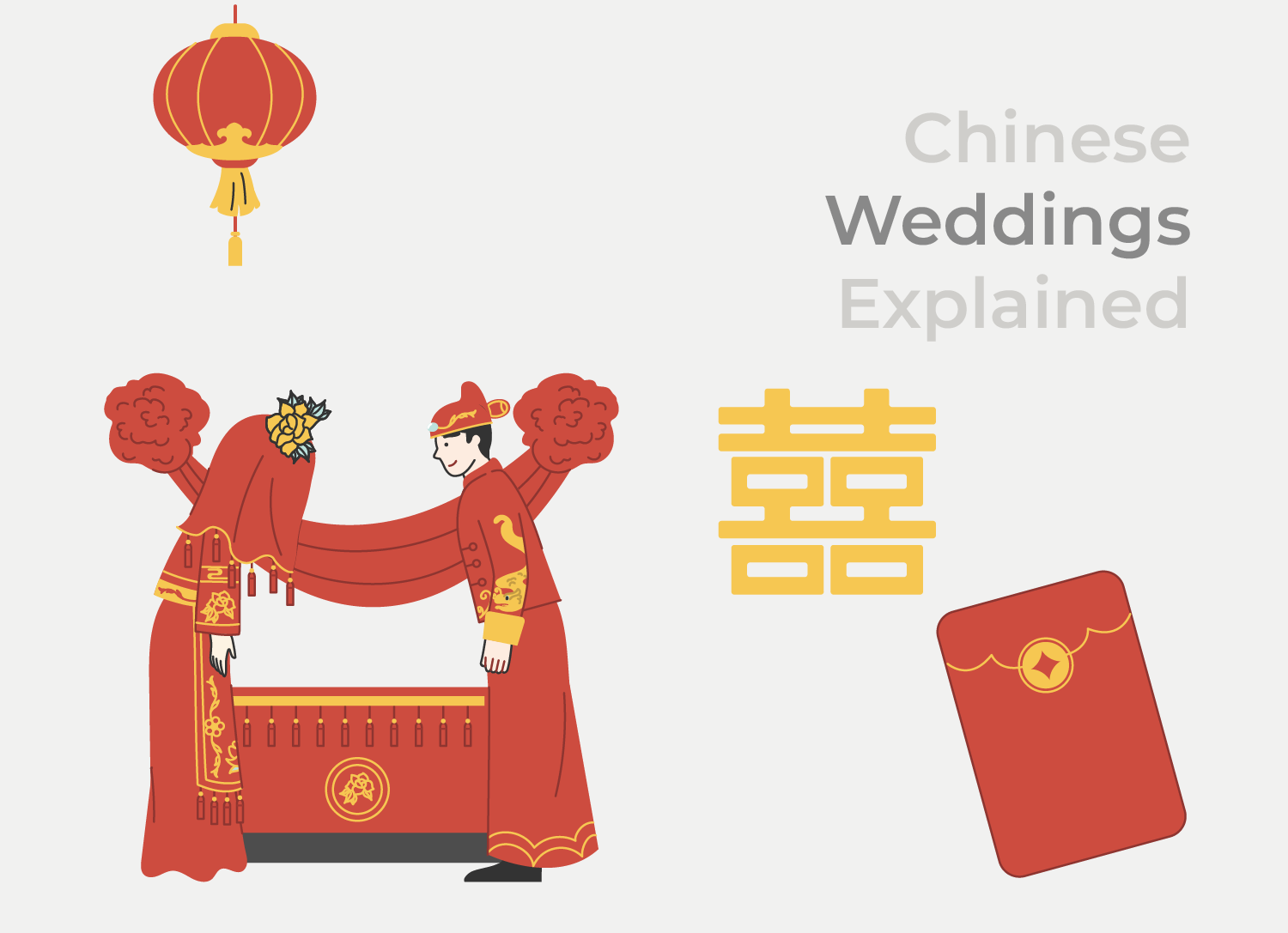
If you’ve ever seen photos of a traditional Chinese wedding, one thing you’ll notice immediately is the colour red. From the bride’s clothing to decorations, invitations and gift envelopes, red appears throughout the celebration.
In Chinese culture, red has long been associated with happiness, celebration, good fortune and prosperity. This makes it particularly appropriate for a wedding, which is seen as an important and joyful occasion for both the couple and their families.
You may see red used in:
- Wedding dresses and traditional bridal outfits
- Decorations and flowers
- Wedding invitations
- Red envelopes containing gifts of money
- Candles and other ceremonial items
- Wedding accessories and ornaments
Gold is also commonly paired with red, particularly in decorations and clothing. Together, the colours create a visual association with happiness, prosperity and good fortune.
The Double Happiness Character
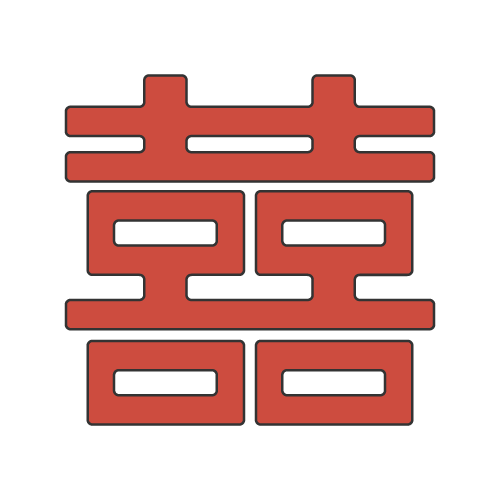
One of the most recognisable symbols of a Chinese wedding is 囍 (shuāngxǐ), often called the “Double Happiness” character.
It combines two 喜 (xǐ) characters, meaning “happiness” or “joy,” into a single symbol. You’ll often see 囍 displayed on wedding invitations, decorations, doors and other items associated with the celebration.
The symbol is particularly appropriate for a wedding because the repeated character represents happiness shared by the couple and their families.
So while red and gold make Chinese weddings visually distinctive, these colours and symbols also communicate something important: the wedding is a celebration of happiness, good fortune and the joining of two families.
Chinese Wedding Clothing
Wedding clothing is another part of the celebration where symbolism and regional traditions come together. While a white Western-style wedding dress is now common at many modern Chinese weddings, traditional Chinese garments are still widely worn for ceremonies, photographs or parts of the wedding day.
Qipao
The qipao (旗袍, qípáo) is one of the best-known forms of Chinese dress associated with weddings. It is a fitted dress that became particularly prominent in Shanghai and other Chinese cities during the 20th century.
For weddings, qipao are often made in red, with embroidery featuring auspicious motifs such as flowers, birds or traditional patterns.
Today, a bride may change into a qipao for the reception or banquet after wearing a Western-style wedding dress for the main ceremony.
Qun Kwa
Another important traditional bridal outfit is the 裙褂 (qún guà), particularly associated with Cantonese wedding traditions.
It is typically a red two-piece outfit decorated with intricate gold embroidery. Traditional designs may include motifs such as the dragon and phoenix, which represent the bride and groom and are associated with harmony and good fortune.
The craftsmanship of a qun kwa can also be significant. Elaborate embroidery and detailed patterns can make the garment an important part of the wedding ceremony rather than simply something the bride wears.
Modern Chinese Wedding Dress
There is no requirement for a modern Chinese bride to choose just one style of wedding clothing. It is common for couples to combine different traditions throughout the day.
A bride might wear:
- A white wedding dress for the main ceremony
- A qipao or qun kwa for the tea ceremony
- Another traditional outfit for the banquet or photographs
This combination reflects how Chinese weddings have evolved: traditional clothing can remain meaningful without replacing modern wedding styles.
Chinese Wedding Gifts & Red Envelopes
Giving a gift is an important part of attending a Chinese wedding, and one of the most common options is a red envelope (红包, hóngbāo) containing money.
The red envelope itself is meaningful. Red is associated with happiness and good fortune, making it a natural choice for a wedding celebration. In some Chinese communities, particularly Cantonese-speaking ones, you may also hear 利是 (lìshì) or lai see used when talking about lucky money.
How Much Money Should You Give?
There isn’t one fixed amount that everyone is expected to give. The appropriate amount can depend on your relationship with the couple, the type of wedding, the venue and local or family customs.
The number itself can also matter. Because 8 (八, bā) is traditionally associated with prosperity, amounts containing 8 may be considered auspicious. Conversely, amounts involving 4 (四, sì) may be avoided because of its association with the word for death.
If you’re attending a Chinese wedding as a guest, the safest approach is to follow the expectations of the couple or family rather than assuming there is a universal rule.
Other Chinese Wedding Gifts
Money isn’t the only possible wedding gift. Depending on the family and region, guests may give:
- Jewellery
- Tea
- Household items
- Practical gifts for the couple
- Traditional or symbolic gifts
Historically, wedding gifts could also have a strong connection to the relationship between the two families. Today, however, many couples simply prefer gifts that are useful or meaningful to them.
The important idea is that a wedding gift is not only about its monetary value. It represents good wishes for the couple’s future together.
The Chinese Wedding Banquet
The wedding banquet, or 婚宴 (hūnyàn), is often one of the largest parts of a Chinese wedding celebration. Rather than being a simple meal after the ceremony, it is an opportunity for the couple to celebrate with their wider family, friends and community.
Traditional Chinese wedding banquets often feature multiple courses, with dishes chosen not only for their taste but sometimes for their symbolic meanings. The exact menu varies by region and family, so there is no single set of foods that appears at every Chinese wedding.
Fish: A Symbol of Abundance
Fish (鱼, yú) is commonly associated with abundance because 鱼 (yú) sounds like 余 (yú), which can refer to having something left over or in surplus.
A whole fish may be served at a banquet to express wishes for abundance and prosperity. Keeping the fish whole can also carry associations with completeness.
Long Noodles: A Wish for Longevity
Long noodles may also appear at celebratory meals because their length can symbolise longevity.
The idea connects food with a traditional Chinese wish for the couple to enjoy a long and happy life together.
Sweet Foods and Desserts
Sweet foods can represent wishes for a sweet and happy marriage. Depending on the region and family, different desserts or sweet dishes may be included in the banquet.
The important point is that Chinese banquet food can communicate good wishes without those meanings being explicitly spoken. A dish can be chosen because its name, shape or traditional association represents something the family hopes for the newlyweds.
The Banquet as a Family Celebration
Beyond the symbolism of individual dishes, the banquet has an important social purpose: it brings together the people who are part of the couple’s lives.
For many families, the wedding banquet is therefore just as much about celebrating with the wider family and community as it is about the couple themselves.
Chinese Wedding Etiquette for Guests
If you’re invited to a Chinese wedding, you don’t need to know every traditional custom to be a respectful guest. However, understanding a few common expectations can help you avoid accidentally overlooking something important.
Be Respectful During the Tea Ceremony
If the couple holds a tea ceremony, treat it as an important family occasion rather than simply another part of the wedding programme.
Guests may be asked to make space for the immediate family or to follow the couple’s lead during the ceremony. If you’re unsure what to do, it’s perfectly fine to observe what the other guests are doing.
Be Thoughtful About What You Wear
Red is strongly associated with Chinese weddings, happiness and good fortune. However, because the bride may also wear red, guests should generally avoid choosing an elaborate red outfit that could draw attention away from her.
The exact expectations can vary depending on the wedding and family, so the invitation or dress code should always take priority.
Bring an Appropriate Wedding Gift
If the couple or family follows the tradition of giving 红包 (hóngbāo), bringing a red envelope with your gift is usually more appropriate than assuming a Western-style gift registry.
If you’re unsure about the expected amount, asking another guest who knows the family can be more useful than relying on a generic rule.
Be Mindful of Lucky Numbers
If you’re giving money as a wedding gift, you may want to consider culturally auspicious numbers. 8 is generally considered lucky, while 4 is often avoided.
This is a cultural preference rather than a strict requirement, so don’t worry about getting it “wrong” if you weren’t familiar with the tradition beforehand.
Remember That Customs Vary
Perhaps the most important piece of Chinese wedding etiquette is not assuming that every Chinese wedding follows the same traditions.
A couple may have a very traditional ceremony, a modern Western-style wedding, or a combination of both. Regional traditions can also differ considerably.
If you’re interested in other customs to be aware of when visiting China, see our guide to Chinese etiquette: do’s and don’ts for visitors.
Chinese Wedding Vocabulary
If you’re learning Mandarin, these words are useful when talking about weddings and marriage:
| chinese | pinyin | english |
|---|---|---|
| 婚礼 | hūnlǐ | wedding |
| 结婚 | jiéhūn | to get married |
| 新娘 | xīnniáng | bride |
| 新郎 | xīnláng | groom |
| 婚姻 | hūnyīn | marriage |
| 敬茶 | jìngchá | tea ceremony |
| 红包 | hóngbāo | red envelope |
| 喜 | xǐ | happiness |
| 囍 | shuāngxǐ | double happiness |
| 婚宴 | hūnyàn | wedding banquet |
| 婚服 / 婚纱 | hūnfú / hūnshā | wedding dress |
| 礼物 | lǐwù | gift |
| 好运 | hǎoyùn | good fortune |
For example:
他们明年结婚。
Tāmen míngnián jiéhūn.
They’re getting married next year.