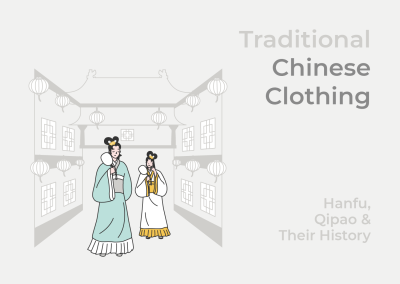
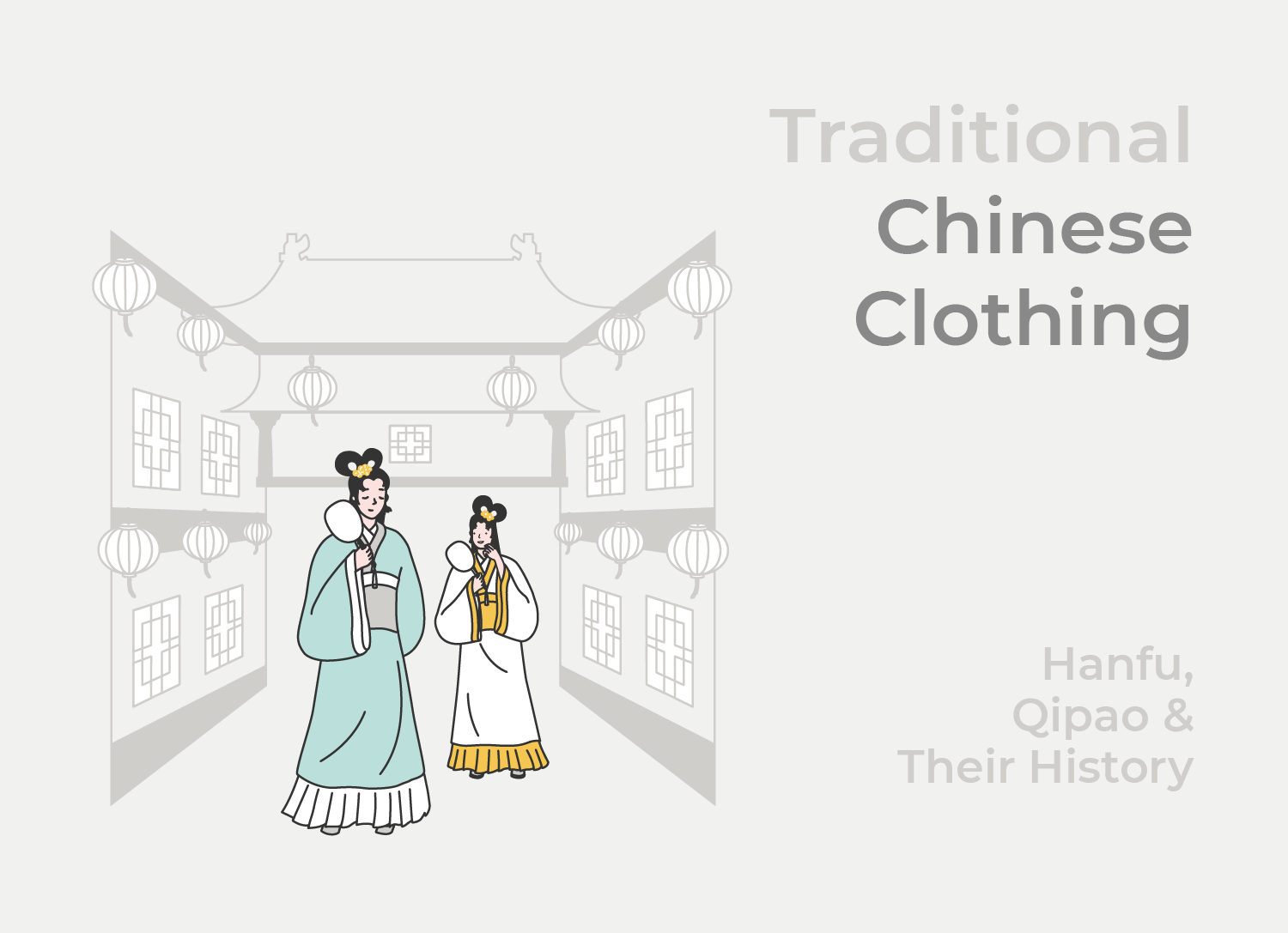
Traditional Chinese clothing has changed considerably throughout China’s history.
Different styles developed across different dynasties, regions and communities, influenced by factors such as social status, culture and the occasion.
This is why there isn’t one single outfit that can be called “traditional Chinese clothing”.
Hanfu (汉服) and Qipao (旗袍) are two of the best-known styles, but they come from different historical traditions and developed at very different times.
Hanfu is a broad term for traditional clothing associated with the Han Chinese, while the Qipao is a more specific style of dress whose modern form developed in the 20th century.
In this guide, we’ll look at the history of Chinese clothing, how Hanfu and Qipao developed, the differences between them and how traditional styles are worn today.
Key Takeaways
- Traditional Chinese clothing includes many different styles from different periods and regions.
- Hanfu (汉服) refers broadly to traditional clothing associated with the Han Chinese tradition.
- Qipao (旗袍) is a fitted dress that developed into its modern form in the 20th century.
- Chinese clothing can reflect history, culture, social status and occasion.
- Hanfu and Qipao are not the only forms of traditional clothing found in China.
- Traditional Chinese styles continue to appear at festivals, weddings, cultural events and celebrations.
What Is Traditional Chinese Clothing?
Traditional Chinese clothing refers to the many styles of dress that developed across different periods and regions of China. What people wore could depend on the historical period, social position, climate, occupation and occasion. Clothing also changed as different cultures and communities interacted with one another.
This means that traditional Chinese clothing is better understood as a collection of styles rather than one standard costume.
Two styles you’ll often come across are Hanfu (汉服) and Qipao (旗袍). Although both are associated with Chinese culture, they have different histories and appearances.
A Brief History of Chinese Clothing
Chinese clothing traditions have developed over thousands of years, with styles changing from one historical period to another.
During the Han dynasty, clothing associated with Han Chinese traditions became more established. Later periods introduced their own silhouettes, fabrics and influences.
The Tang dynasty, for example, was known for its diverse and relatively open cultural influences, which could be seen in clothing and fashion.
By the Ming dynasty, distinctive robes, skirts and layered garments had become an important part of dress.
The Qing dynasty brought further changes, with Manchu clothing traditions influencing the styles worn during the period.
Moving into the 20th century, Chinese clothing changed again as Western fashion became more influential. This period also saw the development of the modern Qipao, which would become one of the most recognisable forms of Chinese dress.
What Is Hanfu?
Hanfu (汉服, hànfú) is a broad term for traditional clothing associated with the Han Chinese.
It isn’t one specific outfit. Hanfu includes many different garments and styles that changed throughout Chinese history, so a Han dynasty outfit can look quite different from clothing worn during the Ming dynasty.
Common features found across different Hanfu styles can include overlapping collars, layered garments, flowing shapes and wide sleeves. The exact design depends on the historical period and type of clothing.
Hanfu was traditionally worn in everyday life, at court and for formal occasions, depending on the period and the person’s social position.
Hanfu Through History
Hanfu developed alongside Chinese society and changed considerably over time.
During the Han dynasty, clothing was generally layered and relatively flowing. Later periods developed their own silhouettes and details.
The Tang dynasty is often associated with more varied and flowing styles, reflecting the period’s connections with cultures across Asia.
During the Song dynasty, clothing often became more restrained in appearance, while the Ming dynasty developed its own distinctive robes, skirts and layered garments.
Because of this long history, there is no single style that represents all Hanfu. Different designs can reflect the period they are inspired by.
What Is a Qipao?
Qipao (旗袍, qípáo) is a fitted style of Chinese dress that became particularly associated with Shanghai during the 20th century.
Its history is connected to earlier Manchu clothing traditions, but the modern Qipao developed considerably as Chinese fashion changed during the early 20th century. It became especially popular in Shanghai and was influenced by contemporary fashion.
The Qipao is recognisable for its fitted silhouette, high collar and side opening, although modern designs can vary significantly in length, fabric and cut.
It is sometimes called a cheongsam in English, particularly in Hong Kong and other Cantonese-speaking contexts.
Hanfu vs Qipao
Although both are associated with Chinese culture, Hanfu and Qipao are quite different.
| Hanfu | Qipao | |
|---|---|---|
| Chinese | 汉服 | 旗袍 |
| Historical association | Han Chinese clothing traditions | Manchu origins and 20th-century development |
| Typical silhouette | Flowing and layered | More fitted |
| Styles | Many historical forms | More specific dress style |
| Modern use | Cultural events, festivals and celebrations | Weddings, formal occasions and celebrations |
Neither represents all traditional Chinese clothing. China has many other regional and ethnic clothing traditions, each with their own history and designs.
Traditional Chinese Clothing by Occasion
Traditional Chinese clothing is not limited to historical reenactments. Today, traditional and traditional-inspired styles can be seen at a range of cultural and social occasions.
Weddings
Hanfu and Qipao are both popular choices for weddings. Couples may wear traditional styles for part of the ceremony or incorporate them into wedding photography.
Festivals and Celebrations
Traditional clothing is often worn during cultural festivals, performances and other celebrations. Hanfu has become particularly visible at events celebrating Chinese history and culture.
Photography
Hanfu and Qipao are also popular for photoshoots, particularly in historical sites, gardens and other settings that complement the clothing.
The style chosen often depends on the occasion and the period or cultural tradition being represented.
Chinese Clothing Beyond Hanfu and Qipao
Hanfu and Qipao are two of the most recognizable forms of Chinese dress, but they are far from the only ones.
China is home to many ethnic groups, each with their own clothing traditions. Styles can differ in color, embroidery, materials and design depending on the community and region.
For example, traditional clothing from Tibet, Inner Mongolia, Yunnan and Xinjiang can look very different from Hanfu or Qipao.
These traditions are an important reminder that there is no single style that represents all Chinese clothing or culture.
Traditional Chinese Clothing Today
Traditional clothing has also found a place in modern Chinese life. Hanfu, in particular, has attracted renewed interest among younger people interested in Chinese history and culture.
You may see traditional or traditional-inspired clothing at festivals, weddings, cultural events and photography sessions. Some people also wear Hanfu simply because they enjoy the style and want to connect with Chinese cultural heritage.
Modern designers have also adapted traditional elements into contemporary fashion. This can include traditional collars, fabrics, embroidery or silhouettes combined with more modern cuts.
The result is that traditional Chinese clothing isn’t only something found in museums or historical dramas. Its influence can still be seen in the way people celebrate, dress and engage with Chinese culture today.
Chinese Clothing Vocabulary
If you’re learning Mandarin, knowing a few basic clothing words can help when talking about traditional dress or shopping for clothes.
| chinese | pinyin | english |
|---|---|---|
| 衣服 | yīfu | clothing |
| 传统服装 | chuántǒng fúzhuāng | traditional clothing |
| 汉服 | hànfú | hanfu |
| 旗袍 | qípáo | qipao |
| 裙子 | qúnzi | dress |
| 布料 | bùliào | fabric |
| 颜色 | yánsè | color |
Want to expand your vocabulary further? See our guide to Chinese clothes and shoes for more useful words and phrases.
Shopping for Chinese Clothing
If you’re interested in buying Hanfu, Qipao or other Chinese clothing, online shopping can also be a useful way to practice Mandarin.
Taobao, in particular, has a huge range of clothing and accessories. Knowing a few basic phrases can help when searching for products, asking about sizes or communicating with sellers.
For useful language you can use while shopping, check out our guide to Chinese phrases for shopping on Taobao.