The Great Wall of China is one of the world’s most famous landmarks, attracting millions of visitors every year and standing as a powerful symbol of Chinese history and culture. Stretching across mountains, deserts and grasslands, it is also one of the greatest engineering achievements ever built.
While many people know that the Great Wall is incredibly long and was built to defend ancient China, there are countless fascinating stories, myths and surprising facts hidden within its history. Did you know that the Great Wall isn’t actually one continuous wall? Or that the popular belief that it can be seen from space is a myth?
Whether you’re a student researching Chinese history, planning a trip to Beijing or simply curious about one of the world’s most iconic landmarks, these facts will help you discover a whole new side of the Great Wall.
In this guide, we’ll explore 25 fascinating Great Wall of China facts, covering its incredible construction, famous myths, unique architecture and the remarkable stories that have made it one of the world’s most celebrated historical sites.

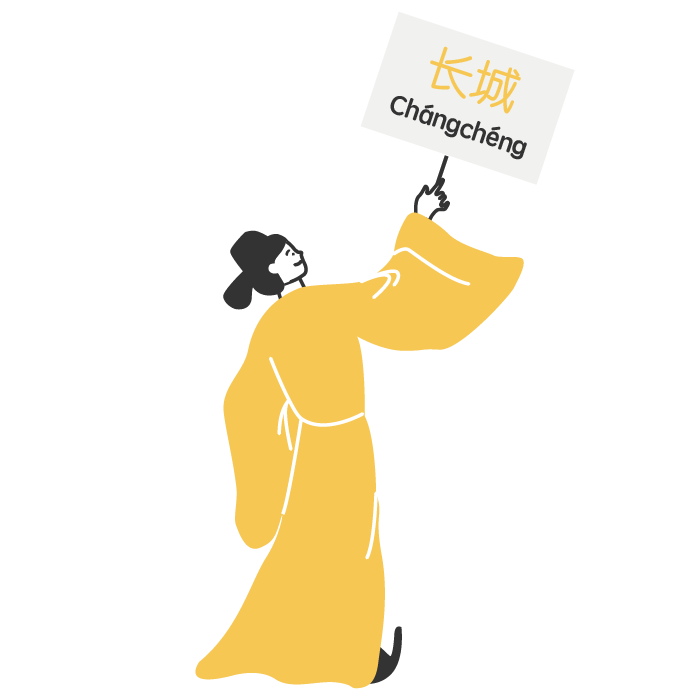
长城
Chángchéng
the Great Wall
(lit.”long-city wall”)
Key Takeaways
-
The Great Wall of China stretches for 21,196.18 kilometres, making it the world’s longest man-made defensive structure.
-
It was built over more than 2,000 years by several Chinese dynasties.
-
The Great Wall is not one continuous wall, but a vast network of fortifications, watchtowers and military outposts.
-
Most of the sections visited today were built during the Ming Dynasty (1368–1644).
-
Contrary to popular belief, the Great Wall cannot normally be seen from space with the naked eye.
-
Today, the Great Wall is one of China’s most popular tourist attractions and a UNESCO World Heritage Site.
25 Great Wall of China Facts
1. The Great Wall Is Longer Than You Probably Think
Most people know the Great Wall is long, but very few realise just how enormous it actually is.
According to China’s official archaeological survey, the Great Wall measures an incredible 21,196.18 kilometres (13,170.70 miles). That makes it the longest man-made defensive structure ever built.
This figure includes not only walls, but also watchtowers, fortresses, mountain passes, trenches and natural defensive barriers such as rivers and ridges. Rather than being one straight wall, it’s an enormous network of interconnected fortifications stretching across 15 provincial-level regions in northern China.
2. It Was Built Over More Than 2,000 Years
The Great Wall wasn’t built all at once.
Construction began as early as the 7th century BC, when different kingdoms built defensive walls to protect their territories. Over the centuries, successive dynasties, including the Qin, Han and Ming Dynasties, expanded, rebuilt and strengthened different sections of the Wall.
The famous brick-and-stone sections visited by most tourists today were largely constructed during the Ming Dynasty, making the Great Wall a remarkable project that evolved over more than two millennia.
3. It Wasn’t Built by Just One Emperor
Many people believe the Great Wall was built by Emperor Qin Shi Huang, China’s first emperor. While Qin Shi Huang played an important role by connecting and expanding existing walls after unifying China in 221 BC, he certainly didn’t build the entire Great Wall.
In reality, dozens of rulers across multiple dynasties continued constructing, repairing and extending the Wall for more than 2,000 years, making it one of the longest-running construction projects in human history.
If you’re looking for a complete overview of the Wall’s history, construction and significance, be sure to read our guide to The Great Wall of China: History, Facts & Everything You Need to Know.
4. The Great Wall Crosses 15 Regions of China
Although many visitors associate the Great Wall with Beijing, it actually stretches across 15 provincial-level regions in northern China.
The Wall passes through:
- Beijing
- Tianjin
- Hebei
- Shanxi
- Inner Mongolia
- Liaoning
- Jilin
- Heilongjiang
- Shandong
- Henan
- Shaanxi
- Ningxia
- Gansu
- Qinghai
- Xinjiang
Its route crosses mountains, forests, deserts, grasslands and river valleys, demonstrating just how vast China’s defensive network became over the centuries.
5. The Great Wall Isn’t One Continuous Wall
Despite its name, the Great Wall is not a single uninterrupted wall.
Instead, it is a vast network of:
- Defensive walls
- Watchtowers
- Fortresses
- Beacon towers
- Mountain passes
- Trenches
- Natural barriers such as rivers and cliffs
Many sections were built hundreds of kilometres apart during different dynasties before later being connected or expanded. Some parts have disappeared entirely due to erosion, while others remain remarkably well preserved.
6. Millions of People Helped Build It
The Great Wall is one of the largest construction projects in human history.
Over the course of more than 2,000 years, millions of people contributed to building and maintaining different sections of the Wall.
Workers included:
- Soldiers
- Farmers
- Skilled craftsmen
- Local labourers
- Prisoners
- Convicted criminals performing forced labour
Construction was physically demanding and often dangerous, particularly in remote mountain regions where workers transported heavy materials without modern machinery.
7. The Great Wall Passes Through Mountains, Deserts and Grasslands
The Great Wall was designed to protect a huge frontier, meaning it had to adapt to many different landscapes.
Depending on the location, the Wall crosses:
- Rugged mountain ranges
- Dense forests
- Rolling grasslands
- Dry deserts
- River valleys
- High mountain ridges
Builders used locally available materials wherever possible. In mountainous areas, stone was commonly used, while desert regions often relied on rammed earth, gravel and compacted sand.
8. Many Sections Have Disappeared
Although the Great Wall originally stretched for more than 21,000 kilometres, not all of it still exists today.
Over the centuries, many sections have been damaged by:
- Natural erosion
- Earthquakes
- Flooding
- Weather
- Human activity
- Reused building materials
Some remote sections have become completely overgrown with vegetation, while others have almost disappeared into the surrounding landscape.
Fortunately, many famous sections near Beijing have been carefully restored and are now protected as important historical sites.
9. Most of the Great Wall You See Today Was Built During the Ming Dynasty
When people imagine the Great Wall, they’re usually thinking of the impressive brick-and-stone fortifications built during the Ming Dynasty (1368–1644).
Following repeated attacks from northern tribes, the Ming emperors invested heavily in rebuilding and strengthening the Wall using bricks, stone and advanced military engineering.
Many of today’s most famous sections, including Badaling, Mutianyu, Jinshanling and Simatai, date from this period and remain among the best-preserved parts of the entire Wall.
10. The Great Wall Became a UNESCO World Heritage Site in 1987
In 1987, the Great Wall of China was officially recognised as a UNESCO World Heritage Site.
UNESCO described the Wall as one of the greatest examples of military architecture in history, recognising both its remarkable engineering and its importance to Chinese civilisation.
Today, the designation helps protect the Wall through conservation projects and encourages responsible tourism, ensuring future generations can continue to experience one of the world’s most extraordinary historical landmarks.
11. It Is One of the New Seven Wonders of the World
The Great Wall of China was named one of the New Seven Wonders of the World in 2007 following a global public vote organised by the New7Wonders Foundation.
This recognition highlights the Wall’s extraordinary cultural significance and engineering achievement, placing it alongside famous landmarks such as the Colosseum, Machu Picchu and the Taj Mahal.
Today, it remains one of the most recognised and photographed landmarks anywhere in the world.
12. The Great Wall Has Thousands of Watchtowers
One of the Great Wall’s most distinctive features is its thousands of watchtowers.
These towers were built at regular intervals along the Wall and served several important purposes, including:
- Watching for approaching enemies
- Sending military signals
- Storing weapons and supplies
- Providing shelter for soldiers
Because many towers were positioned on mountain peaks, guards could monitor vast stretches of the surrounding landscape.
13. Smoke Signals Could Send Messages Across Hundreds of Kilometres
Long before telephones or radios existed, the Great Wall had its own communication system.
Soldiers stationed in watchtowers used:
- Smoke during the day
- Beacon fires at night
- Drums
- Flags
- Signal lanterns
These warning signals allowed messages to travel rapidly from one watchtower to the next.
In some cases, news of an approaching enemy could travel hundreds of kilometres within just a few hours, making it one of the most advanced military communication systems of its time.
14. The Great Wall Helped Protect the Silk Road
The Great Wall wasn’t only built to stop invasions; it also helped protect trade.
During the Han Dynasty, parts of the Wall were extended westward to help safeguard the Silk Road, the famous network of trade routes linking China with Central Asia, the Middle East and Europe.
By protecting merchants and trade caravans, the Wall played an important role in helping valuable goods such as silk, tea and porcelain travel safely across Asia.
15. You Can’t See the Great Wall from the Moon
One of the most famous myths about the Great Wall is that it can be seen from the Moon.
This is false.
In reality, the Great Wall is extremely narrow compared to the vast size of Earth, making it impossible to see with the naked eye from the Moon.
Even from low Earth orbit, astronauts have explained that the Wall is difficult to distinguish because its colours blend into the surrounding mountains and landscape.
16. Badaling Is the Most Visited Section
If you’ve seen photographs of the Great Wall, there’s a good chance they were taken at Badaling.
Located around 70 kilometres from central Beijing, Badaling is the most visited section of the Wall and welcomes millions of visitors every year.
Its popularity is due to:
- Excellent transport connections
- Fully restored pathways
- Cable car access
- Family-friendly facilities
- Historical significance
For many travellers, Badaling is their very first experience of the Great Wall.
17. Mutianyu Has a Famous Toboggan Ride
While most people visit the Great Wall for its history and scenery, Mutianyu is also known for something a little different, a mountain toboggan ride.
After exploring the Wall, visitors can ride a metal toboggan down the mountainside instead of taking the chairlift or walking back.
It’s become one of the most popular attractions for families and makes Mutianyu one of the most memorable sections to visit.
18. Some Parts of the Great Wall Remain Completely Wild
Not every part of the Great Wall has been restored.
Sections such as Jiankou remain largely untouched, with broken watchtowers, crumbling staircases and trees growing directly through parts of the Wall.
These wild sections provide a fascinating glimpse into what much of the Great Wall looked like before restoration work began and are particularly popular with experienced hikers and photographers.
19. Different Building Materials Were Used Across China
The Great Wall wasn’t built from the same materials everywhere.
Builders used whatever resources were available locally.
Depending on the region, construction materials included:
- Stone
- Brick
- Rammed earth
- Wood
- Gravel
- Compacted sand
This practical approach allowed the Wall to be constructed across China’s diverse landscapes while making the best use of local materials.
20. The Great Wall Attracts Millions of Visitors Every Year
Today, the Great Wall is one of the world’s most popular tourist attractions. The Great Wall welcomes around 15–17 million visitors each year.
Millions of people from around the globe visit every year to:
- Learn about Chinese history
- Hike along ancient pathways
- Enjoy spectacular mountain scenery
- Experience one of the world’s greatest engineering achievements
If you’re planning your own visit, our Visiting the Great Wall of China: Best Sections, Tips & Day Trips from Beijing guide will help you choose the best section and plan your trip.
21. Some Watchtowers Served as Homes for Soldiers
The watchtowers along the Great Wall weren’t just observation posts, they also functioned as small military bases.
Depending on their location, soldiers stationed at the Wall could use the towers to:
- Sleep and rest
- Store food and water
- Keep weapons and armour
- Shelter during bad weather
- Monitor nearby sections of the Wall
Many larger fortresses even housed permanent military garrisons responsible for protecting nearby border regions.
22. The Great Wall Has Inspired Poems, Paintings and Legends
For centuries, the Great Wall has been a powerful symbol in Chinese literature, art and folklore.
It appears in countless:
- Traditional poems
- Landscape paintings
- Folk stories
- Historical novels
- Modern films and documentaries
Perhaps the most famous legend associated with the Wall is the story of Meng Jiangnü, whose grief over the death of her husband, forced to work on the Wall, was said to be so great that part of the Wall collapsed. While the story is a legend rather than a historical fact, it remains one of China’s best-known folk tales.
23. Archaeologists Are Still Making New Discoveries
Although the Great Wall has been studied for centuries, researchers continue to make new discoveries.
Archaeologists regularly uncover:
- Previously undocumented sections
- Ancient watchtowers
- Military fortresses
- Historical inscriptions
- Construction techniques used by different dynasties
Modern technologies such as satellite imagery, drones and 3D mapping have helped historians identify sections that were previously hidden by forests, deserts or mountains.
These discoveries continue to improve our understanding of how the Wall evolved over more than two thousand years.
24. Some Sections Are Closed to Protect Them
Not every part of the Great Wall is open to visitors.
Many remote or fragile sections have been closed to:
- Prevent further erosion
- Protect original structures
- Reduce damage caused by tourism
- Allow conservation and restoration work
These preservation efforts help ensure that one of the world’s greatest historical landmarks can be enjoyed by future generations while protecting its historical authenticity.
25. The Great Wall Remains One of China’s Greatest Symbols
More than two thousand years after construction first began, the Great Wall continues to represent the strength, resilience and ingenuity of Chinese civilisation.
It has become a global symbol of:
- Chinese history
- Engineering excellence
- Cultural heritage
- National identity
- Human determination
Why Is the Great Wall So Important?
The Great Wall is much more than an ancient military structure. It is one of the most important symbols of Chinese history and culture, representing centuries of innovation, perseverance and national identity.
Originally built to defend China’s northern borders, the Wall also helped protect trade routes, improve communication and strengthen imperial control across vast territories.
Today, the Great Wall continues to inspire millions of visitors from around the world. As both a UNESCO World Heritage Site and one of the New Seven Wonders of the World, it stands as a lasting reminder of one of humanity’s greatest engineering achievements and remains one of China’s most treasured cultural landmarks.