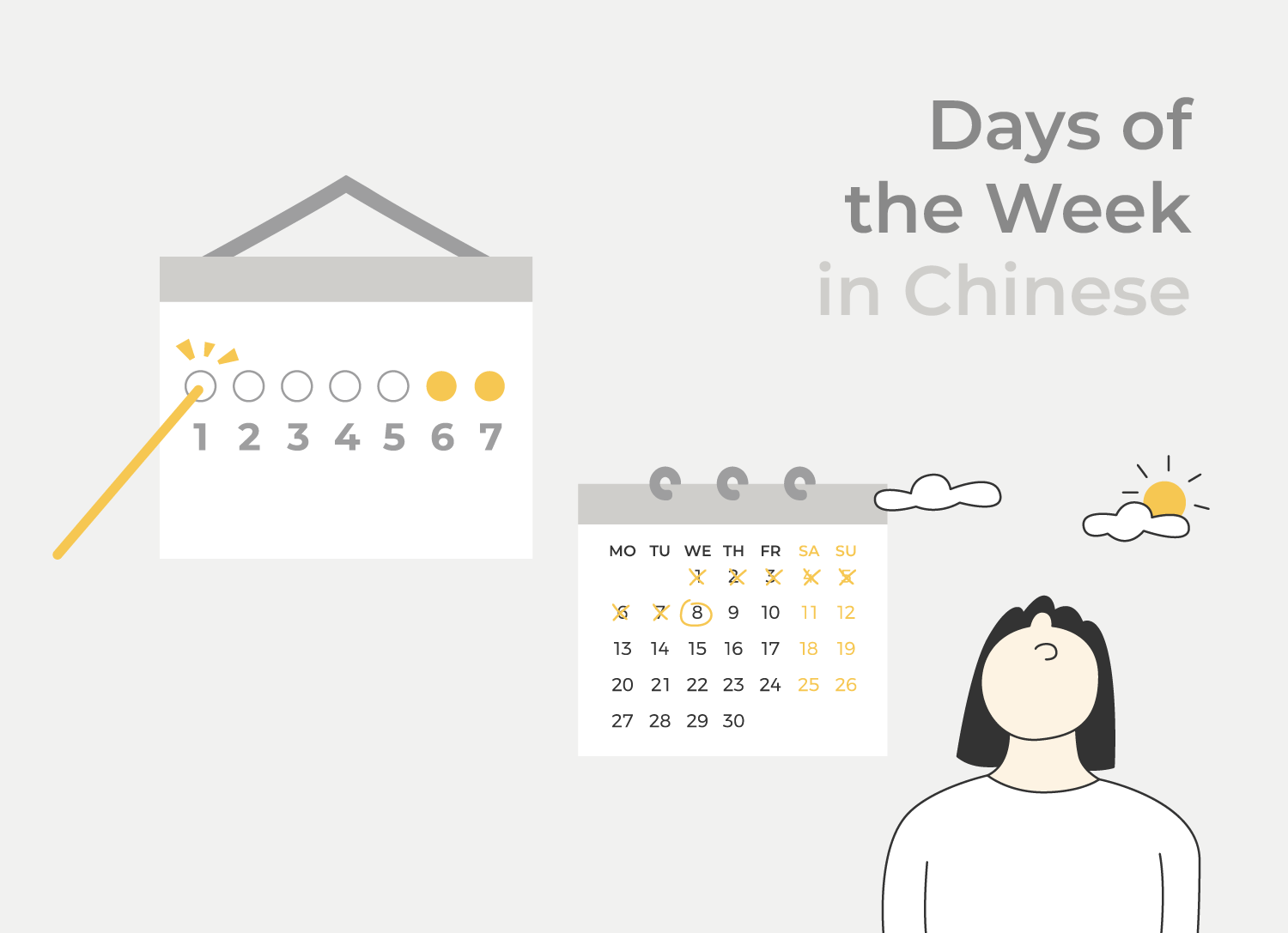
Learning the days of the week in Chinese is an essential part of learning Mandarin. You’ll use them when making plans, arranging meetings, talking about your routine and discussing upcoming events.
The weekday system is also relatively easy to learn because most days follow a simple numbered pattern.
Monday is 星期一 (xīngqī yī), Tuesday is 星期二 (xīngqī èr), and the pattern continues through Saturday.
You’ll also come across 周 (zhōu), which provides a shorter way to talk about the days of the week.
For example, 星期五 (xīngqī wǔ) and 周五 (zhōu wǔ) both mean Friday.
In this guide, we’ll cover Monday through Sunday, explain 星期 vs. 周, and introduce useful phrases for talking about today, tomorrow, yesterday and making plans in Chinese.
Key Takeaways
-
星期 (xīngqī) and 周 (zhōu) are both commonly used for days of the week.
-
Monday is 星期一 (xīngqī yī) or 周一 (zhōu yī).
-
Sunday can be 星期日 (xīngqī rì) or 星期天 (xīngqī tiān).
-
今天 (jīntiān) means “today.”
-
明天 (míngtiān) means “tomorrow.”
-
昨天 (zuótiān) means “yesterday.”
-
Most weekday names follow the simple pattern 星期 + number.
Days of the Week in Chinese
The days of the week in Mandarin follow a simple pattern: 星期 (xīngqī) + number.
| english | simplified chinese | pinyin |
|---|---|---|
| Monday | 星期一 | xīngqī yī |
| Tuesday | 星期二 | xīngqī èr |
| Wednesday | 星期三 | xīngqī sān |
| Thursday | 星期四 | xīngqī sì |
| Friday | 星期五 | xīngqī wǔ |
| Saturday | 星期六 | xīngqī liù |
| Sunday | 星期日 / 星期天 | xīngqī rì / xīngqī tiān |
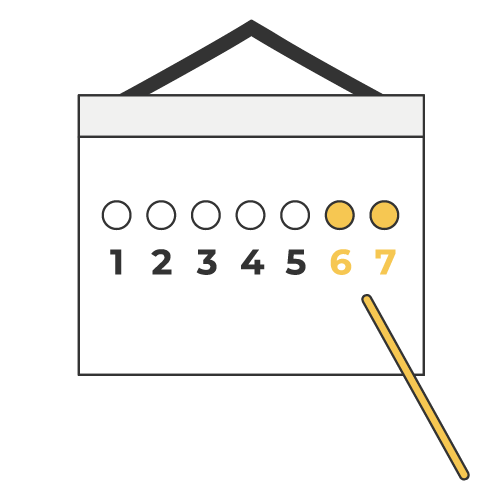
The first six days are particularly easy to remember because they simply use the numbers 一 (yī, one) through 六 (liù, six)after 星期.
For example:
星期一
xīngqī yī
Monday
星期三
xīngqī sān
Wednesday
星期五
xīngqī wu
Friday
💡 Sunday is the exception. You can say either 星期日 (xīngqī rì) or 星期天 (xīngqī tiān), and both mean Sunday.
Once you know the numbers in Chinese, the weekday names are therefore relatively easy to build and remember.
星期 vs. 周: What’s the Difference?
There are two common ways to talk about the days of the week in Mandarin: 星期 (xīngqī) and 周 (zhōu).
星期 (xīngqī)
星期 is a standard and very common way to refer to weekdays.
For example:
- 星期一 (xīngqī yī) — Monday
- 星期三 (xīngqī sān) — Wednesday
- 星期五 (xīngqī wǔ) — Friday
周 (zhōu)
周 can be used in the same way, usually followed by the corresponding number:
- 周一 (zhōu yī) — Monday
- 周三 (zhōu sān) — Wednesday
- 周五 (zhōu wǔ) — Friday
The meaning is the same, so 星期一 and 周一 both mean Monday.
For beginners, 星期 is a useful form to learn first because the numbered pattern is easy to recognise. As you encounter more natural Mandarin, you’ll also see 周 frequently in conversations, schedules and written communication.
How to Say Today, Tomorrow and Yesterday in Chinese
Once you know the days of the week, a few additional time words will help you talk about when something is happening.
| english | chinese | pinyin |
|---|---|---|
| Today | 今天 | jīntiān |
| Tomorrow | 明天 | míngtiān |
| Yesterday | 昨天 | zuótiān |
今天是星期一。
Jīntiān shì xīngqī yī.
Today is Monday.
明天是星期二。
Míngtiān shì xīngqī èr.
Tomorrow is Tuesday.
昨天是星期日。
Zuótiān shì xīngqī rì.
Yesterday was Sunday.
You can also use these words on their own:
明天见。
Míngtiān jiàn.
See you tomorrow.
昨天我很忙。
Zuótiān wǒ hěn máng.
I was very busy yesterday.
The three words are useful to learn as a set:
昨天 → 今天 → 明天
yesterday → today → tomorrow
How to Ask What Day It Is in Chinese
To ask “What day is it today?”, you can say:
今天星期几?
Jīntiān xīngqī jǐ?
What day is it today?
You can also say:
今天是星期几?
Jīntiān shì xīngqī jǐ?
What day is it today?
Here, 几 (jǐ) means “which number” or “what number,” so the question is essentially asking which weekday it is.
To answer, simply replace 几 with the appropriate number:
今天星期三。
Jīntiān xīngqī sān.
Today is Wednesday.
Or:
今天是星期三。
Jīntiān shì xīngqī sān.
Today is Wednesday.
You can use the same pattern with 周:
今天周几?
Jīntiān zhōu jǐ?
What day is it today?
This is a useful question to learn because it lets you immediately practise the weekday vocabulary you’ve just learned.
How to Talk About Weekdays and Weekends
Two useful words for talking about your schedule are 工作日 (gōngzuòrì), meaning “workday” or “weekday,” and 周末 (zhōumò), meaning “weekend.”
For example:
星期一是工作日。
Xīngqī yī shì gōngzuòrì.
Monday is a workday.
To ask someone about their weekend, you can say:
周末你有时间吗?
Zhōumò nǐ yǒu shíjiān ma?
Are you free on the weekend?
You can also use 周末 when talking about plans:
这个周末我很忙。
Zhège zhōumò wǒ hěn máng.
I’m very busy this weekend.
For everyday conversation, 周末 is the key word to remember when talking about the weekend.
Making Plans in Chinese
Once you know the days of the week, you can use them to make simple plans and arrange meetings.
Are You Free on Friday?
你星期五有时间吗?
Nǐ xīngqī wǔ yǒu shíjiān ma?
Are you free on Friday?
Let’s Meet on Saturday
我们星期六见吧。
Wǒmen xīngqī liù jiàn ba.
Let’s meet on Saturday.
The 吧 (ba) at the end makes the suggestion sound natural and conversational.
What Are You Doing on Sunday?
你星期天做什么?
Nǐ xīngqītiān zuò shénme?
What are you doing on Sunday?
See You Tomorrow
明天见。
Míngtiān jiàn.
See you tomorrow.
These simple phrases cover many everyday situations, from checking someone’s availability to arranging when you’ll meet.
Useful Chinese Scheduling Phrases
Here are some practical phrases you can use when talking about your schedule or making plans in Mandarin.
| english | chinese | pinyin |
|---|---|---|
| What day is it today? | 今天星期几? | Jīntiān xīngqī jǐ? |
| Today is Monday. | 今天是星期一。 | Jīntiān shì xīngqī yī. |
| Are you free tomorrow? | 你明天有时间吗? | Nǐ míngtiān yǒu shíjiān ma? |
| See you tomorrow. | 明天见。 | Míngtiān jiàn. |
| Are you free on Friday? | 你星期五有时间吗? | Nǐ xīngqī wǔ yǒu shíjiān ma? |
| Let’s meet on Saturday. | 我们星期六见吧。 | Wǒmen xīngqī liù jiàn ba. |
| This weekend | 这个周末 | zhège zhōumò |
| Next week | 下周 / 下个星期 | xià zhōu / xià ge xīngqī |
| Last week | 上周 / 上个星期 | shàng zhōu / shàng ge xīngqī |