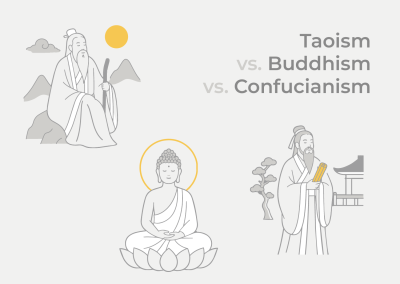
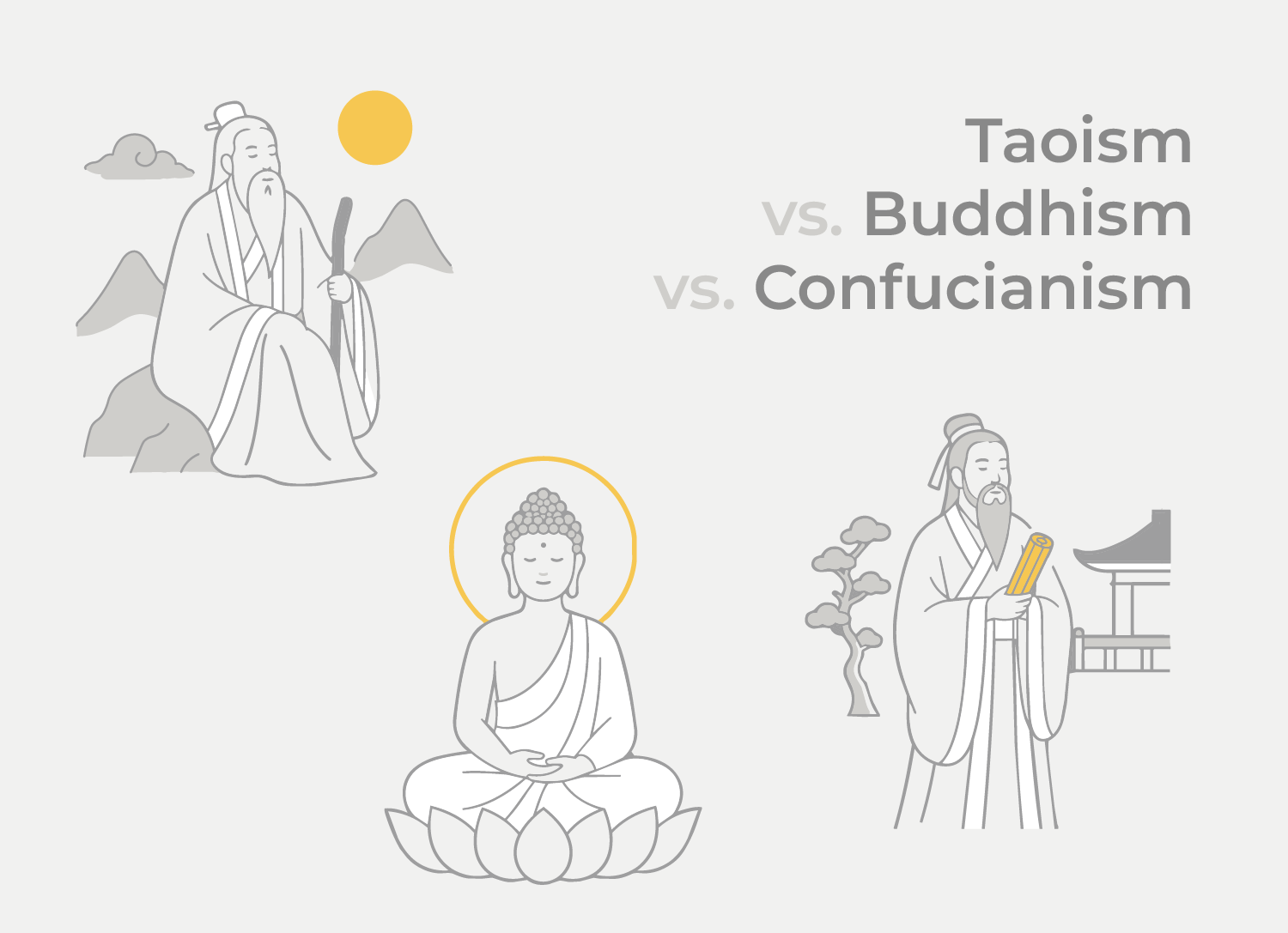
When people talk about Chinese culture and beliefs, Taoism, Confucianism and Buddhism are often mentioned together. But they aren’t simply three versions of the same belief system.
Confucianism developed in China around ideas of ethics, relationships, education and social responsibility. Taoism explores how people can live in harmony with the Tao (道), or “the Way,” and with the natural world. Buddhism, meanwhile, originated in India and developed its own traditions after spreading to China, focusing on suffering, attachment and the path towards liberation.
The interesting part is that these traditions have not always existed separately. Over centuries, their ideas influenced one another and became woven into Chinese culture, literature and everyday life. A person could value Confucian principles in family life, appreciate Taoist ideas about nature and also participate in Buddhist practices.
Understanding that overlap is key to understanding Chinese philosophy and beliefs.
Key Takeaways
- Confucianism focuses strongly on ethics, relationships, education and social responsibility.
- Taoism emphasizes harmony with the Tao and the natural world.
- Buddhism originated in India and developed distinctive traditions in China.
- The three traditions have different origins and teachings, but they have also influenced one another.
- Chinese culture has historically allowed these traditions to coexist rather than requiring people to choose only one.
Taoism, Confucianism and Buddhism at a Glance
Before looking at each tradition in more detail, it helps to see where they came from and what questions they are primarily concerned with.
| Taoism | Confucianism | Buddhism | |
|---|---|---|---|
| Chinese name | 道教 | 儒家 | 佛教 | Pinyin | Dàojiào | Rújiā | Fójiào |
| Origin | China | China | India |
| Key figure | Laozi | Confucius | Siddhartha Gautama |
| Main concern | Living in harmony with the Tao | Developing ethical people and relationships | Understanding and overcoming suffering |
| Key idea | 道 (dào) — the Way | 仁 (rén) — humaneness | Liberation from suffering |
Buddhism is also different in origin. It began in India and gradually entered China through trade routes and cultural exchange, where it developed into distinct Chinese schools and practices.
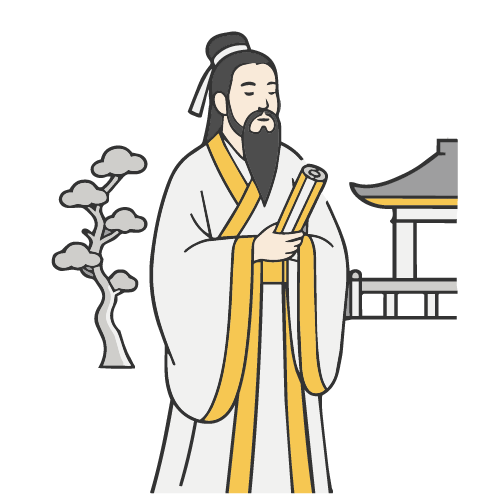
儒家
Rújiā
Confucianism
What Is Confucianism?
Confucianism (儒家, Rújiā) developed from the teachings associated with Confucius (孔子, Kǒngzǐ) and later thinkers. Rather than focusing primarily on questions about gods or the afterlife, Confucian thought is heavily concerned with how people should conduct themselves in society.
One of its central ideas is 仁 (rén), often translated as humaneness or benevolence. It describes the quality of treating other people with consideration and developing a strong moral character.
Confucian thought also places importance on relationships. The way a person behaves towards their parents, children, teachers, friends and wider community is seen as part of their moral development.
Education and Self-Cultivation
Education is another important part of Confucian thought.
Learning isn’t simply about gaining knowledge. It is also a way of developing one’s character and becoming a more responsible member of society.
This idea had a major influence on Chinese attitudes towards education, scholarship and service, particularly through the imperial examination system, which selected officials based largely on knowledge of Confucian classics.
Confucianism therefore became much more than a set of philosophical ideas. It influenced how education and family relationships were understood for centuries.
道教
Dàojiào
Taoism
What Is Taoism?
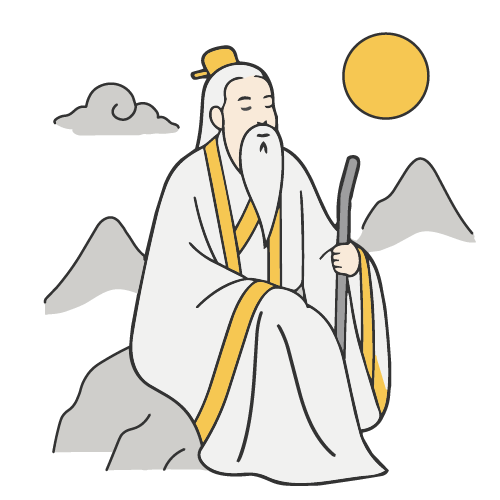
Taoism (道教, Dàojiào) is a Chinese tradition associated with the idea of living in accordance with the Tao (道, Dào), usually translated as “the Way.”
The Tao refers to the underlying way or natural order of the universe. Rather than trying to control everything around us, Taoist thought often encourages people to understand how things naturally work and act in harmony with that flow.
The philosopher Laozi (老子) is traditionally associated with the Tao Te Ching (道德经), one of the foundational texts of Taoist thought. Another important figure is Zhuangzi (庄子), whose writings use stories, humour and paradoxes to explore ideas about nature, knowledge and human limitations.
What Does Wu Wei Mean?
One of the best-known Taoist concepts is 无为 (wúwéi), often translated as “non-action.”
This doesn’t mean sitting around doing nothing. It is closer to not forcing things unnecessarily, acting in a way that works with circumstances rather than constantly struggling against them.
A simple example would be water. Water does not fight its way through every obstacle; it flows around them while continuing towards its destination. Taoist texts often use nature in this way to illustrate how people might approach life.
Taoism as Philosophy and Religion
There is also an important distinction between Taoist philosophy and Taoism as a religious tradition.
Taoist philosophical texts explore ideas about the Tao, nature and how to live, while religious Taoism developed its own rituals, temples, deities and practices.
The two are connected, but they are not exactly the same thing. This is one reason simply defining Taoism as either a “philosophy” or a “religion” misses some of its history.
佛教
Fójiào
Buddhism
What Is Buddhism in China?
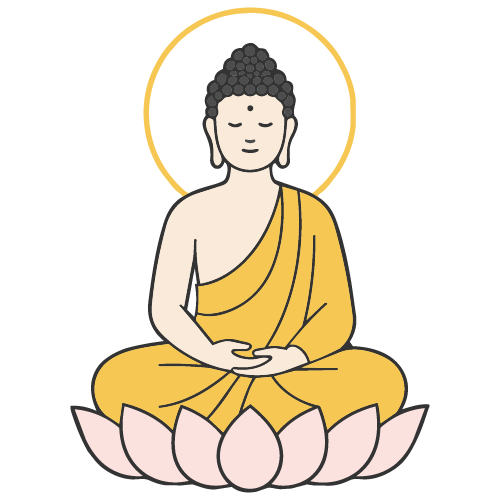
Buddhism (佛教, Fójiào) originated in India and began spreading into China around the first centuries CE. Unlike Taoism and Confucianism, it was therefore an imported tradition that had to develop within an already established Chinese cultural and philosophical environment.
As Buddhism spread, Chinese thinkers began interpreting Buddhist ideas through concepts that were already familiar to them. This helped Buddhism develop into distinctly Chinese forms rather than remaining identical to the traditions that had developed in India.
How Buddhism Developed in China
Several schools of Buddhism became influential in China. One of the best known is Chan Buddhism (禅宗, Chánzōng), which later influenced the development of Zen Buddhism in Japan.
Chinese Buddhism also developed its own temples, rituals, scriptures and devotional practices. Different traditions placed emphasis on different paths to spiritual development, including meditation, study and devotion.
Buddhist ideas also became closely connected with Chinese art and literature. Buddhist temples, sculptures and paintings became important parts of China’s cultural landscape, while Buddhist concepts appeared throughout Chinese writing and storytelling.
This process was not one-way. Buddhism’s development in China also involved interaction with existing Chinese traditions, particularly Taoist and Confucian thought. Rather than simply replacing them, Buddhism became part of a much broader Chinese religious and philosophical landscape.
Taoism vs Confucianism: What’s the Difference?
The difference between Taoism and Confucianism becomes clearer when you look at the kind of problems each tradition is trying to address.
Confucianism is strongly concerned with human relationships and society. It asks how people should behave towards their family, community and wider society, and how good character can contribute to a stable and ethical society.
Taoism takes a different starting point. It is more concerned with the relationship between people and the natural order of the world. Rather than trying to organise life through rules and social roles, Taoist thought often encourages flexibility, simplicity and working with circumstances instead of constantly trying to control them.
This difference can be seen in their attitudes towards social structure. Confucian thought generally sees well-ordered relationships as important, while Taoist thinkers have sometimes questioned whether too many rules and artificial expectations actually make life better.
That doesn’t mean one tradition is simply “social” and the other is “natural.” Both are concerned with how people should live and develop themselves. They simply approach those questions from different directions.
A useful way to remember the distinction is:
“Confucianism asks how we can become better people within our relationships and society.
Taoism asks how we can live in greater harmony with the way the world works.”
Taoism vs Buddhism: What’s the Difference?
Taoism and Buddhism can sometimes look similar because both encourage people to rethink their attachment to everyday desires and question the way we normally see the world.
The underlying ideas, however, are quite different.
In Taoism, the goal is broadly to live in harmony with the Tao, the natural way or order of things. Ideas such as wu wei encourage people not to force situations unnecessarily and to work with the circumstances around them.
Buddhism begins with a different problem: suffering. Buddhist teachings explore why people experience suffering, how attachment and desire contribute to it, and how a person can eventually move beyond it.
Their views of the self also differ. Buddhist teachings place significant emphasis on understanding the changing and impermanent nature of the self, while Taoist thought is more concerned with moving beyond rigid ideas and living in accordance with the natural flow of life.
There was also considerable interaction between the two traditions after Buddhism arrived in China. Taoist concepts sometimes provided Chinese thinkers with familiar ways of discussing Buddhist ideas, while Chinese Buddhism developed in its own direction rather than simply reproducing Indian Buddhism.
Confucianism vs Buddhism: What’s the Difference?
Confucianism and Buddhism both place importance on improving oneself, but they approach that goal in different ways.
Confucianism is primarily concerned with how a person lives within society. Being a good person involves fulfilling responsibilities towards family, friends and the wider community. Moral development happens through learning, self-discipline and practising good conduct in everyday relationships.
Buddhism takes a broader view of the problem of human existence. Rather than focusing mainly on social roles, Buddhist teachings ask why people suffer and how they can become free from suffering. This involves understanding attachment, impermanence and the causes of suffering.
Their ideas about family and society can therefore feel quite different. Confucianism places considerable value on family duties and social relationships, while Buddhist teachings can encourage people to look beyond worldly attachments altogether.
That doesn’t mean Buddhism rejects family or society, nor does Confucianism ignore questions about human suffering. The difference is more about where each tradition places its emphasis.
A useful distinction is:
“Confucianism focuses on becoming a good and responsible person within society, while Buddhism focuses on understanding existence and overcoming suffering.”
How These Traditions Shaped Chinese Culture
The influence of Taoism, Confucianism and Buddhism extends well beyond temples and philosophical texts. Their ideas have shaped parts of Chinese family life, education, art, literature and cultural traditions.
Family and Social Relationships
Confucian ideas have had a particularly strong influence on attitudes towards family responsibility, education and respect for elders. Concepts such as filial piety, or 孝 (xiào), became important parts of Chinese social thought.
Art and Literature
Taoist and Buddhist ideas have both influenced Chinese art and literature. Traditional landscape painting, for example, often reflects Taoist ideas about humanity’s relationship with nature, while Buddhist themes appear in religious sculpture, painting and poetry.
Health and Spiritual Practices
Taoist traditions have also influenced practices connected with health, meditation and physical cultivation. Practices such as qigong (气功) developed within a broader cultural environment influenced by Taoist ideas, although their history also involves other traditions.
Stories and Folklore
Religious and philosophical ideas also appear throughout Chinese stories and legends. Journey to the West (Note to Nika: please internally link to JTW guide blog once live), for example, brings together Buddhist ideas, Taoist traditions and Chinese folklore within a single fictional world.
The same overlap can be seen more broadly in Chinese mythology, where gods, spirits and legendary figures can have connections to different religious and folk traditions.
Chinese Philosophy Vocabulary
If you’re learning Mandarin, these are some useful words for discussing Taoism, Confucianism, Buddhism and Chinese philosophy.
| English | Chinese | Pinyin |
|---|---|---|
| Taoism | 道教 | Dàojiào |
| Confucianism | 儒家 | Rújiā |
| Buddhism | 佛教 | Fójiào |
| Philosophy | 哲学 | zhéxué |
| The Way / Tao | 道 | dào |
| Harmony | 和谐 | héxié |
| Virtue | 德 | dé |
| Benevolence | 仁 | rén |
| Filial piety | 孝 | xiào |
| Nature | 自然 | zìrán |
| Enlightenment | 觉悟 | juéwù |
| Meditation | 冥想 | míngxiǎng |