Key Takeaways
- Chinese does not use an alphabet like English.
- Mandarin is written using characters called 汉字 (Hànzì).
- Chinese characters represent meaning rather than combinations of letters.
- Pinyin uses the Roman alphabet to show pronunciation, but is not the Chinese writing system.
- Most learners only need a few hundred characters to begin reading and communicating in Chinese.
If you’ve ever searched for the “Chinese alphabet”, you’re not alone.
One of the first questions many beginner Chinese learners ask is whether Mandarin has letters like A, B, and C. After all, most languages are written using some form of alphabet, so it’s natural to assume Chinese works the same way.
The short answer is no. Chinese does not use an alphabet.
Instead, Mandarin uses a writing system based on characters called 汉字 (Hànzì). While this may seem intimidating at first, understanding how Chinese characters work can make the language far less mysterious than many people expect.
In this guide, we’ll explain how Chinese writing works, what pinyin is, and why not having an alphabet doesn’t make Chinese impossible to learn.
Does Chinese Have an Alphabet?
Unlike English, Chinese is not written using an alphabet.
English uses 26 letters that can be combined to create thousands of words. For example:
cat
c+a+t
Each letter represents a sound, and together they form a word.
Chinese works differently. Instead of combining letters, Chinese uses characters.
For example:
猫
māo
cat
狗
gǒudog
Each character represents a syllable and carries meaning. Rather than sounding out words letter by letter, Chinese readers recognise individual characters and combinations of characters.
This type of writing system is known as a logographic writing system, while English is considered an alphabetic writing system.
For example:
| chinese | pinyin | english |
|---|---|---|
| 人 | rén | person |
| 中国 | Zhōngguó | China |
| 学生 | xuésheng | student |
| 生肖 | shēngxiào | Chinese Zodiac |
| 朋友 | péngyou | friend |
| 电脑 | diànnǎo | computer |
This means learners don’t memorise random symbols. Instead, they gradually build vocabulary in much the same way they would when learning any other language.
What Are Chinese Characters?
Chinese characters, known as 汉字 (Hànzì), are one of the oldest continuously used writing systems in the world.
Archaeologists have found early forms of Chinese writing dating back more than 3,000 years. Although the writing system has evolved significantly over time, modern Chinese characters still share many connections with their historical origins.
Here are a few simple examples:
character
meaning
pinyin pronunciation
人
person
rén
大
big
dà
学
to study
xué
Simplified Chinese
Used primarily in Mainland China and Singapore.
EXAMPLE
学
Traditional Chinese
Used primarily in Hong Kong, Macau, and Taiwan.
EXAMPLE
學
Then What Is Pinyin?
If Chinese doesn’t use an alphabet, you may be wondering why Chinese words are often written using Roman letters.
The answer is pinyin.
Pinyin is a pronunciation system that uses the Roman alphabet to represent Mandarin sounds. It was developed in the 1950s to standardise pronunciation and make Chinese more accessible to learners.
For example:
你好
nǐ hǎo
hello
Pinyin helps learners understand how words are pronounced before they learn the corresponding characters.
However, one of the biggest misconceptions among beginners is that pinyin is the Chinese alphabet. It isn’t.
Pinyin is simply a pronunciation tool. Chinese books, newspapers, websites, menus, text messages, and official documents are written using Chinese characters, not pinyin.
Most learners use pinyin heavily during the early stages of study before gradually becoming more comfortable reading characters directly.
How Do Chinese People Type on Their Phones?
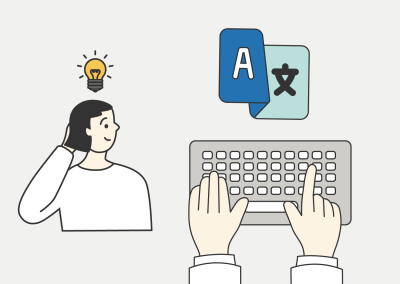
Many beginners assume typing Chinese must be difficult because there is no alphabet.
In reality, Chinese speakers type just as quickly as English speakers.
The most common method is using a pinyin keyboard.
For example, if someone wants to type: 你好
They simply type: nihao
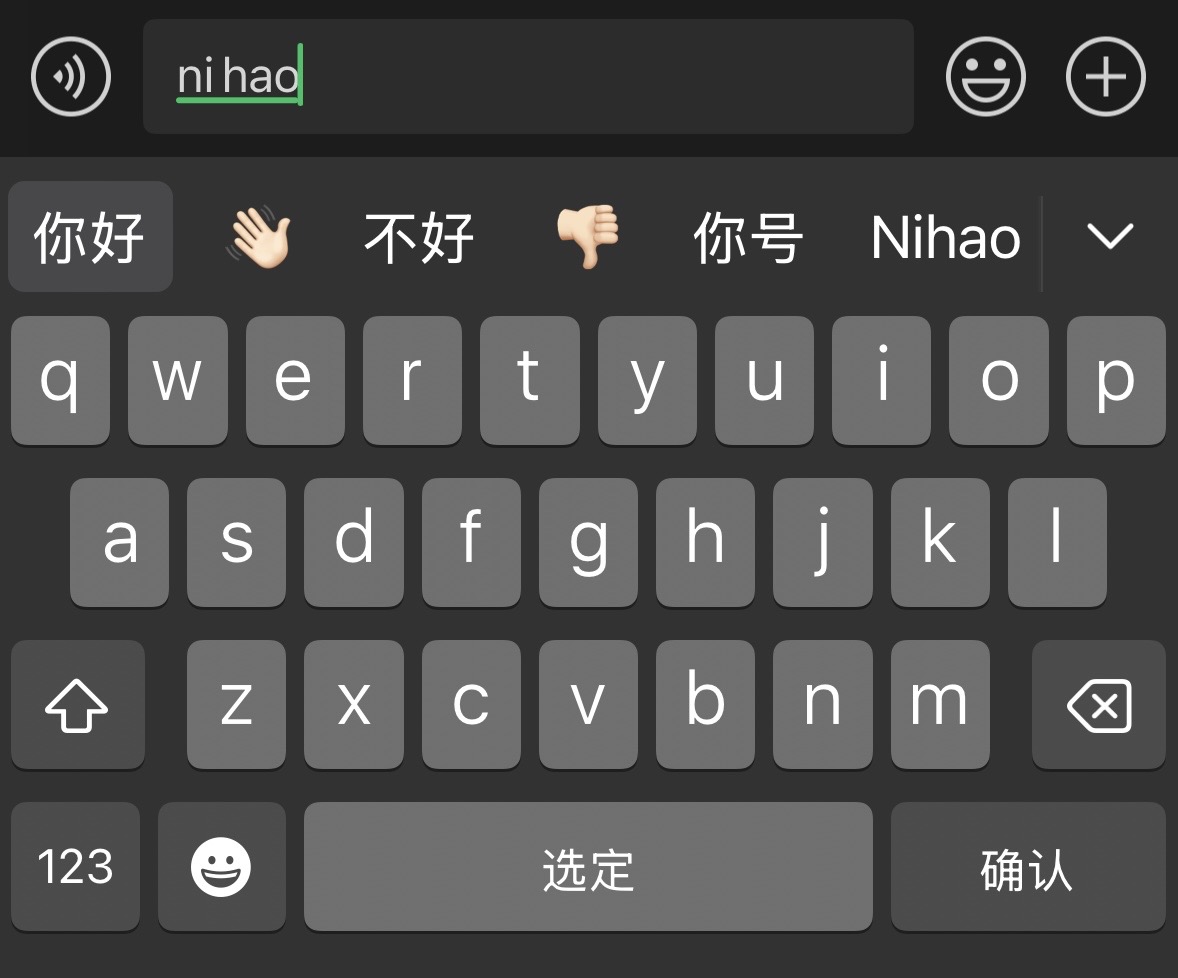
Their phone then suggests matching characters, and they select the correct option.
Modern keyboards are highly accurate and can often predict entire phrases after only a few keystrokes.
Many Chinese speakers also use:
- Handwriting input, where characters are drawn directly onto the screen
- Voice input, where speech is automatically converted into Chinese characters
Understanding how Chinese people type helps many learners realise that memorising thousands of characters is not as overwhelming as it initially seems.
Do You Need to Learn Thousands of Characters?
No. This is one of the biggest myths surrounding Chinese learning.
While there are tens of thousands of Chinese characters in existence, the vast majority are rarely used. Most beginners only need a few hundred characters to start reading simple texts and recognising common vocabulary.
Chinese proficiency exams, such as HSK, introduce vocabulary gradually. Learners build their knowledge step by step rather than attempting to memorise thousands of characters at once.
For example:
- HSK 1 introduces approximately 300 words
- HSK 2 introduces approximately 500 words
- Higher levels gradually expand reading and communication ability
As your vocabulary grows, you’ll begin recognising recurring character patterns, which makes learning new words significantly easier.
Why Chinese Is Easier Than Many Beginners Expect
Chinese certainly presents challenges. The writing system is unfamiliar, tones require practice, and character recognition takes time.
However, Chinese is often simpler than many learners expect in other areas.
Unlike English, Chinese does not require:
- Verb conjugations
- Grammatical gender
- Multiple verb tenses
- Complex plural forms

For example:
I eat.
She eats.
They eat.
In Chinese, the verb remains the same:
我吃。 (Wǒ chī.)
她吃。 (Tā chī.)
他们吃。 (Tāmen chī.)
Once learners understand how the writing system works, many find Chinese grammar surprisingly straightforward.
The challenge is different from learning a European language, but it is not necessarily harder.
Chinese Alphabet: The Takeaway
Chinese does not have an alphabet, but that does not make it impossible to learn.
Instead of using letters, Mandarin relies on characters that represent meaning and pronunciation. Pinyin helps learners understand how words sound, while modern technology makes reading and typing Chinese easier than ever.
You do not need to memorise thousands of characters to get started, and most learners are surprised by how quickly they can begin recognising common words and phrases.
Once you understand how characters, pinyin, and pronunciation work together, the Chinese writing system becomes far less intimidating than it first appears.