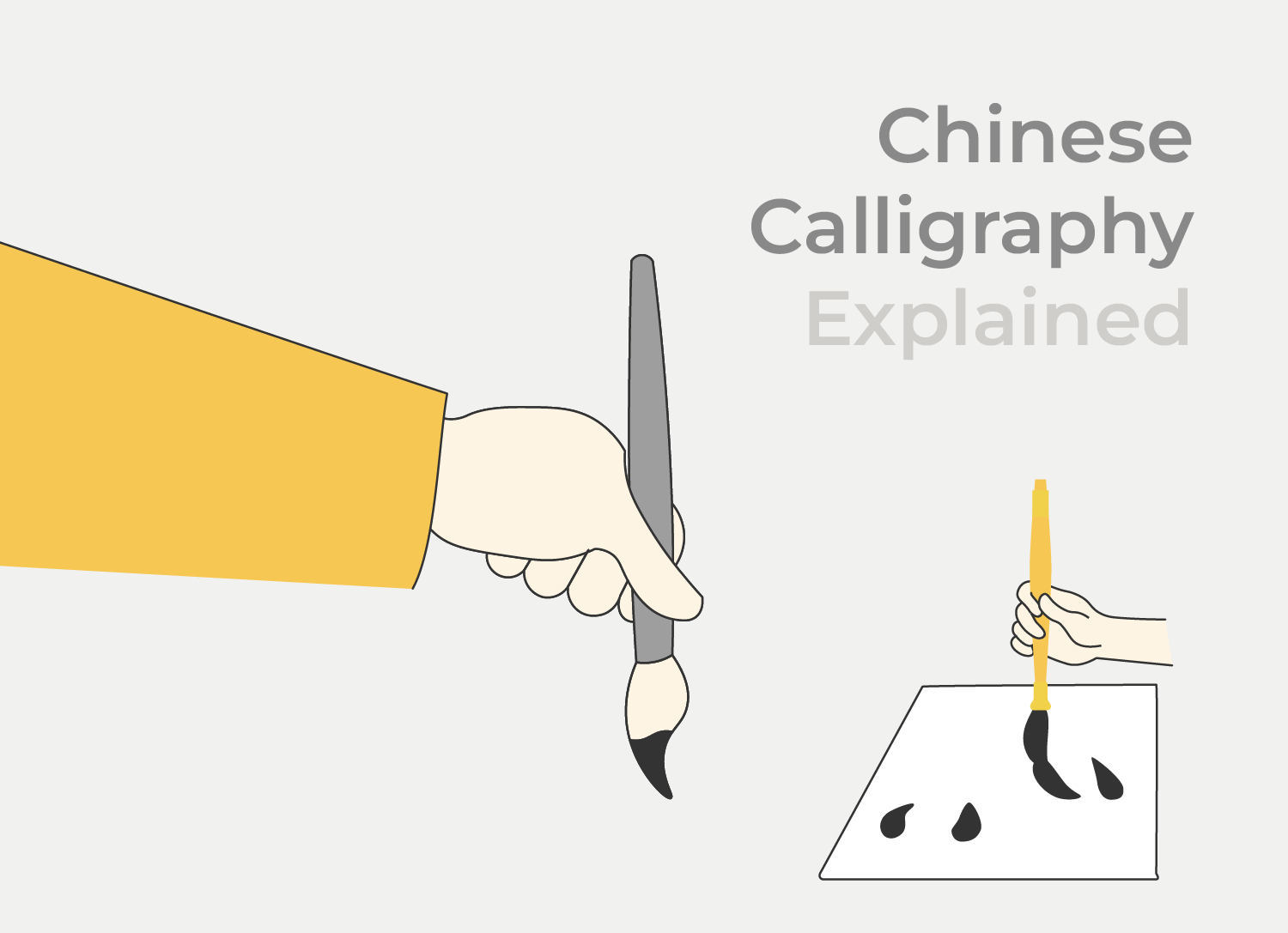
Chinese calligraphy (书法, shūfǎ) is the art of writing Chinese characters with a brush. It is more than simply handwriting: calligraphy combines the structure of Chinese characters with movement, balance, rhythm and artistic expression.
Chinese calligraphy has been practised for thousands of years and remains an important part of Chinese culture. Different styles developed throughout Chinese history, each with its own distinctive shapes, strokes and visual qualities.
For Mandarin learners, Chinese calligraphy also offers a different way to understand the writing system. The same character can look very different depending on the calligraphic style, while still retaining its underlying structure and meaning.
In this guide, we’ll explore the history of Chinese calligraphy, its major styles, the traditional tools used by calligraphers and why this form of Chinese writing art remains important today.
Key Takeaways
- Chinese calligraphy is known as 书法 (shūfǎ).
- It combines Chinese writing with artistic expression.
- Its history stretches back thousands of years.
- Several major calligraphic styles developed throughout Chinese history.
- The Four Treasures of the Study are traditional tools associated with calligraphy.
- Calligraphy can help learners appreciate the structure and history of Chinese characters.
What Is Chinese Calligraphy?
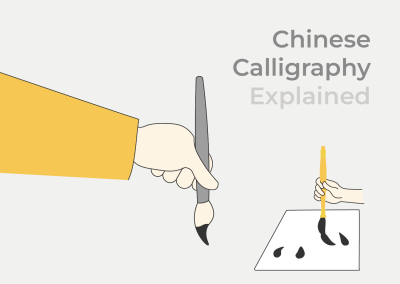
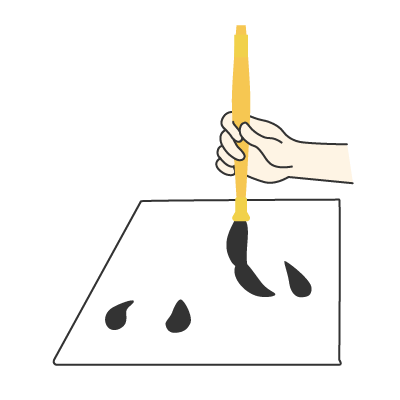
Chinese calligraphy (书法, shūfǎ) is the artistic practice of writing Chinese characters with a brush.
Unlike ordinary handwriting, calligraphy places particular importance on the shape, movement and balance of each character. The way a stroke begins, changes direction and ends can all affect the appearance of the finished character.
Calligraphers also consider the spacing between strokes and the overall balance of the character. This gives calligraphy its distinctive visual quality.
Chinese calligraphy is therefore both a form of writing and a form of traditional Chinese art.
书法
shūfǎ
calligraphy
Chinese Calligraphy and Chinese Characters
Calligraphy is closely connected to the development of Chinese characters (汉字, Hànzì).
As Chinese writing developed, different ways of forming and writing characters emerged. These eventually became the major calligraphic styles used today.
A character can look very different in regular script compared with cursive or seal script. However, the different styles are connected by the underlying structure of the Chinese writing system.
This is one reason calligraphy can be particularly interesting for Mandarin learners. It shows how Chinese characters are not simply symbols to memorize, but a writing system with a long history and distinctive visual structure.
A Brief History of Chinese Calligraphy
Chinese calligraphy has developed alongside the Chinese writing system for thousands of years.
Some of the earliest known examples of Chinese writing appear on oracle bones, which were used during the Shang dynasty. These early characters were carved rather than written with a brush, but they provide an important foundation for understanding the development of Chinese writing.
Over time, Chinese characters became more standardized, and different writing styles emerged.
The development of calligraphy was particularly important during periods such as the Han and Tang dynasties, when different scripts became established and calligraphy developed into a respected artistic and scholarly practice.
Rather than changing into one single modern style, Chinese calligraphy developed several distinct forms. Each style reflects a different stage in the history of Chinese writing.
The Five Major Styles of Chinese Calligraphy
Chinese calligraphy is usually discussed through five major styles, each with its own appearance and characteristics.
| style | chinese | pinyin | key characteristic |
|---|---|---|---|
| seal script | 篆书 | zhuànshū | ancient and highly structured |
| clerical script | 隶书 | lìshū | broad and distinctive strokes |
| regular script | 楷书 | kǎishū | clear and structured |
| running script | 行书 | xíngshū | fluid and semi-cursive |
| cursive script | 草书 | cǎoshū | highly flowing and expressive |
Seal Script
Seal script (篆书, zhuànshū) is one of the oldest major calligraphic styles.
Its characters have a distinctive, often symmetrical appearance and are closely connected to early forms of Chinese writing.
Clerical Script
Clerical script (隶书, lìshū) developed from earlier forms of writing and became more standardized. It is recognizable for its relatively broad, horizontal strokes and structured appearance.
Regular Script
Regular script (楷书, kǎishū) is one of the clearest and most structured styles.
It is particularly important for learners because it is the basis for the standard forms of Chinese characters commonly seen in modern writing.
Running Script
Running script (行书, xíngshū) is more fluid than regular script.
Characters can be written with connected or simplified strokes, while still remaining relatively easy to recognize.
Cursive Script
Cursive script (草书, cǎoshū) is the most free-flowing of the five major styles.
Strokes may be heavily abbreviated or connected, making it expressive and visually striking but much harder for beginners to read.
The Four Treasures of the Study
Traditional Chinese calligraphy is closely associated with four essential tools, known as the Four Treasures of the Study (文房四宝, wénfáng sìbǎo).
These are the brush, ink, paper and inkstone. Together, they form the basic tools traditionally used for Chinese calligraphy.
| chinese | pinyin | tool |
|---|---|---|
| 笔 | bǐ | brush |
| 墨 | mò | ink |
| 纸 | zhǐ | paper |
| 砚 | yàn | inkstone |
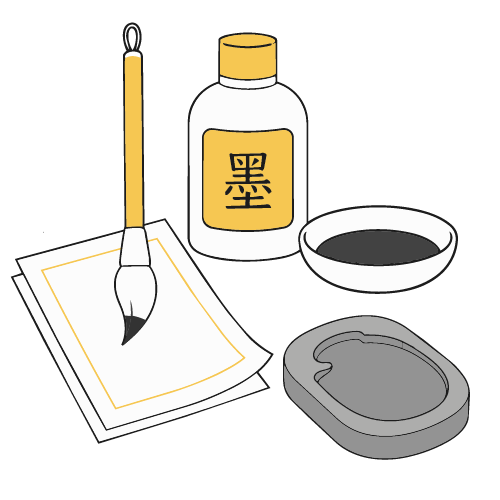
文房四宝
wénfáng sìbǎo
Four Treasures of the Study
Brush
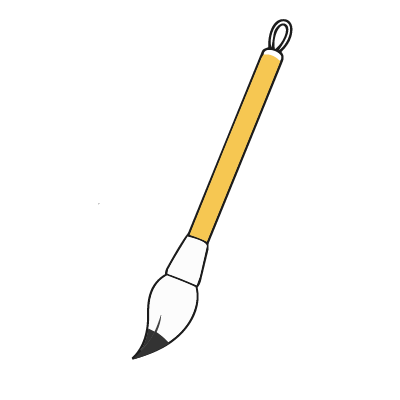
The brush (毛笔, máobǐ) is used to create the strokes of each character.
Different amounts of pressure can change the thickness and shape of a stroke, giving calligraphy its distinctive movement and rhythm.
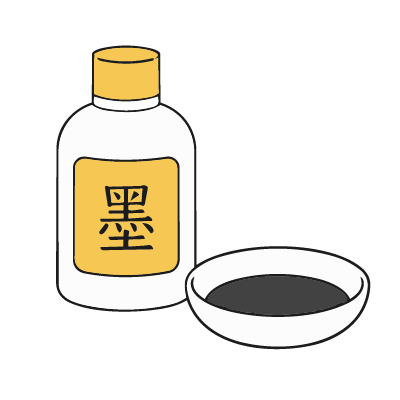
Ink
Traditional Chinese ink is often made using an inkstick, which is ground with water on an inkstone. The amount of water and ink used can affect the darkness and texture of the writing.
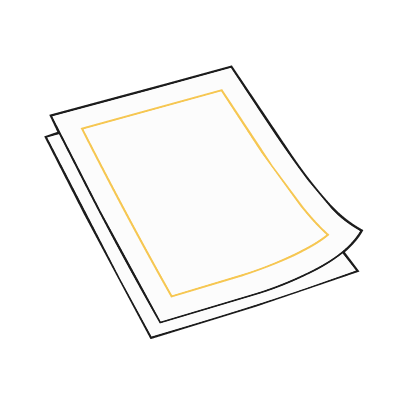
Paper
Specialised calligraphy paper absorbs ink differently from ordinary writing paper.
The way the ink spreads across the paper is an important part of the final appearance of the work.
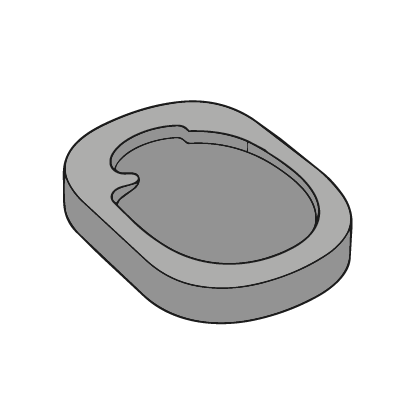
Inkstone
The inkstone (砚, yàn) is traditionally used to grind the inkstick and mix it with water.
Together, these four tools form an important part of the traditional practice of Chinese calligraphy.
Chinese Calligraphy and Chinese Characters
Chinese calligraphy cannot be separated from the Chinese writing system.
The appearance of a character can change significantly depending on the calligraphic style, but its underlying structure remains connected to the same Chinese writing system.
For example, a character written in regular script may look much clearer and more structured than the same character written in cursive script. This is also why understanding the development of Chinese characters can make calligraphy easier to appreciate.
If you’re interested in how modern Chinese characters differ depending on the writing system used, see our guide to traditional and simplified Chinese characters.
Calligraphy can therefore give Mandarin learners a different perspective on characters they may already recognize from textbooks or everyday writing.
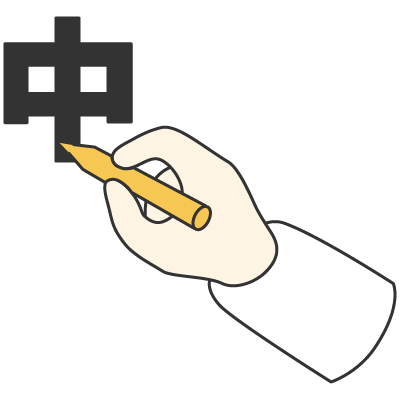
汉字
Hànzì
Chinese character(s)
Chinese Calligraphy and Chinese Idioms
Calligraphy is often used to write Chinese idioms and chengyu (成语), as well as poems, quotations and traditional phrases.
A short expression can become a piece of visual art when written with a brush. The meaning of the words and the style of the calligraphy work together to create the finished piece.
For example, a calligrapher might write a chengyu in an expressive style and display it in a home, school or cultural space.
If you’re interested in learning more about these expressions, see our guide to Chinese idioms and chengyu.
Useful Chinese Calligraphy Vocabulary
If you’re learning Mandarin, these words can help you understand discussions about Chinese calligraphy and Chinese writing.
| chinese | pinyin | english |
|---|---|---|
| 书法 | shūfǎ | Chinese calligraphy |
| 书法家 | shūfǎjiā | calligrapher |
| 汉字 | Hànzì | Chinese character |
| 毛笔 | máobǐ | brush |
| 墨 | mò | ink |
| 纸 | zhǐ | paper |
| 砚 | yàn | inkstone |
| 篆书 | zhuànshū | seal script |
| 隶书 | lìshū | clerical script |
| 楷书 | kǎishū | regular script |
| 行书 | xíngshū | running script |
| 草书 | cǎoshū | cursive script |