Colors can carry meanings that go far beyond appearance. In Chinese culture, different colors have traditionally been associated with ideas such as luck, happiness, wealth, power, celebration, mourning, and prosperity.
Some of these meanings come from traditional beliefs and symbolism, while others have developed through Chinese history, language, and customs. This is why a color that has a positive meaning in one culture can have a very different meaning in another.
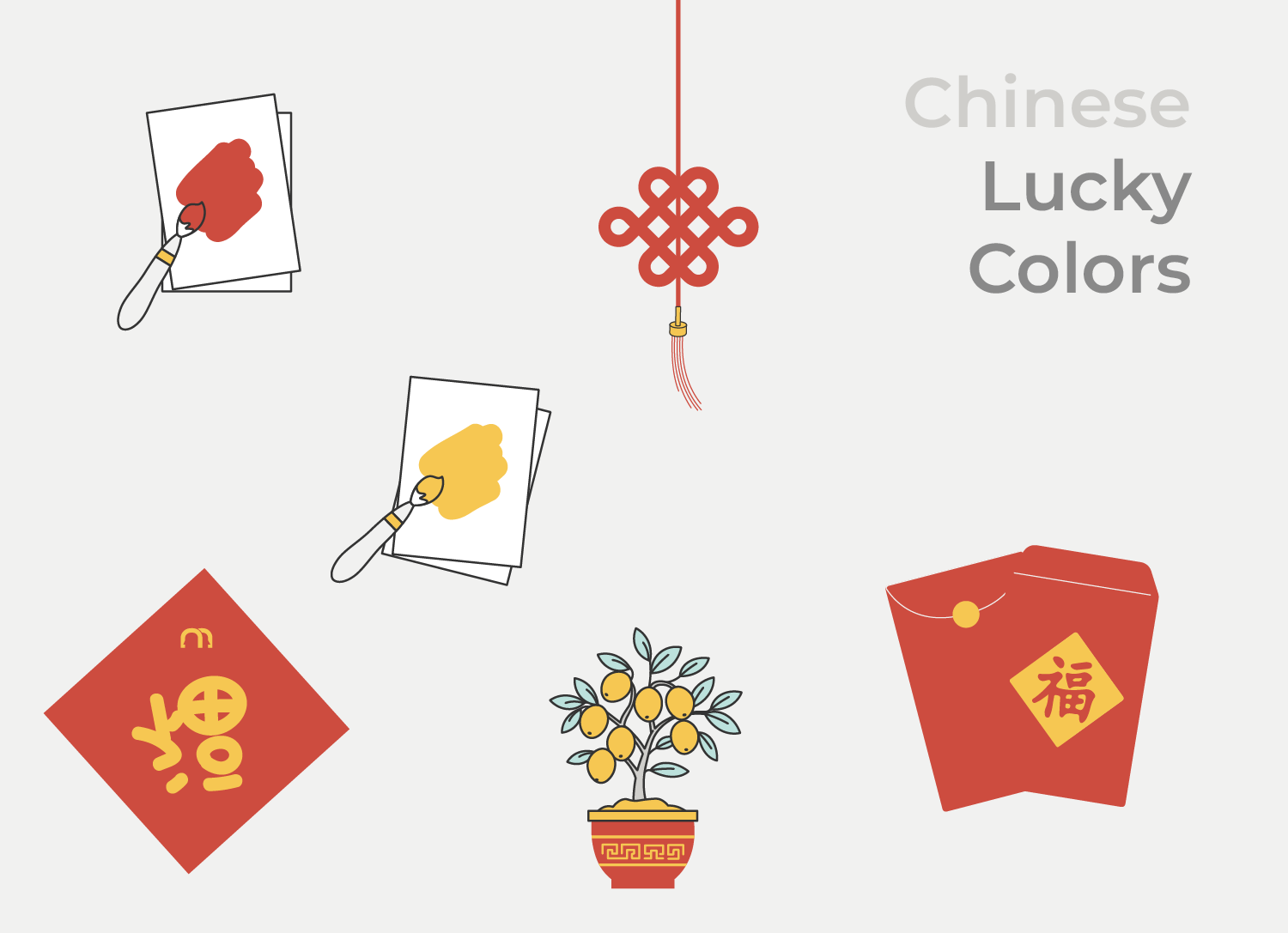
The best-known example is red. In China, red is strongly associated with good luck, happiness, celebration, and prosperity, which is why it appears so often during Chinese New Year, weddings, and other important occasions. Gold also has strong associations with wealth and prosperity, while yellow has a long history connected with power and status.
In this guide, we’ll explore the meanings of the most important Chinese lucky colors, as well as the cultural symbolism associated with other common colors.
Key Takeaways
-
Red (红色, hóngsè) is strongly associated with luck, happiness, celebration, and prosperity.
-
Gold (金色, jīnsè) is traditionally associated with wealth, prosperity, and status.
-
Yellow (黄色, huángsè) has important historical associations with power, authority, and tradition.
-
Green (绿色, lǜsè) is commonly connected with nature, life, and growth.
-
Blue (蓝色, lánsè) has a range of traditional and modern associations.
-
White (白色, báisè) can represent purity in some contexts but is also traditionally associated with mourning.

What Do Colors Mean in Chinese Culture?
Color symbolism has played an important role in Chinese culture for centuries.
Different colors have been used to communicate ideas about luck, wealth, status, celebration, nature, and mourning. Some associations developed through Chinese history, while others are connected to the sounds, symbolism, or traditional use of particular colors.
This means that colors can sometimes communicate something without words.
For example, seeing a lot of red and gold during a Chinese celebration can immediately create an association with happiness, prosperity, and good fortune.
If you want to learn more about good fortune in Chinese culture, check out our dedicated guide.
What Are the Lucky Colors in Chinese Culture?
The colors most commonly associated with good fortune and positive symbolism include red and gold, while yellow also has an important historical and cultural significance.
Here’s a quick overview:
| color | chinese | pinyin | common association |
|---|---|---|---|
| Red | 红色 | hóngsè | Luck, happiness, celebration |
| Gold | 金色 | jīnsè | Wealth, prosperity, status |
| Yellow | 黄色 | huángsè | Power, authority, tradition |
| Green | 绿色 | lǜsè | Nature, life, growth |
| Blue | 蓝色 | lánsè | Calmness, nature, modern use |
| White | 白色 | báisè | Mourning, purity |

Red in Chinese Culture: Luck, Happiness & Celebration
Red (红色, hóngsè) is probably the most important color to understand when learning about Chinese culture.
It is traditionally associated with:
- Good luck
- Happiness
- Prosperity
- Celebration
- Good fortune
- Protection from bad luck
This is why red appears so frequently during important Chinese celebrations.
During Chinese New Year, for example, red decorations are used in homes, shops, streets, and public spaces. Red envelopes, known as 红包 (hóngbāo), are also traditionally given during celebrations and are associated with good wishes and good fortune.
Red is also an important color at Chinese weddings, where it can symbolize happiness and celebration.
You may see red in:
- Decorations
- Clothing
- Envelopes
- Gift packaging
- Lanterns
- Festival decorations
- Wedding decorations
For someone visiting China, the importance of red is one of the easiest examples of how cultural symbolism can appear in everyday life.
What Does Red Mean in Chinese Culture?
In simple terms, red is strongly associated with happiness, luck, prosperity, and celebration.
However, just as with other colors, context matters. Red isn’t automatically “lucky” in every possible situation. Its strongest positive associations are particularly visible during festivals, weddings, and other celebrations.

Gold in Chinese Culture: Wealth & Prosperity
Gold (金色, jīnsè) is another color strongly associated with positive ideas in Chinese culture.
Gold can represent:
- Wealth
- Prosperity
- Success
- Status
- Luxury
Its association with wealth makes gold a natural complement to red during celebrations.
You will often see red and gold together in Chinese festival decorations, particularly around Chinese New Year and other important celebrations.
Gold can also be used in decorative objects, architecture, clothing, packaging, and traditional designs to create an impression of importance, prosperity, and luxury.
For this reason, gold is often considered one of the most auspicious colors in Chinese cultural contexts.

Yellow in Chinese Culture: Power, Status & Tradition
Yellow (黄色, huángsè) has a particularly interesting history in China.
Rather than simply being a color associated with luck, yellow has traditionally been connected with power, authority, and status.
Its historical significance is closely connected with the Chinese imperial tradition. Yellow was associated with the emperor and imperial authority, giving the color a special status in traditional Chinese culture.
Today, yellow can still carry historical and cultural associations, although its meaning depends heavily on context.
This makes yellow a good example of why Chinese color symbolism cannot always be reduced to a simple list of “lucky” and “unlucky” colors.

Green in Chinese Culture: Nature, Life & Growth
Green (绿色, lǜsè) is naturally associated with the world around us and can represent ideas such as:
- Nature
- Life
- Growth
- Freshness
- Health
Green is therefore often used in contexts connected with the environment, nature, and modern ideas of health and sustainability.
However, green also has some more specific cultural associations in Chinese. One well-known example is 戴绿帽子 (dài lǜ màozi), literally “to wear a green hat,” which has a negative meaning related to a partner’s infidelity.
This is a useful reminder that color symbolism can be highly context-dependent. Knowing that green can represent nature and growth doesn’t mean that every use of green carries the same meaning.

Blue in Chinese Culture: Traditional & Modern Meanings
Blue (蓝色, lánsè) has a range of meanings in Chinese culture.
It can be associated with:
- The sky
- Water
- Calmness
- Nature
- Modern design
Unlike red, blue isn’t generally thought of as one of the primary traditional “lucky colors.”
However, it is widely used in modern Chinese fashion, branding, architecture, technology, and design.
This shows how color meanings can evolve over time. Traditional symbolism continues to exist alongside modern aesthetic preferences and cultural influences.

White in Chinese Culture: Mourning & Purity
White (白色, báisè) is an interesting example of how color symbolism can differ between cultures.
In many Western cultures, white is commonly associated with purity, innocence, and weddings. In traditional Chinese culture, however, white has also had strong associations with mourning, funerals, and death.
White may therefore appear in contexts connected with:
- Mourning
- Funerals
- Death
- Grief
- Purity
This is particularly important to understand when choosing clothing, flowers, or gifts for traditional Chinese occasions.
However, white does not always have a negative meaning. Its association with purity and simplicity can also appear in other contexts, particularly in modern design and everyday life.
The key point is that the meaning of white depends on the situation. When attending a traditional Chinese funeral or giving flowers, its connection with mourning is particularly important to understand.

Black in Chinese Culture: Traditional & Modern Meanings
Black (黑色, hēisè) also has a range of meanings in Chinese culture.
Traditionally, black could be associated with ideas such as authority, seriousness, and mystery, while in modern Chinese culture it is also commonly used in fashion, design, branding, and everyday clothing.
Today, black can communicate:
- Elegance
- Formality
- Seriousness
- Power
- Modernity
As with blue and green, it is difficult to classify black simply as either a lucky or unlucky color.
Its meaning depends on the context, occasion, and how it is used.
What Colors Are Used During Chinese Festivals?
Chinese festivals are some of the best places to see traditional color symbolism in action.
Chinese New Year
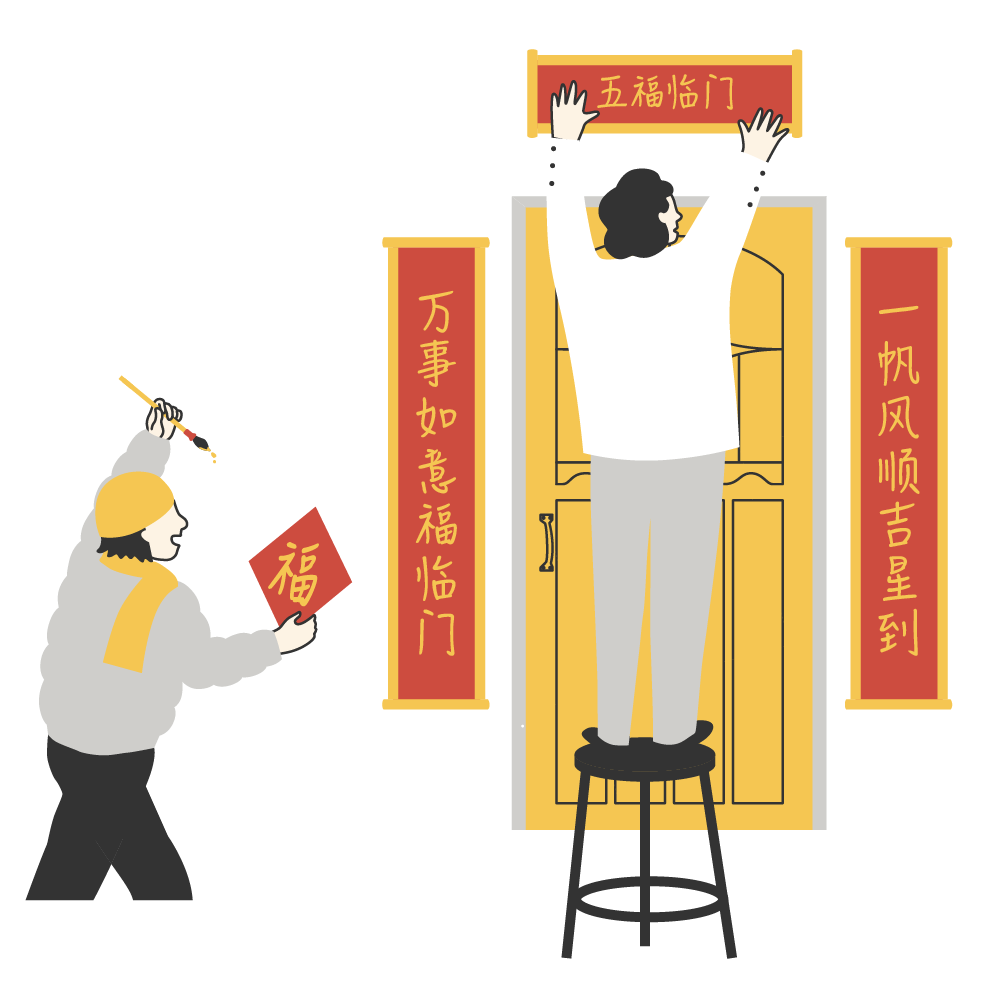
Red and gold are particularly prominent during Chinese New Year.
Red is associated with luck, happiness, and good fortune, while gold reinforces ideas of wealth and prosperity.
You may see these colors used in:
- Lanterns
- Door decorations
- Paper decorations
- Red envelopes
- Clothing
- Gift packaging
- Public decorations
This is why a street or home decorated for Chinese New Year can look dramatically different from its everyday appearance.
If you want to learn more about Chinese New Year, we have a full article that breaks it down for you!
Other Chinese Festivals
Color symbolism can also appear during other traditional festivals and celebrations. The specific colors used can depend on the occasion, local customs, and the objects being displayed.
Rather than assuming that one color has exactly the same meaning at every festival, it is useful to consider what is being celebrated and the cultural context.
Colors and Chinese Weddings
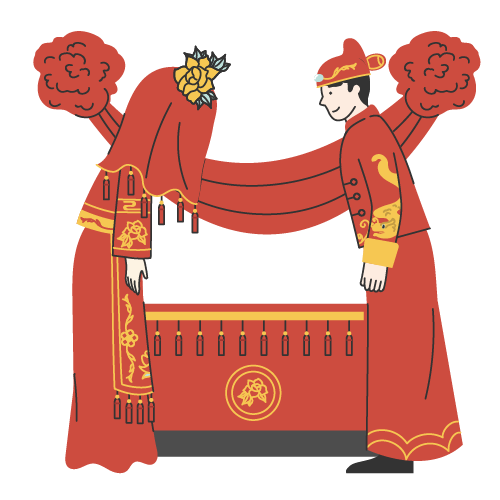
Color is particularly important at Chinese weddings.
Red is traditionally one of the most prominent wedding colors because of its associations with happiness, celebration, and good fortune.
Gold may also be incorporated into wedding decorations, clothing, invitations, and other details because of its associations with prosperity and success.
This can be quite different from traditional Western weddings, where white is often the dominant color.
For anyone attending a Chinese wedding, understanding these differences can help avoid accidental cultural misunderstandings.
If you want to full list of do’s and don’t for Chinese wedding, we have collated it here for you.

Colors and Chinese Gift-Giving
Color can also matter when choosing or presenting a gift in China.
For example, red and gold can create positive associations in festive contexts, making them common choices for celebrations and gift packaging.
White, on the other hand, can have associations with mourning, meaning that white flowers or predominantly white gifts may be inappropriate for certain occasions.
This doesn’t mean that every white object is considered bad luck. Context matters, and modern preferences are diverse.
When giving a gift, it is therefore useful to consider not only what the gift is, but also its color, packaging, and the occasion.
Do Chinese People Still Care About Color Symbolism Today?
Chinese color symbolism is still visible throughout modern China, particularly during festivals, weddings, traditional celebrations, and other important cultural events.
However, this does not mean that everyone in China follows traditional color beliefs.
Some people may deliberately choose auspicious colors for important occasions, while others may simply choose colors based on personal taste, fashion, or modern design.
Younger generations may also interpret colors differently from older generations, and meanings can vary between individuals and contexts.
It is therefore more accurate to think of Chinese color symbolism as a living cultural tradition, rather than a fixed set of rules.
Chinese Color Vocabulary
If you’re learning Mandarin, knowing the names of colors is a useful way to connect language learning with Chinese culture.
| english | chinese | pinyin |
|---|---|---|
| Colour / Color | 颜色 | yánsè |
| Red | 红色 | hóngsè |
| Gold | 金色 | jīnsè |
| Yellow | 黄色 | huángsè |
| Green | 绿色 | lǜsè |
| Blue | 蓝色 | lánsè |
| White | 白色 | báisè |
| Black | 黑色 | hēisè |
| Lucky / fortunate | 幸运 | xìngyùn |
| Auspicious | 吉祥 | jíxiáng |
| Celebration | 庆祝 | qìngzhù |
A useful pattern to notice is that 色 (sè) means “color.” So once you know the individual color words, you can recognize how many color names are constructed in Mandarin.
For example:
红色 (hóngsè) — red
黄色 (huángsè) — yellow
绿色 (lǜsè) — green
蓝色 (lánsè) — blue
This makes color vocabulary relatively straightforward for Mandarin learners to build.