The Forbidden City is one of China’s most famous landmarks and one of the world’s best-preserved imperial palace complexes. Located in the heart of Beijing, it served as the home of Chinese emperors and the political centre of the country for almost 500 years. Today, it attracts millions of visitors each year and offers a fascinating glimpse into China’s imperial past.
Built during the Ming Dynasty, the Forbidden City was the residence of 24 emperors from the Ming and Qing dynasties. Behind its towering red walls and golden rooftops lies a vast complex of palaces, courtyards, gardens, and ceremonial halls that once housed the emperor, his family, court officials, and servants.
See our guide on China’s dynasties and its fascinating history here.
Today, the Forbidden City is known as the Palace Museum and is recognised as a UNESCO World Heritage Site. Its remarkable architecture, rich history, and priceless collection of cultural treasures make it one of the most important historical sites in China.
Whether you’re planning a trip to Beijing, learning about Chinese history, or simply curious about one of the world’s greatest palaces, this guide explains everything you need to know about the Forbidden City, from its fascinating history to the people who once lived behind its walls.
Key Takeaways
-
The Forbidden City is a vast imperial palace complex located in Beijing, China.
-
It was built during the Ming Dynasty and served as the home of 24 Chinese emperors between 1420 and 1912.
-
The palace complex contains more than 980 surviving buildings spread across approximately 72 hectares.
-
Ordinary people were not allowed to enter the palace without the emperor’s permission, giving rise to the name “Forbidden City”.
-
Today, the site is known as the Palace Museum and is one of China’s most visited attractions and a UNESCO World Heritage Site.
What Is the Forbidden City?
The Forbidden City is a vast imperial palace complex located in the centre of Beijing, China. For nearly five centuries, it served as the home of China’s emperors and the political heart of the country. Important ceremonies, government meetings, and state affairs all took place within its walls.
Construction began in 1406 under the Yongle Emperor of the Ming Dynasty and was completed in 1420. Designed to reflect the power and authority of the emperor, the palace became the centre of imperial rule during both the Ming and Qing dynasties.
Today, the Forbidden City is better known as the Palace Museum (故宫, Gùgōng). Visitors can explore its magnificent halls, beautifully preserved courtyards, imperial gardens, and museum collections, making it one of the most popular tourist attractions in China.
As the largest surviving imperial palace complex in the world, the Forbidden City remains one of the greatest symbols of Chinese history, culture, and architecture.
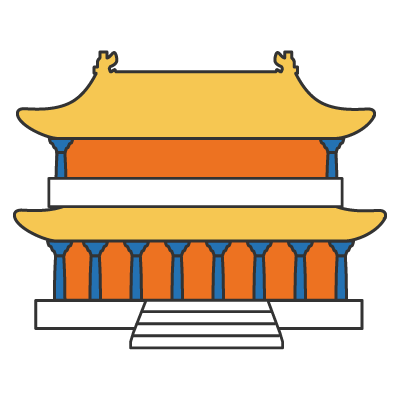
故宫
Gùgōng
the Forbidden City
Where Is the Forbidden City?
The Forbidden City is located in the centre of Beijing, China’s capital city. It sits immediately north of Tiananmen Square, placing it at the heart of the city’s historic and political centre.
The palace complex stretches for around 960 metres from north to south and 750 metres from east to west, covering approximately 72 hectares (180 acres). It is surrounded by a defensive moat and a high red wall, creating a self-contained city within the capital.
Today, visitors enter the Forbidden City through the Meridian Gate (午门, Wǔmén) on the southern side before making their way through the palace’s grand courtyards and ceremonial halls. The complex is easily accessible by public transport and is often visited alongside nearby attractions such as Tiananmen Square, Jingshan Park, and Beihai Park.
Its central location makes the Forbidden City one of the most recognisable and important landmarks in both Beijing and China as a whole.
Why Is It Called the Forbidden City?
The name “Forbidden City” comes from the fact that, for nearly 500 years, very few people were allowed to enter its walls. During the Ming and Qing dynasties, the palace was the private residence of the emperor and the centre of the Chinese government. Ordinary citizens could not enter without special permission, making it a truly “forbidden” place.
In traditional Chinese belief, the emperor was known as the “Son of Heaven” (天子, Tiānzǐ) and was considered to rule with the Mandate of Heaven. Because of his unique status, access to the palace was strictly controlled. Only members of the imperial family, high-ranking officials, servants, guards, and trusted advisers were permitted inside certain areas of the complex.
The palace was also designed to separate the emperor from the outside world. Surrounded by a 10-metre-high red wall and a 52-metre-wide moat, the Forbidden City functioned as a secure and self-contained city within Beijing. Life inside followed strict rules and ceremonies that reinforced the emperor’s authority.
Interestingly, the palace’s Chinese name is 紫禁城 (Zǐjìnchéng), which translates more accurately as “Purple Forbidden City”.
The word “purple” (紫, zǐ) does not refer to the colour of the palace walls. Instead, it refers to the Purple Star, known in Western astronomy as the North Star (Polaris). In ancient Chinese astronomy, this star was believed to be the home of the Heavenly Emperor and the centre of the heavens. Naming the imperial palace after it symbolised that the emperor ruled on Earth with heavenly authority.
Today, the palace is more commonly known in Chinese as 故宫 (Gùgōng), meaning “Former Palace”. Since becoming the Palace Museum in 1925, it has welcomed millions of visitors from around the world, making one of history’s most exclusive places one of China’s most accessible cultural attractions.
A Brief History of the Forbidden City
The Forbidden City has stood at the heart of Beijing for more than 600 years. During that time, it witnessed the rise and fall of dynasties, imperial ceremonies, political change, and the end of more than two thousand years of imperial rule.
Here’s a brief timeline of its history.
1406–1420: Construction Begins
Construction of the Forbidden City began in 1406 under the Yongle Emperor, the third emperor of the Ming Dynasty.
It is estimated that more than one million workers, including craftsmen, builders, artists, and labourers, took part in the project. Precious materials were transported from across China, including timber from the south and marble from quarries near Beijing.
After 14 years of construction, the palace was completed in 1420, becoming the official residence of the emperor and the political centre of the Ming Dynasty.
1420–1644: The Ming Dynasty
For more than two centuries, the Forbidden City served as the home of 14 Ming emperors.
From within its walls, emperors governed the empire, received foreign ambassadors, held elaborate ceremonies, and made decisions that shaped Chinese history. The palace was not only a royal residence but also the centre of government and imperial administration.
Several fires damaged parts of the palace during the Ming Dynasty, but the buildings were repeatedly rebuilt using traditional architectural techniques.
1644–1912: The Qing Dynasty
In 1644, the Qing Dynasty took control of Beijing and the Forbidden City became the residence of a new imperial family.
Over the next 268 years, 10 Qing emperors ruled from the palace. While they preserved much of the existing complex, they also expanded and renovated sections of the palace, adding new buildings, artworks, and gardens.
Many of the treasures displayed in the Palace Museum today date from the Qing Dynasty, reflecting the wealth and artistic achievements of China’s last imperial rulers.
1912: The End of Imperial China
In 1912, the last emperor, Puyi, abdicated following the Xinhai Revolution, bringing more than two thousand years of imperial rule in China to an end.
Although the monarchy had officially ended, Puyi was allowed to continue living in the Inner Court of the Forbidden City for several years under a special agreement with the new government.
In 1924, however, he was required to leave the palace permanently, marking the end of the Forbidden City’s role as an imperial residence.
1925 to Today: The Palace Museum
In 1925, the Forbidden City officially became the Palace Museum, opening its gates to the public for the first time.
Today, the museum houses one of the world’s largest collections of Chinese art and historical artefacts, including paintings, ceramics, jade, calligraphy, furniture, and imperial treasures.
In 1987, the Forbidden City was designated a UNESCO World Heritage Site in recognition of its outstanding cultural and historical significance. Today, it remains one of China’s most visited attractions and an enduring symbol of the country’s rich imperial history.
Who Lived in the Forbidden City?
Although the emperor was the most important resident of the Forbidden City, thousands of people lived and worked within its walls. At its height, the palace was home to the imperial family, court officials, guards, servants, and artisans, all of whom played a role in running the vast palace complex.
Life inside the Forbidden City was highly organised. Every resident had a specific place within the palace hierarchy, and strict rules governed where they could go, what they could wear, and who they could interact with.

The Emperor
The emperor was the most powerful person in China and lived at the centre of the Forbidden City. He was regarded as the “Son of Heaven”, ruling the country under the Mandate of Heaven.
Each day, the emperor met with ministers, reviewed government affairs, held ceremonies, and made important decisions affecting the empire. Although he possessed immense power, his daily routine was carefully structured, with official duties often taking up much of his time.
The grand ceremonial halls in the Outer Court were used for major state occasions, while the Inner Court served as the emperor’s private living quarters.
The Empress
The empress was the highest-ranking woman in the imperial court and oversaw the Inner Court.
She managed palace affairs, supervised the imperial household, and played an important role during religious ceremonies and state events. Although her responsibilities were largely centred on palace life, she could also hold considerable influence over court politics, particularly if she had the emperor’s trust.
The empress lived in her own palace within the Inner Court, surrounded by attendants and servants.
The Imperial Family
The Forbidden City was also home to princes, princesses, imperial relatives, and members of the extended royal family.
Children of the emperor were educated within the palace, studying subjects such as literature, history, calligraphy, and Confucian philosophy. Their lives were governed by strict etiquette, and many rarely left the palace grounds during their early years.
Marriages within the imperial family were often arranged for political or diplomatic reasons rather than personal choice.
Imperial Consorts and Concubines
Alongside the empress, the emperor often had several consorts and concubines, each holding a specific rank within the imperial household.
Their lives were governed by strict rules, and promotions within the palace depended on imperial favour and court protocol. Many spent years living inside the Forbidden City with limited contact beyond the palace walls.
Competition for influence could be intense, and the relationships between consorts have inspired countless historical accounts, novels, television dramas, and films about imperial China.
Officials, Guards and Servants
The Forbidden City was also home to senior government officials, palace guards, cooks, doctors, craftsmen, artists, and countless servants.
Officials entered the palace to attend meetings with the emperor and discuss matters of government, while guards protected the palace gates and maintained security throughout the complex.
Behind the scenes, thousands of workers ensured that meals were prepared, ceremonies were organised, buildings were maintained, and the enormous palace continued to function smoothly every day.
What Is Inside the Forbidden City?
The Forbidden City covers approximately 72 hectares (180 acres) and contains more than 980 surviving buildings. Although it may appear overwhelming at first glance, the palace follows a carefully planned layout based on symmetry and traditional Chinese architectural principles.
The complex is broadly divided into two main sections: the Outer Court, where official ceremonies and state affairs took place, and the Inner Court, where the emperor and the imperial family lived.
The Outer Court
The Outer Court occupies the southern part of the palace and was used for the empire’s most important official ceremonies.
Here, emperors celebrated major festivals, received foreign ambassadors, announced important appointments, and presided over state occasions. The vast open courtyards were designed to impress visitors and demonstrate the authority of the imperial court.
Three magnificent halls dominate this section of the palace, forming the ceremonial heart of the Forbidden City.
Hall of Supreme Harmony
The Hall of Supreme Harmony (太和殿, Tàihédiàn) is the largest and most impressive building in the Forbidden City.
This grand hall was used for the emperor’s coronation, birthday celebrations, imperial weddings, and other important state ceremonies. Inside, the magnificent Dragon Throne symbolised the emperor’s supreme authority over the empire.
Standing on a three-tiered marble platform, it remains one of the finest examples of traditional Chinese palace architecture.
The Inner Court
North of the ceremonial halls lies the Inner Court, the private residential area of the palace.
This section contained the living quarters of the emperor, empress, consorts, and members of the imperial family. Daily life unfolded here, away from the formal ceremonies held in the Outer Court.
Although quieter than the southern part of the palace, the Inner Court remained a place of strict protocol and carefully observed traditions.
Palace of Heavenly Purity
The Palace of Heavenly Purity (乾清宫, Qiánqīng Gōng) served as the emperor’s residence during the early Ming Dynasty and remained one of the palace’s most important buildings throughout imperial history.
Later Qing emperors used it primarily for receiving officials, holding meetings, and conducting state business, while living in nearby residences.
Its richly decorated interiors reflected the dignity and prestige of the imperial court.
The Imperial Garden
Located at the northern end of the Forbidden City, the Imperial Garden provided a peaceful retreat from the formal surroundings of the palace.
The garden features ancient trees, colourful pavilions, elegant pathways, ornamental rocks, and traditional landscaping designed according to principles of harmony and balance.
Members of the imperial family used the garden for relaxation, festivals, and private ceremonies.
Museums and Imperial Treasures
Today, many of the palace buildings have been transformed into museum galleries displaying priceless collections from China’s imperial past.
Visitors can admire ancient paintings, jade carvings, porcelain, calligraphy, jewellery, furniture, bronze artefacts, and ceremonial objects collected by generations of emperors.
These collections make the Palace Museum one of the world’s greatest museums of Chinese history and art.
Architecture of the Forbidden City
The Forbidden City is widely regarded as one of the greatest masterpieces of traditional Chinese architecture. Every building, courtyard, and gateway was carefully planned to reflect the emperor’s supreme authority while following principles of balance, symmetry, and harmony.
Unlike many European palaces built from stone, the Forbidden City was constructed primarily from wood, making it the largest surviving collection of ancient wooden buildings in the world. Despite fires, earthquakes, and centuries of change, much of the original architecture has survived thanks to careful restoration and preservation.
The palace’s distinctive red walls, golden roofs, and elaborate decorations continue to make it one of China’s most recognisable landmarks.
Symmetry and Layout
One of the most striking features of the Forbidden City is its perfect symmetry.
The palace was designed along a central north-south axis, with the most important buildings positioned in the middle and smaller structures arranged evenly on either side. This orderly layout reflected the Confucian ideals of balance, hierarchy, and stability that shaped Chinese society.
Walking through the palace today, visitors pass through a carefully planned sequence of gates, courtyards, and ceremonial halls, each becoming progressively more exclusive as they move towards the emperor’s private quarters.
Red Walls and Yellow Roofs
The Forbidden City’s distinctive colours were chosen for their symbolic meaning.
The red walls represent happiness, prosperity, and good fortune, while the yellow glazed roof tiles symbolise imperial authority. During the Ming and Qing dynasties, yellow was reserved almost exclusively for the emperor, making it one of the most prestigious colours in Chinese culture.
Together, these colours reinforced the emperor’s unique status and helped distinguish the palace from every other building in the empire.
Dragons and Imperial Symbols
Throughout the Forbidden City, visitors will find countless carvings, paintings, and decorations featuring dragons.
In Chinese culture, the dragon symbolises strength, wisdom, prosperity, and imperial power. It became the official emblem of the emperor, appearing on robes, furniture, ceremonial objects, and the famous Dragon Throne inside the Hall of Supreme Harmony.
Other decorative motifs include phoenixes, cranes, lions, clouds, and lotus flowers, each representing different virtues such as peace, longevity, protection, or harmony.
Feng Shui and Design
The layout of the Forbidden City was also influenced by the traditional Chinese philosophy of feng shui (风水, fēngshuǐ).
The palace faces south, which was considered the most favourable direction according to ancient Chinese beliefs. Mountains lie to the north, while rivers and open spaces surround the complex, creating a balanced natural setting believed to encourage harmony and good fortune.
Whether viewed as philosophy or architectural planning, feng shui played an important role in shaping one of China’s most remarkable buildings.
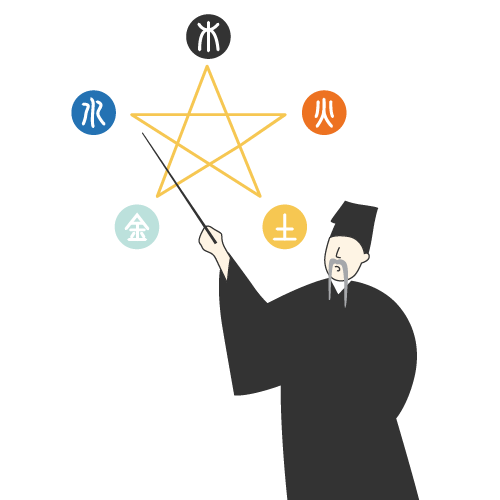
风水
fēngshuǐ
Feng Shui
Interesting Forbidden City Facts
The Forbidden City is full of fascinating stories and records that continue to amaze historians and visitors alike.
Here are some of the most interesting facts about this extraordinary palace.
It Was Home to 24 Emperors
Between 1420 and 1912, the Forbidden City served as the residence of 24 emperors—14 from the Ming Dynasty and 10 from the Qing Dynasty.
It Contains More Than 980 Buildings
The palace complex contains more than 980 surviving buildings and thousands of individual rooms spread across approximately 72 hectares (180 acres).
For centuries, people believed the palace contained 9,999½ rooms. Although this was symbolic rather than accurate, the legend reflected the emperor’s desire to build a palace that approached—but did not equal—the heavenly palace, which was believed to contain 10,000 rooms.
It Is the World’s Largest Imperial Palace Complex
The Forbidden City is recognised as the largest surviving imperial palace complex in the world, covering an area larger than 100 football pitches.
Its immense scale reflects the power and wealth of imperial China at its height.
The Buildings Are Made Mostly of Wood
Despite its enormous size, nearly all of the major buildings were constructed using traditional wooden timber frames.
This remarkable achievement demonstrates the skill of ancient Chinese craftsmen, whose techniques have allowed many of the buildings to survive for more than 600 years.
It Became a UNESCO World Heritage Site
In 1987, UNESCO added the Forbidden City to its list of World Heritage Sites, recognising its outstanding cultural, historical, and architectural importance.
Today, it remains one of China’s most treasured historical landmarks.
The Palace Is Home to Cats
One of the Forbidden City’s more unusual residents is its population of cats.
Cats have lived within the palace grounds for many years and were originally valued for protecting important buildings and artefacts from mice. Today, they have become popular with visitors and are often spotted wandering through the courtyards and gardens.
Can You Visit the Forbidden City?
Yes. Today, the Forbidden City is open to visitors as the Palace Museum, welcoming millions of people from around the world each year.
Visitors can explore the magnificent ceremonial halls, imperial residences, gardens, and museum galleries while learning about nearly 600 years of Chinese history. A typical visit takes three to five hours, although history enthusiasts may wish to spend an entire day exploring the site.
Because the Forbidden City is one of China’s most popular attractions, it’s recommended to book tickets in advance, particularly during weekends, public holidays, and peak travel seasons. Visitor numbers are limited each day to help preserve the historic buildings.
Many travellers combine their visit with nearby attractions such as Tiananmen Square, Jingshan Park, and Beihai Park, all of which are within walking distance.
Useful Chinese Vocabulary
| chinese | pinyin | english |
|---|---|---|
| 故宫 | Gùgōng | Forbidden City |
| 紫禁城 | Zǐjìnchéng | Purple Forbidden City |
| 宫殿 | gōngdiàn | Palace |
| 皇帝 | huángdì | Emperor |
| 皇后 | huánghòu | Empress |
| 朝代 | cháodài | Dynasty |
| 皇家的 | huángjiā de | Imperial |
| 北京 | Běijīng | Beijing |
| 博物馆 | bówùguǎn | Museum |
| 庭院 | tíngyuàn | Courtyard |
| 龙 | lóng | Dragon |
| 宝座 | bǎozuò | Throne |
| 门 | mén | Gate |
| 花园 | huāyuán | Garden |
| 世界遗产 | Shìjiè Yíchǎn | UNESCO World Heritage Site |
Learn More About Chinese History and Culture
If you enjoyed learning about the Forbidden City, explore these related guides to discover more about China’s fascinating history and traditions: