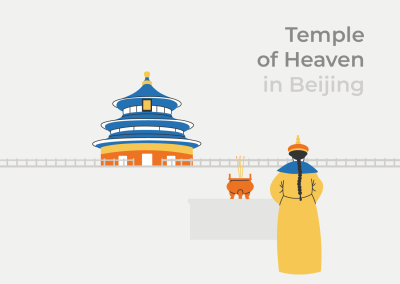
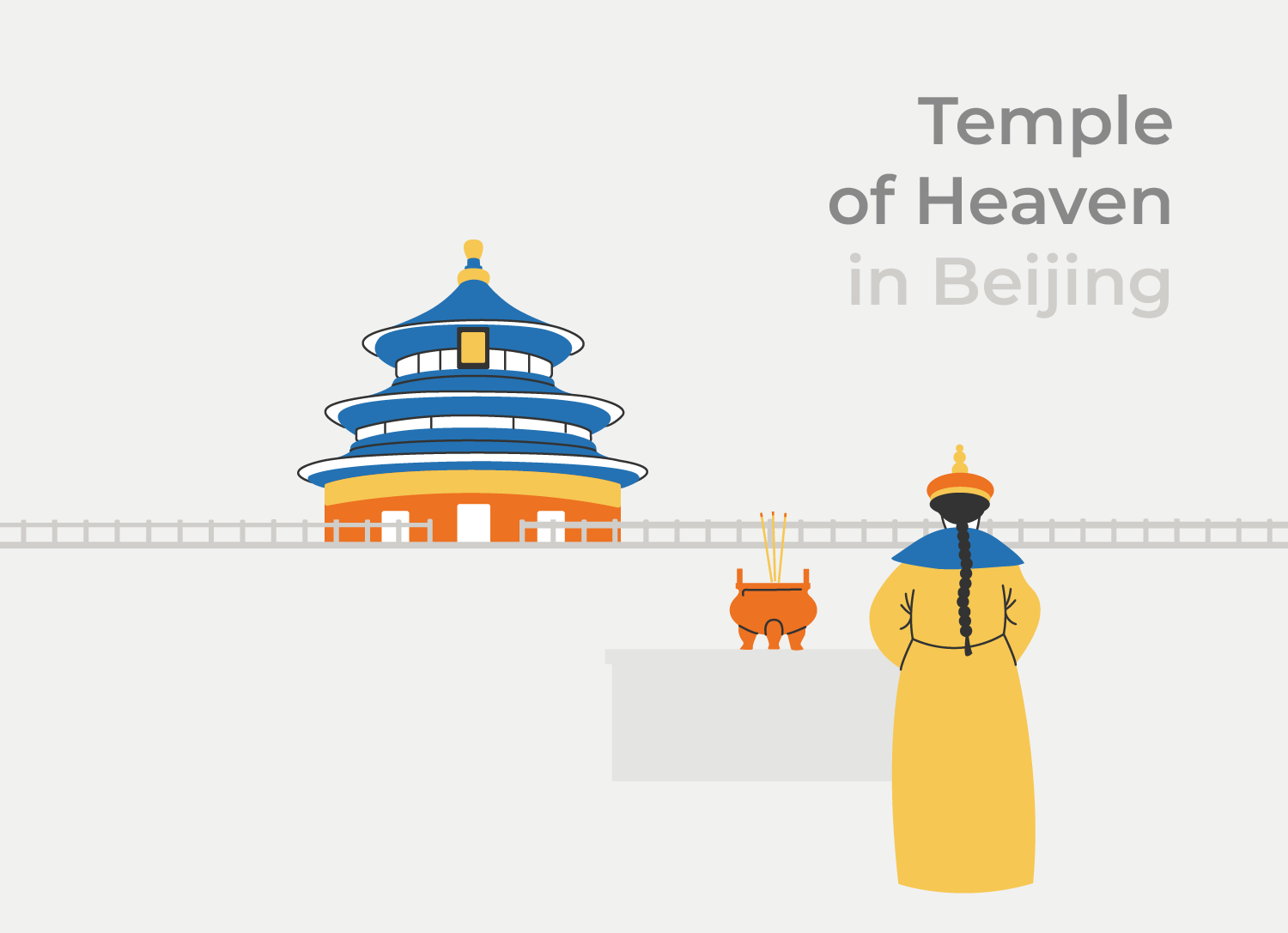
Built during the Ming Dynasty in the early 15th century, the Temple of Heaven was designed to symbolise the connection between Heaven and Earth. Unlike the nearby Forbidden City, which served as the emperor’s palace, the Temple of Heaven was dedicated entirely to religious rituals and state ceremonies.
Today, the Temple of Heaven is recognised as a UNESCO World Heritage Site and attracts millions of visitors each year. Its magnificent buildings, peaceful gardens, and rich history make it one of the most fascinating places to explore in Beijing.
Whether you’re interested in Chinese history, architecture, or planning a trip to Beijing, this guide explains everything you need to know about the Temple of Heaven, from why it was built to the symbolism behind its unique design.
Key Takeaways
-
The Temple of Heaven is a historic religious complex located in Beijing, China.
-
It was built between 1406 and 1420 during the Ming Dynasty.
-
Chinese emperors visited the temple to pray for good harvests and perform important state ceremonies.
-
The complex is home to the famous Hall of Prayer for Good Harvests, one of China’s most recognisable buildings.
-
The Temple of Heaven became a UNESCO World Heritage Site in 1998.
-
Today, it is one of Beijing’s most popular historical attractions and an important symbol of Chinese culture.
What Is the Temple of Heaven?
The Temple of Heaven is a large religious complex in southern Beijing that was used by the emperors of the Ming and Qing dynasties. Rather than serving as a place of everyday worship, it was built specifically for imperial ceremonies and rituals.
Each year, the emperor travelled from the Forbidden City to the Temple of Heaven to pray for a successful harvest. These ceremonies reflected the belief that the emperor ruled as the “Son of Heaven” and was responsible for maintaining harmony between Heaven, Earth, and the people.
The Temple of Heaven is best known for its magnificent Hall of Prayer for Good Harvests, a circular building with a striking blue roof that has become one of Beijing’s most recognisable landmarks.
Today, the complex forms part of Temple of Heaven Park, where visitors can admire its historic buildings, walk through beautiful gardens, and learn about one of the most important ceremonial sites in Chinese history.

天坛
Tiāntán
Temple of Heaven
Where Is the Temple of Heaven?
The Temple of Heaven is located in southern Beijing, around five kilometres from the Forbidden City. It sits within the expansive Temple of Heaven Park, one of the city’s largest and most popular public parks.
The complex covers approximately 273 hectares, making it even larger than the Forbidden City itself. Its spacious grounds include ancient cypress trees, landscaped gardens, and several important ceremonial buildings connected by wide pathways.
Thanks to its central location, the Temple of Heaven is easy to reach by public transport and is often included in visits to other famous attractions such as Tiananmen Square, the Forbidden City, and Jingshan Park.
Why Was the Temple of Heaven Built?
The Temple of Heaven was built as a sacred place where China’s emperors could communicate with Heaven through important religious ceremonies. They believed that the prosperity of the empire depended on maintaining harmony between Heaven, Earth, and the people.
The most important ceremony took place each year before the planting season. The emperor prayed for a good harvest, believing that successful crops would bring prosperity and stability to the country.
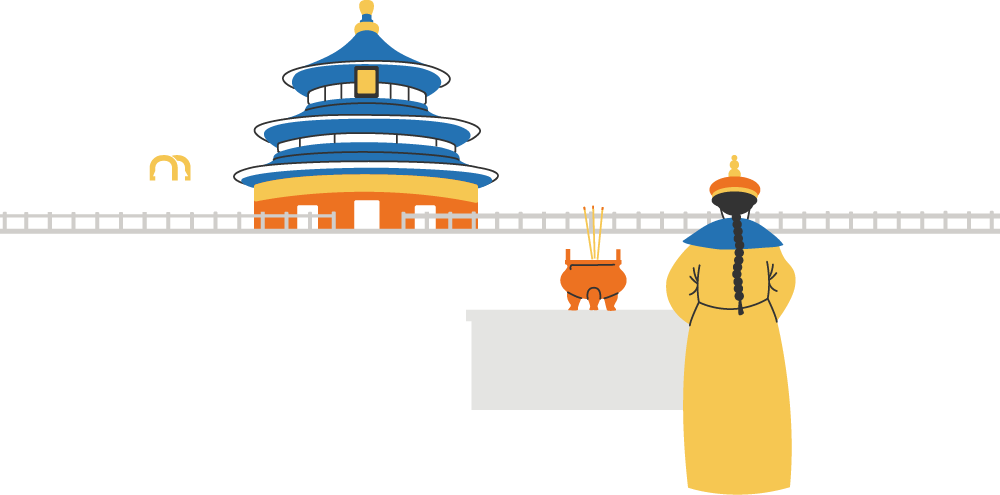
Unlike ordinary temples, the Temple of Heaven was not open to the public. Only the emperor and selected officials were allowed to take part in these ceremonies, making it one of the most important religious sites in imperial China.
The ceremonies also reinforced the emperor’s role as the “Son of Heaven”. According to traditional Chinese belief, the emperor ruled with the Mandate of Heaven, meaning his authority came from Heaven and depended on governing wisely and justly.
For more than 500 years, emperors from the Ming and Qing dynasties visited the Temple of Heaven to perform these rituals. The tradition ended with the fall of the Qing Dynasty in 1912, bringing centuries of imperial ceremonies to a close.
A Brief History of the Temple of Heaven
The Temple of Heaven has played an important role in Chinese history for more than 600 years. From its construction during the Ming Dynasty to its status as a UNESCO World Heritage Site today, it remains one of Beijing’s most significant landmarks.
Construction (1406–1420)
Construction of the Temple of Heaven began in 1406 during the reign of the Yongle Emperor, the same ruler who commissioned the Forbidden City.
The complex was completed in 1420 and was originally known as the Temple of Heaven and Earth. It was designed to provide a dedicated space where emperors could perform important religious ceremonies away from the imperial palace.
The Ming Dynasty
During the Ming Dynasty (1368–1644), the Temple of Heaven became the centre of the empire’s most important state rituals.
Each year, the emperor travelled in a grand procession from the Forbidden City to pray for a successful harvest. These ceremonies were carried out according to strict traditions and were considered essential to the well-being of the nation.
The Qing Dynasty
When the Qing Dynasty came to power in 1644, the new emperors continued the traditions established by the Ming rulers.
Several buildings within the complex were repaired and expanded over the following centuries, while the annual ceremonies remained an important part of imperial life.
Construction (1406–1420)
Construction of the Temple of Heaven began in 1406 during the reign of the Yongle Emperor, the same ruler who commissioned the Forbidden City.
The complex was completed in 1420 and was originally known as the Temple of Heaven and Earth. It was designed to provide a dedicated space where emperors could perform important religious ceremonies away from the imperial palace.
The End of Imperial China
The final imperial ceremonies took place in the early 20th century, shortly before the Qing Dynasty came to an end in 1912.
Without an emperor to perform the rituals, the Temple of Heaven lost its original purpose. However, its historical and cultural importance ensured that the site would be preserved for future generations.
The Temple of Heaven Today
Today, the Temple of Heaven is one of Beijing’s most popular attractions and welcomes millions of visitors every year.
In 1998, it was designated a UNESCO World Heritage Site in recognition of its outstanding cultural and architectural significance. The surrounding park has also become a favourite gathering place for local residents, who visit to walk, exercise, practise tai chi, play music, and enjoy the peaceful surroundings.
The Most Famous Buildings
The Temple of Heaven is made up of several impressive buildings, each designed for a specific purpose during imperial ceremonies. Together, they demonstrate the remarkable craftsmanship and symbolism of traditional Chinese architecture.
Hall of Prayer for Good Harvests
The Hall of Prayer for Good Harvests is the most famous building in the Temple of Heaven and one of Beijing’s best-known landmarks.
Its striking triple-tiered blue roof symbolises the heavens, while its perfectly circular shape reflects the ancient Chinese belief that Heaven is round. Built entirely from wood without the use of nails, the hall is considered a masterpiece of traditional Chinese engineering.
Each year, the emperor came here to pray for favourable weather and abundant harvests, making it the ceremonial heart of the entire complex.
Imperial Vault of Heaven
The Imperial Vault of Heaven was used to store the sacred tablets that represented the gods and the emperor’s ancestors during important ceremonies.
The building is surrounded by the famous Echo Wall, a circular wall designed so that sound can travel surprisingly clearly from one side to the other. Today, it is one of the Temple of Heaven’s most popular attractions.
Circular Mound Altar
The Circular Mound Altar is an open-air marble platform where the emperor performed the annual Winter Solstice Ceremony.
Its design is rich in symbolism. The circular shape represents Heaven, while the arrangement of the marble stones follows the number nine, which was traditionally associated with the emperor and considered the most powerful single-digit number in Chinese culture.
Temple of Heaven Architecture and Symbolism
The Temple of Heaven is widely regarded as one of the greatest masterpieces of traditional Chinese architecture. Every building, pathway, and courtyard was carefully designed to reflect ancient Chinese beliefs about the relationship between Heaven, Earth, and humanity.
Unlike the Forbidden City, which symbolised imperial authority, the Temple of Heaven was designed to express harmony, balance, and respect for the natural world. Its layout follows principles that were central to Chinese philosophy for centuries.
The Circle and the Square
One of the most important ideas behind the Temple of Heaven’s design is the belief that Heaven is round and Earth is square.
Many of the temple’s main buildings, including the Hall of Prayer for Good Harvests, are circular to represent Heaven. In contrast, many courtyards, walls, and surrounding spaces are square, symbolising Earth.
This combination reflects the emperor’s role in maintaining harmony between the two.
The Blue Roofs
Unlike the golden roofs of the Forbidden City, the Temple of Heaven’s buildings are topped with striking blue glazed tiles.
Blue was traditionally associated with the sky and Heaven, making it the perfect colour for a place dedicated to religious ceremonies. The vibrant roofs remain one of the temple’s most recognisable features today.
The Importance of the Number Nine
Numbers also played an important role in the temple’s design.
The number nine was closely associated with the emperor and was considered the most powerful single-digit number in ancient China. Throughout the complex, visitors can find staircases, terraces, and stone slabs arranged in multiples of nine to reflect imperial authority and cosmic order.
Feng Shui and Symmetry
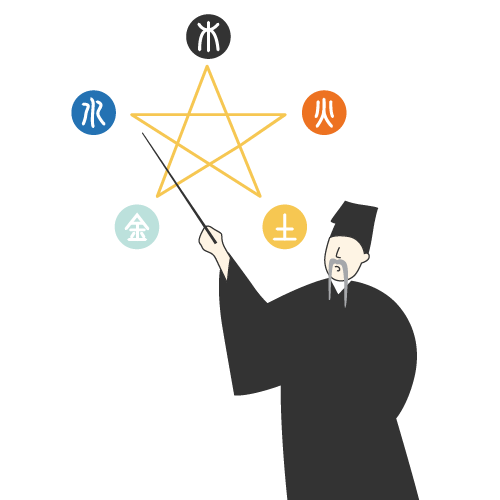
Like many important Chinese landmarks, the Temple of Heaven was designed according to the principles of feng shui (风水, fēngshuǐ).
Its buildings are arranged with careful symmetry, while open spaces, trees, and pathways create a sense of balance and tranquillity. Together, these elements reinforce the temple’s purpose as a place where Heaven and Earth were believed to be in harmony.
Interesting Temple of Heaven Facts
The Temple of Heaven has a fascinating history stretching back more than 600 years. Here are some of the most interesting facts about this remarkable landmark.
It Is More Than 600 Years Old
Construction of the Temple of Heaven was completed in 1420, making it more than six centuries old.
Despite fires, earthquakes, and centuries of change, many of its most famous buildings have been carefully restored and preserved.
The Hall of Prayer Was Built Without Nails
The Hall of Prayer for Good Harvests is one of the world’s most impressive wooden buildings.
It was constructed using traditional Chinese joinery techniques, allowing the enormous structure to stand without metal nails.
It Covers a Huge Area
The Temple of Heaven complex covers approximately 273 hectares, making it significantly larger than the Forbidden City.
Much of this space is occupied by gardens, ancient trees, ceremonial pathways, and open parkland.
The Echo Wall Really Works
The Echo Wall surrounding the Imperial Vault of Heaven is famous for its unusual acoustics.
Under the right conditions, a whisper made at one end of the wall can sometimes be heard clearly at the other, making it one of the temple’s most popular attractions.
Emperors Fasted Before Ceremonies
Before performing important rituals, Chinese emperors spent several days preparing both physically and spiritually.
They fasted, avoided distractions, and observed strict ceremonial rules before praying for a successful harvest.
It Is a UNESCO World Heritage Site
In 1998, UNESCO recognised the Temple of Heaven as a World Heritage Site because of its outstanding architectural design and cultural importance.
Today, it remains one of Beijing’s most visited historical landmarks.
Can You Visit the Temple of Heaven?
Yes. Today, the Temple of Heaven is open to visitors as part of Temple of Heaven Park, one of Beijing’s largest public parks.
Visitors can explore the historic buildings, stroll through peaceful gardens, and watch local residents practising tai chi, dancing, singing, playing traditional instruments, and taking part in other community activities.
The park is particularly beautiful in the early morning, when locals gather to exercise beneath the ancient cypress trees. Visiting at this time offers a glimpse into everyday life in Beijing as well as the site’s rich history.
Most visitors spend two to three hours exploring the complex. Alongside the Hall of Prayer for Good Harvests, don’t miss the Echo Wall, the Imperial Vault of Heaven, and the Circular Mound Altar.
Learn More About Chinese History and Culture
If you enjoyed learning about the Temple of Heaven, explore these related guides to discover more about China’s rich history and traditions:
Useful Chinese Vocabulary
| chinese | pinyin | english |
|---|---|---|
| 天坛 | Tiāntán | Temple of Heaven |
| 天 | Tiān | Heaven |
| 皇帝 | Huángdì | Emperor |
| 祈年殿 | Qíniándiàn | Hall of Prayer for Good Harvests |
| 皇穹宇 | Huángqióngyǔ | Imperial Vault of Heaven |
| 圜丘坛 | Yuánqiūtán | Circular Mound Altar |
| 丰收 | Fēngshōu | Harvest |
| 仪式 | Yíshì | Ceremony |
| 祭祀 | Jìsì | Sacrifice |
| 世界遗产 | Shìjiè Yíchǎn | UNESCO World Heritage Site |
| 北京 | Běijīng | Beijing |
| 风水 | Fēngshuǐ | Feng Shui |