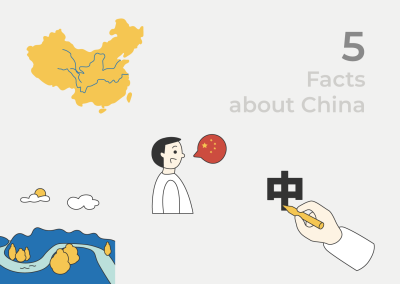
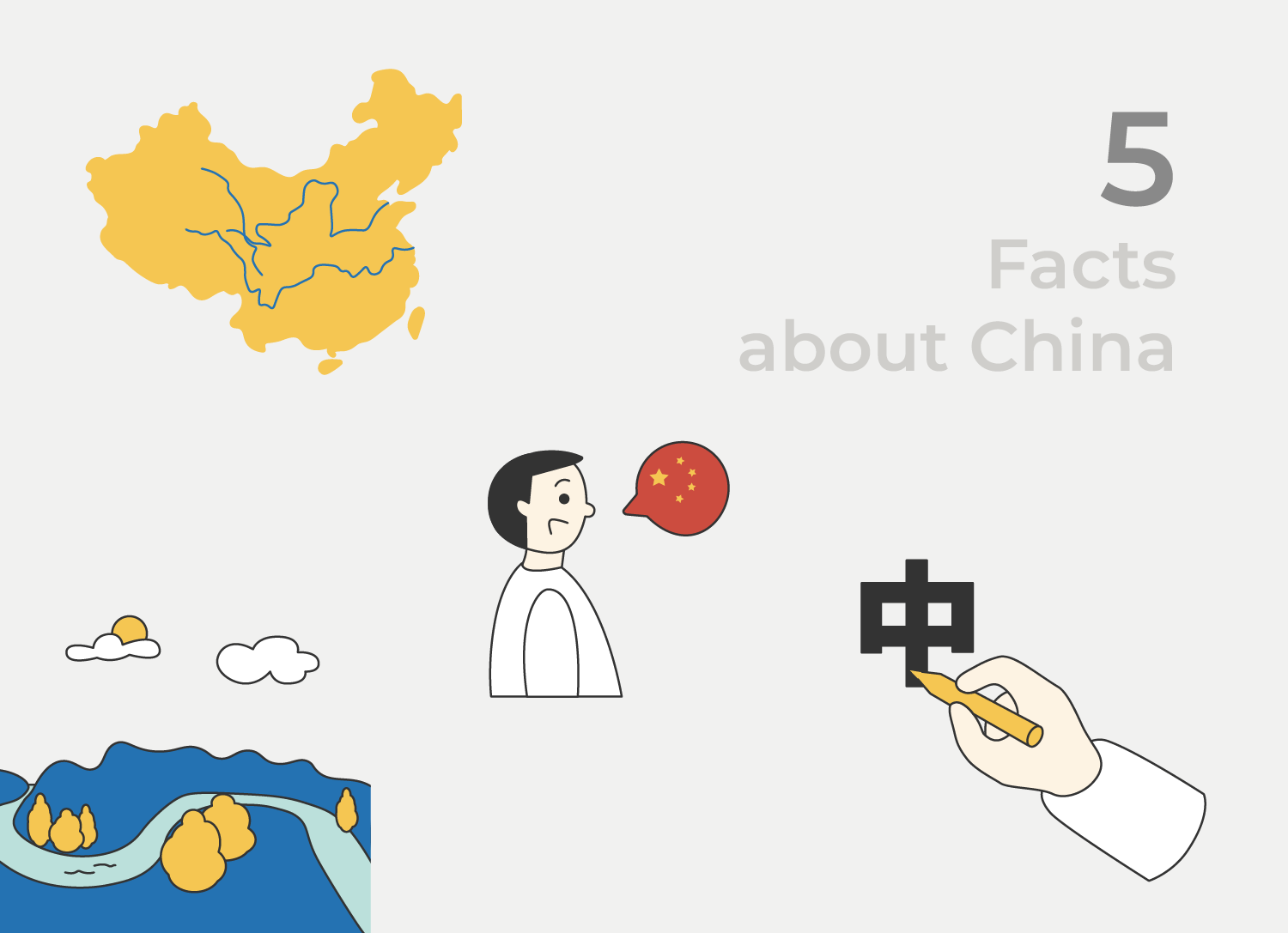
Whether you’re planning a trip, learning Mandarin, studying Chinese culture, or simply curious about the country, these five facts about China offer a quick introduction to what makes it so fascinating.
Key Takeaways
- China is one of the largest countries in the world, stretching thousands of kilometers from east to west.
- Despite its enormous geographical size, China officially uses one time zone: China Standard Time (UTC+8).
- Chinese writing has a history stretching back thousands of years, with modern characters developing from ancient forms of writing.
- China has an extraordinary variety of landscapes and climates, from high mountains and deserts to tropical regions and long coastlines.
- Although Mandarin is China’s official standard language, the country is home to many different Chinese language varieties and regional languages.
1. China Is One of the World’s Largest Countries
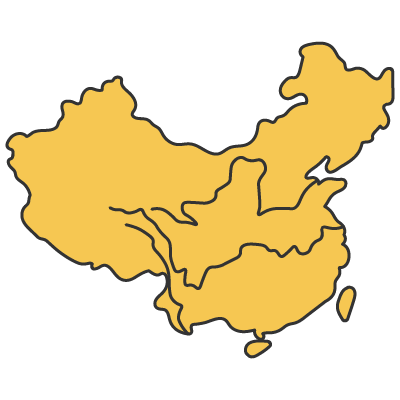
China is an enormous country in East Asia, covering around 9.6 million square kilometres. Its territory stretches thousands of kilometres from east to west and from the northern border to the southern coast.
China also shares land borders with 14 countries, including India, Russia, Mongolia, Vietnam, Nepal and Pakistan. Its geography ranges from some of the highest mountains in the world to vast plains, deserts, forests and coastal regions.
This enormous size has contributed to significant regional differences across China. Climate, food, customs, landscapes and even everyday routines can vary considerably from one part of the country to another.
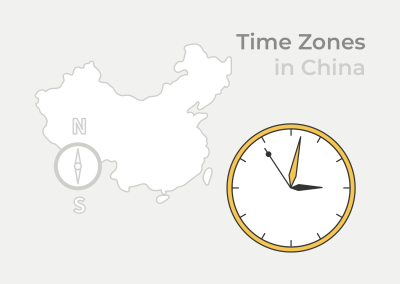
China’s east-west size also creates an interesting situation when it comes to time. Despite spanning roughly five natural geographical time zones, the entire country officially follows one time zone: China Standard Time (UTC+8).
Want to know why? Read our guide to how many time zones China has to learn how Beijing Time works across the country.
2. China Has One Official Time Zone
One of the most surprising facts about China is that the entire country officially uses one time zone.
China Standard Time is set at UTC+8 and is also commonly known as Beijing Time. This means that cities as far apart as Beijing, Shanghai, Guangzhou and Urumqi all officially use the same clock.
This is unusual because China is geographically large enough to span roughly five natural time zones. As you travel from east to west, sunrise and sunset can occur at very different times, even though the clock shows the same official time.
The single time zone was introduced as a national standard in 1949, creating one unified system for the whole country. It makes national scheduling and administration simpler, but it can also create some unusual differences between clock time and daylight, particularly in western China.
For example, people in Xinjiang may experience sunrise and sunset much later according to the clock than people in eastern China. Some people in the region therefore use an informal local time, often called Xinjiang Time, alongside the official Beijing Time.
If you’re traveling or studying in China, it’s useful to remember that official time stays the same across mainland China, even when daylight hours vary significantly from region to region.

3. Chinese Writing Has Thousands of Years of History
Chinese writing is one of the world’s oldest writing systems still in continuous use today. Its history can be traced back more than 3,000 years, with some of the earliest known examples appearing on oracle bones during the late Shang Dynasty.
These early inscriptions were carved onto animal bones and turtle shells and were used for divination and recording important events. Over time, Chinese characters evolved through several different forms before developing into the writing system used today.
Modern Chinese characters may look very different from their ancient forms, but many have retained connections to their historical origins. This long evolution is one reason Chinese writing offers such a fascinating window into the country’s history and culture.
Chinese characters are known as 汉字 (hànzì). Unlike alphabetic writing systems, individual characters generally represent a word or meaningful part of a word rather than a single sound.
Today, Chinese is written using either simplified characters or traditional characters, depending on the region and writing context. Mainland China primarily uses simplified Chinese, while traditional characters remain widely used in places such as Hong Kong and Taiwan.
The history of Chinese writing is closely connected to the development of Chinese language and culture. Learning even a few characters can therefore offer insight into how Chinese people have communicated and recorded ideas for thousands of years.
4. China Has an Incredible Variety of Landscapes
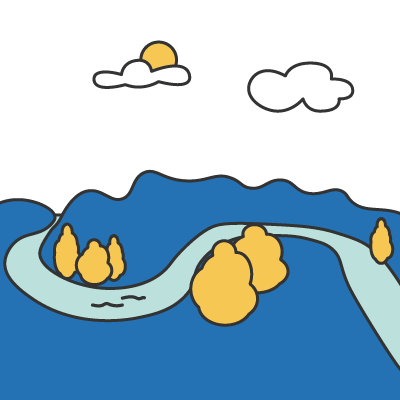
China’s enormous size means that its landscape is incredibly diverse. From snow-covered mountains and high-altitude plateaus to deserts, forests, grasslands and tropical coastlines, the country’s geography changes dramatically from one region to another.
In the southwest, the Tibetan Plateau is home to some of the highest mountains on Earth, including the Himalayas. Further north and west, vast areas of desert and dry grassland stretch across the landscape, while southern China has warmer climates, subtropical forests and lush countryside.
China is also home to some of Asia’s most important rivers. The Yangtze River, the longest river in China, flows through the country from the Tibetan Plateau towards the East China Sea. The Yellow River has also played a major role in the development of Chinese civilization and agriculture.
This geographical diversity has shaped everyday life in different parts of China. Local climates and landscapes have influenced agriculture, architecture, food traditions and ways of living, contributing to the remarkable regional diversity found across the country.
From the mountains of Tibet to the beaches of southern China, there is no single landscape that can truly represent the whole country.
5. China Is Linguistically Diverse
Many people associate China with Mandarin Chinese, and for good reason. Standard Mandarin, known as 普通话 (Pǔtōnghuà), is the official standard language of mainland China and is taught throughout the country’s education system.
However, China is far more linguistically diverse than you might expect. Alongside Mandarin, people across the country speak many different Chinese varieties and regional languages.
These include Cantonese, Wu, Min, Hakka, and several other major Chinese language varieties. There are also numerous languages spoken by China’s ethnic minority communities.
Some Chinese varieties can differ considerably in pronunciation and vocabulary. For example, someone who speaks Cantonese and someone who speaks Mandarin may not be able to understand each other through speech alone, even though both use Chinese writing.
This linguistic diversity is closely connected to China’s geography and history. Different communities developed their own ways of speaking over centuries, while Chinese characters provided a shared written tradition across many regions.
For Mandarin learners, this is an important part of understanding China. Mandarin is a useful way to communicate across the country, but it is only one part of China’s much broader linguistic landscape.
Useful Chinese Vocabulary
| chinese | pinyin | english |
|---|---|---|
| 中国 | Zhōngguó | China |
| 中国人 | Zhōngguórén | Chinese |
| 中文 | Zhōngwén | Chinese language |
| 普通话 | Pǔtōnghuà | Mandarin |
| 汉字 | Hànzì | Chinese character(s) |
| 文化 | wénhuà | culture |
| 历史 | lìshǐ | history |
| 国家 | guójiā | country |
| 城市 | chéngshì | city |
| 省 | shěng | province |
Learn More About China
China’s history and culture are far too broad to cover in just five facts. If you want to explore further, check out our guides on:
- Ancient China: History, Inventions, Culture & Daily Life
- Chinese Dynasties Explained: A Beginner’s Guide to China’s History
- The Great Wall of China: History, Facts & Everything You Need to Know
- The Forbidden City: History, Facts & Everything You Need to Know
- Terracotta Army: History, Facts & Why It Was Built