

10 Things You Need to Know About the HSK Exam (2026 Guide)

Ultimate Guide to the HSK Exam:
Everything You Need to Know About HSK
Whether you’re planning to study at a Chinese university, work in China or simply measure your Mandarin proficiency, the HSK (Hanyu Shuiping Kaoshi / 汉语水平考试) is the world’s most widely recognised Chinese language proficiency test for non-native speakers.
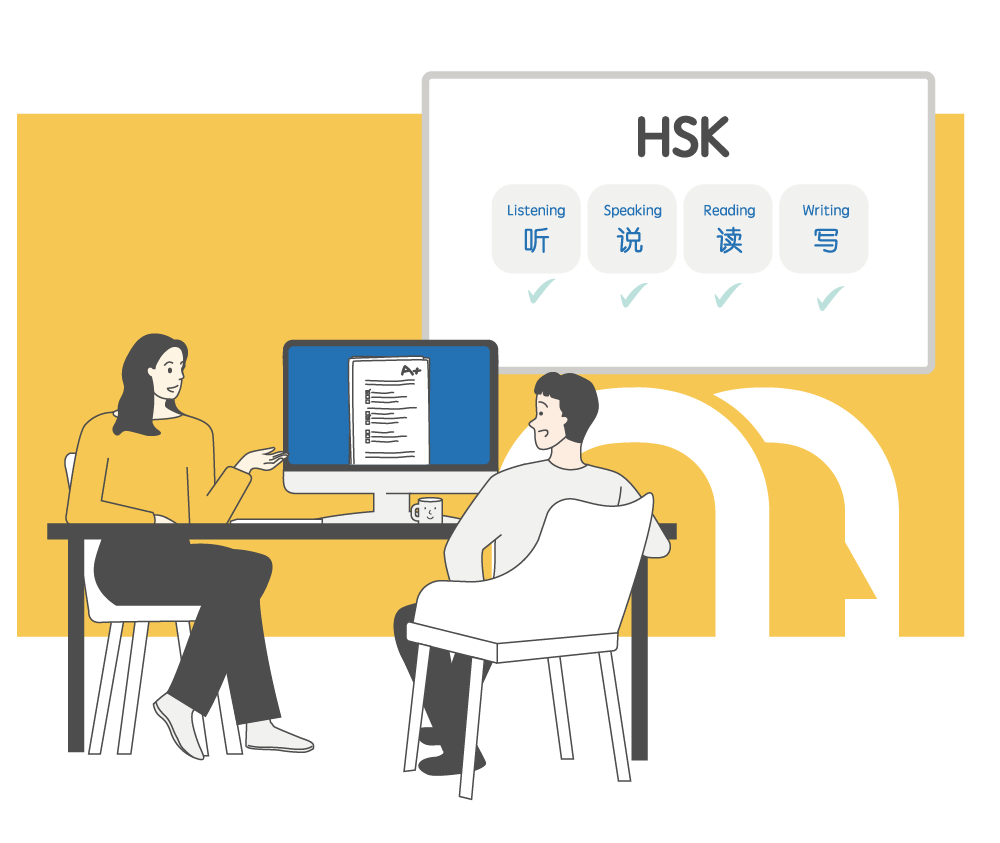
Administered by Chinese Testing International, the HSK is accepted by universities, employers and organisations across China and around the world. The exam assesses your listening, reading and writing abilities, with advanced learners also able to take the HSK 7–9 exam introduced under the updated HSK 3.0 framework.
If you’re considering taking the HSK, this guide covers everything you need to know—from who should take the exam and where it’s offered to the exam structure, preparation tips and the benefits of earning an HSK certificate.
Key Takeaways
- The HSK is China’s official Chinese language proficiency test for non-native speakers.
- The standard HSK consists of Levels 1–6, with HSK 7–9 available for advanced learners.
- The exam is available at authorised test centres across China and internationally as both a paper-based and internet-based test.
- That’s Mandarin offers dedicated HSK Preparation Courses, including exam registration support and flexible online or in-person classes.
1. Who Should Take the HSK?
The HSK is open to anyone who wants to assess their Chinese language proficiency. Whether you’re learning Mandarin for academic, professional or personal reasons, the exam provides an internationally recognised benchmark of your language ability.
The HSK is particularly suitable for:
- International students applying to Chinese universities
- Professionals looking to work in China or with Chinese companies
- Learners preparing for scholarships or exchange programs
- Anyone who wants an official certificate of their Mandarin proficiency
Many universities and employers use HSK scores as part of their admission or recruitment process, making it a valuable qualification for those planning to study or build a career in China.
2. Where Can I Take the HSK?
The HSK is offered at authorised test centres around the world. If you’re living in China, you’ll find official HSK testing centres in most major cities, including Beijing, Shanghai, Guangzhou, Shenzhen, Hangzhou, Chengdu and Suzhou, with many exams hosted by universities and language institutions.
Outside China, authorised HSK testing centres are available across North America, Europe, Asia, Oceania and many other regions, making it convenient for learners to take the exam without travelling abroad.
Depending on your location, you may be able to choose between:
- Paper-based tests (PBT)
- Internet-based tests (iBT) taken at authorised testing centres
Availability varies by country and test centre, so it’s always worth checking the options available before registering.
3. When Can I Take the HSK?
HSK exams are held multiple times throughout the year, with official test dates, registration deadlines and result release schedules published annually by Chinese Testing International.
Most HSK Levels 1–6 are available several times each year, while the advanced HSK 7–9 exam is offered less frequently.
Because the schedule changes every year, we’ve created a dedicated guide with the latest official information.
→ Read our complete HSK 2026 Overview Guide
→ Read our complete HSK Test Dates 2026 Guide
4. How Many Levels Does the HSK Have?
The HSK is divided into 6 standard levels, ranging from HSK 1 for beginners to HSK 6 for advanced learners.
Under the updated HSK 3.0 framework, an additional advanced examination — HSK 7–9 — has also been introduced for learners with a high level of Chinese proficiency.
Each level is designed to assess progressively more complex language skills, helping learners track their progress and demonstrate their ability in academic, professional and everyday situations.
HSK 1
Beginner

Understand and use simple everyday words and phrases.
HSK 2
Elementary
HSK 3
Lower Intermediate

HSK 4
Intermediate
HSK 5
Upper Intermediate
HSK 6
Advanced

HSK 7-9
Advanced Professional
5. What’s the Structure of the HSK Exam?
The HSK exam tests your ability to understand and use Chinese in real-life situations. As you progress through the levels, the exam becomes more challenging, with additional sections and more advanced language tasks.
The exact structure varies depending on which HSK level you’re taking.
HSK 1 & HSK 2
HSK 1 and HSK 2 are designed for beginners and assess two core language skills:
- Listening
- Reading
At these levels, you’ll answer multiple-choice and true-or-false questions based on short conversations, pictures and simple written texts. HSK 1 includes Pinyin alongside Chinese characters to support new learners, while HSK 2 gradually places greater emphasis on recognising Chinese characters independently.
These beginner exams focus on your ability to:
- Understand everyday vocabulary and phrases
- Follow simple conversations
- Read short sentences and notices
- Recognise commonly used Chinese characters
HSK 3 to HSK 6
Candidates are expected to demonstrate a broader range of Chinese language skills, including the ability to organise ideas, understand longer passages and communicate more naturally in written Chinese.
| section | what you’ll be tested on |
|---|---|
| Listening | Understanding conversations, announcements and spoken Chinese in everyday and professional situations. |
| Reading | Reading increasingly complex texts, identifying key information and understanding grammar and vocabulary in context. |
| Writing | Completing sentences, arranging words correctly and writing short passages using appropriate grammar and vocabulary. |
As you move from HSK 3 to HSK 6, the texts become longer, the vocabulary expands significantly and you’ll be expected to understand more nuanced language.
HSK 7-9
The advanced HSK 7–9 exam is designed for learners with a high level of Chinese proficiency.
Unlike HSK 1–6, candidates don’t choose between three separate exams. Instead, everyone takes one integrated HSK 7–9 examination, with their final score determining whether they are awarded HSK Level 7, 8 or 9.
The exam assesses advanced language skills required for academic, professional and research settings, including:
- Understanding complex written texts
- Analyzing spoken Chinese
- Producing well-structured written responses
- Applying Chinese naturally in a variety of real-world contexts

What About the HSK Speaking Test (HSKK)?
One common misconception is that the HSK includes a speaking section.
In fact, speaking is tested separately through the HSKK (Hanyu Shuiping Kouyu Kaoshi).
The HSKK is available at three levels:
- Beginner
- Intermediate
- Advanced
Many universities and employers may require both an HSK certificate and an HSKK certificate, particularly for degree programmes taught in Chinese or positions that require strong spoken communication skills.

Paper-Based vs Internet-Based HSK
Most HSK Levels 1–6 are available as either a paper-based test (PBT) or an internet-based test (iBT) taken at an authorised test centre.
Although the format differs, both exams assess the same language skills and award the same internationally recognised HSK certificate.
|
feature |
paper-based (pbt) |
internet-based (ibt) |
|---|---|---|
|
Writing |
Handwritten |
Typed on a computer |
|
Results |
Usually released within about one month |
Usually released within 10–15 days |
|
Best For |
Learners comfortable writing Chinese characters by hand |
Learners who regularly type Chinese using Pinyin input |
Neither format is considered easier than the other. The best choice depends on your personal learning style and how you’ve prepared for the exam. Whichever format you choose, practising with mock exams beforehand can help you feel more confident on test day.
6. How Long Does It Take to Pass the HSK Exam?
The amount of time it takes to pass the HSK depends on several factors, including your current Chinese level, how often you study, whether you’re immersed in a Chinese-speaking environment and the amount of time you dedicate to practising outside of class.
While every learner progresses at a different pace, the estimates below provide a general guideline for students studying consistently.
HSK 1-2
HSK 3-4
HSK 5-6
If you’re aiming for a specific HSK level by a certain date, studying with a structured curriculum and experienced teachers can help you progress more efficiently.
7. Can I Retake the HSK Exam if I Don’t Pass?
Yes. There is no limit to the number of times you can take the HSK exam.
If you don’t achieve your target score, you can simply register for another exam date and try again. Many learners choose to retake the HSK after spending additional time improving their vocabulary, grammar and exam technique.
If you’re planning to use your HSK certificate for university admission or a job application, it’s worth scheduling your exam early enough to allow time for a retake if necessary.
8. How Can I Prepare for the HSK?
Preparing for the HSK involves much more than memorising vocabulary lists. The most successful candidates develop all four core language skills while becoming familiar with the exam format.
Here are a few practical tips:
- Study the vocabulary and grammar required for your HSK level.
- Practise listening with Chinese podcasts, videos and sample recordings.
- Read graded readers and authentic Chinese materials to improve reading speed.
- Complete mock exams under timed conditions to build confidence.
- Review your mistakes regularly and focus on weaker areas.
Prepare for the HSK with That’s Mandarin
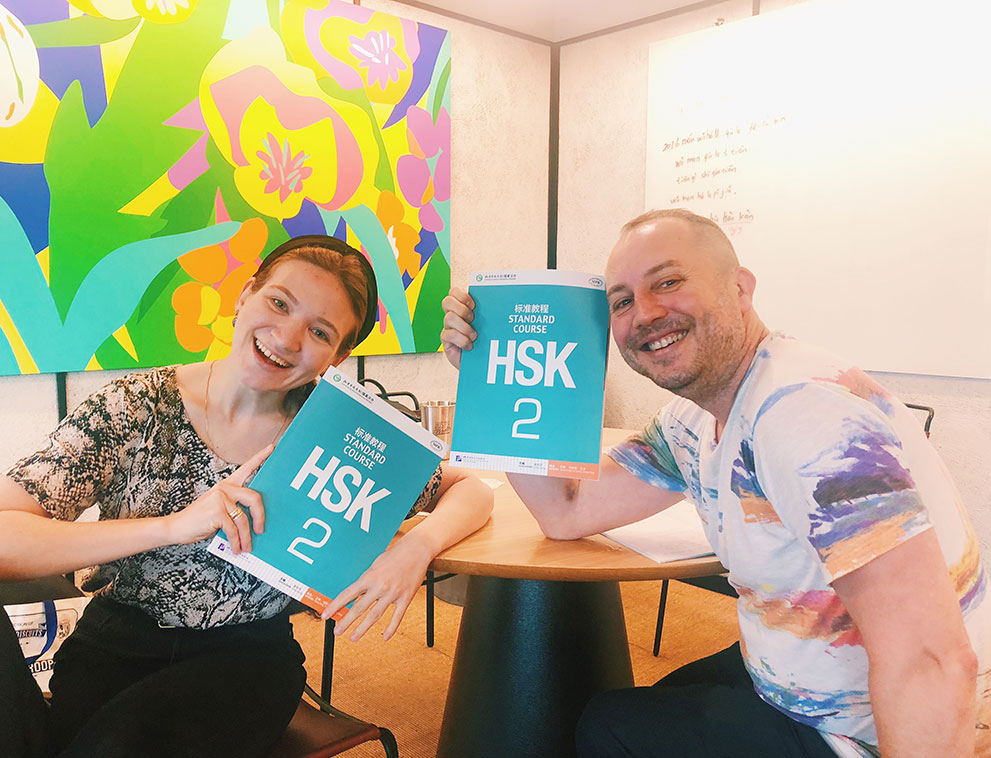
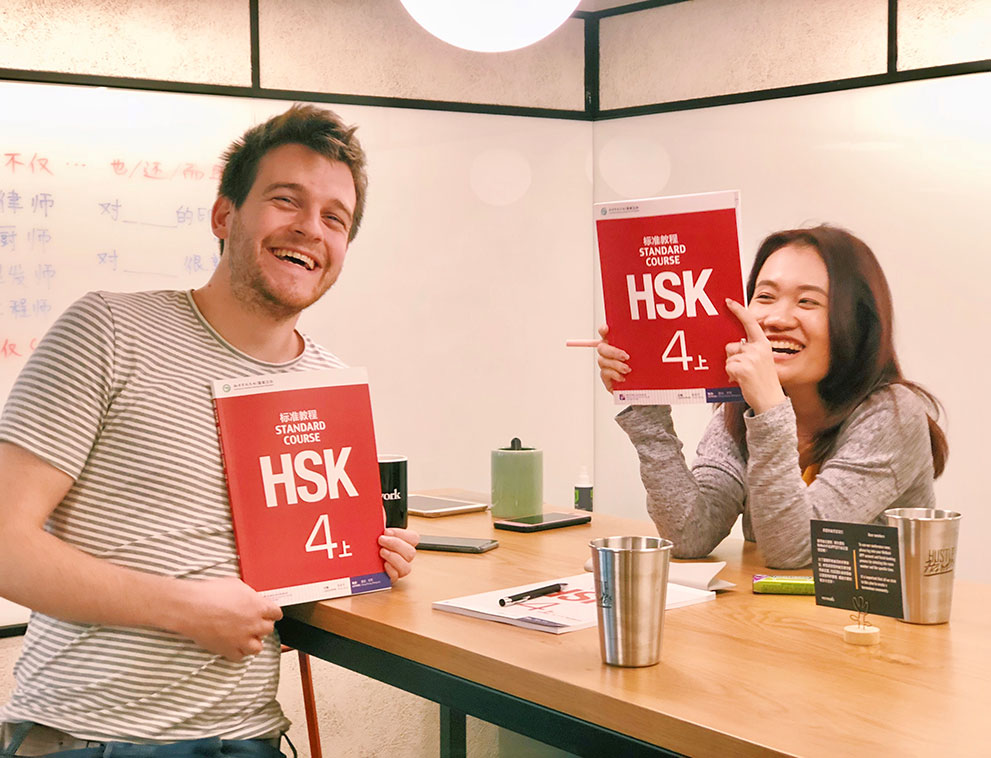
If you’re looking for structured support, That’s Mandarin offers dedicated HSK Preparation Courses for learners from HSK 1 to HSK 6.
Our courses include:
- Private 1ON1 or small group classes (2–6 students)
- Flexible intensive and part-time study options
- Online classes or in-person learning in Beijing, Shanghai, Suzhou, Hangzhou and Chengdu
- Experienced teachers specialising in HSK preparation
- 24/7 access to our NihaoCafe online learning platform
- Assistance with HSK exam registration and the required documents
Our lessons don’t just prepare you to pass the exam; they also focus on developing practical communication skills that you’ll use in everyday life.
9. Why Should I Take the HSK?
An HSK certificate is much more than a language qualification. It can open doors to new educational, professional and personal opportunities.
Study in China
Many Chinese universities require international applicants to achieve a minimum HSK level before enrolling in degree programmes taught in Chinese.
Advance Your Career
As more international businesses work with Chinese partners and clients, employers increasingly value candidates who can demonstrate verified Mandarin proficiency through an HSK certificate.
Apply for Scholarships
Many Chinese government scholarships and university scholarship programmes require applicants to submit HSK results as part of the application process.
Track Your Progress
Even if you don’t need an HSK certificate for work or study, taking the exam is an excellent way to measure your progress, set new learning goals and stay motivated throughout your Chinese learning journey.
10. What Happens After You Pass the HSK?
Passing the HSK is an important milestone, but it’s also the beginning of the next stage of your Chinese learning journey. Your HSK certificate provides internationally recognised proof of your Mandarin proficiency and can be used when applying for universities, scholarships and employment opportunities. Although HSK certificates remain valid indefinitely, some universities and organisations may require results obtained within the previous two years for admissions purposes.
Always check the requirements of the institution you’re applying to. Many learners continue studying towards the next HSK level, gradually building their confidence and expanding their Chinese language skills. Whether your goal is to study in China, advance your career or communicate more naturally with native speakers, every HSK level brings you one step closer to fluency.
Good luck with your HSK journey!
And remember — whether you’re preparing for HSK 1 or aiming for HSK 6, That’s Mandarin is here to help you every step of the way.
Frequently Asked Questions
What is the HSK exam?
Which HSK level should I take?
How often is the HSK held?
Can I take the HSK exam online?
What's the difference between the paper-based and internet-based HSK?
Does the HSK include a speaking test?
Can I retake the HSK if I don't pass?
How long is an HSK certificate valid?
How should I prepare for the HSK exam?
Where can I find the latest HSK test dates?
Official HSK exam dates change every year. For the latest exam schedule, registration deadlines and result release dates, read our dedicated HSK Test Dates 2026 guide.